

Dismissal of a criminal case can occur for various reasons, and understanding these circumstances is necessary for anyone involved in the legal process. Whether you are facing charges or simply seeking knowledge, knowing when a case can be dismissed can significantly impact your situation. Factors such as lack of evidence, procedural errors, or changes in circumstances can lead to a case being dropped. In this post, we will explore these reasons and provide you with the insights you need to navigate this complex area of law effectively.
Grounds for Dismissal
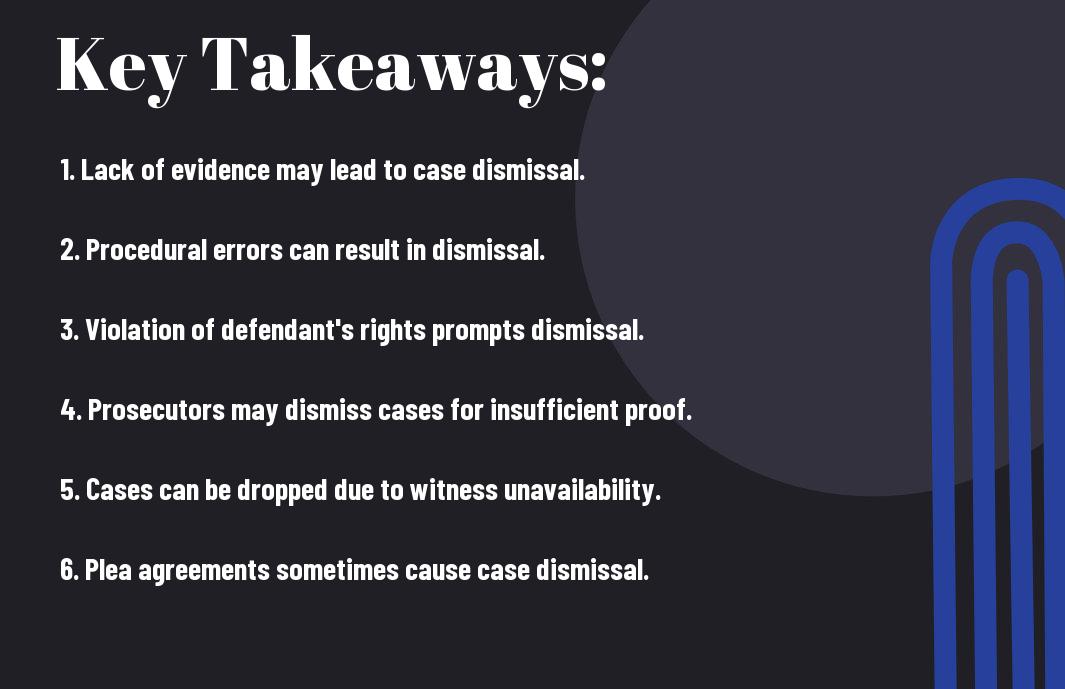
To understand when a criminal case gets dismissed, it’s important to recognize the various grounds that can lead to such an outcome. Dismissal can occur due to insufficient evidence, procedural errors, or issues related to the defendant’s rights, among other reasons. Being aware of these grounds can help you navigate the complexities of your situation more effectively.
Lack of Evidence
After reviewing the case, if the prosecution fails to present enough evidence to support its claims, your case may be dismissed. Without substantial proof that demonstrates your guilt beyond a reasonable doubt, the court has no basis to continue the proceedings against you.
Procedural Errors
Above all, if there are significant procedural errors in the way your case is handled, this may lead to a dismissal. These errors can include breaches of your constitutional rights, improper handling of evidence, or failure to follow legal protocols.
Lack of proper procedure can make all the difference in your case. For instance, if police obtained evidence without a warrant, it could be deemed inadmissible in court. Additionally, failure to disclose evidence to your defense or violating your rights during interrogation can give rise to significant grounds for dismissal. Understanding these procedural elements is vital to ensuring your case is handled justly.
Types of Dismissals
While there are various reasons for dismissing a criminal case, the most common types of dismissals are:
| Voluntary Dismissal | When the prosecution decides to drop the charges. |
| Involuntary Dismissal | Occurs when the court dismisses the case without the option to refile. |
| With Prejudice | The case cannot be refiled in the future. |
| Without Prejudice | The case can be refiled later. |
| Other Procedural Dismissals | Related to violations of legal procedure or rights. |
After reviewing these types, it’s important to understand the implications of dismissals.
With Prejudice
Against a case dismissed with prejudice, you cannot appeal or bring the same charges again. This type of dismissal is final and effectively terminates the case, protecting you from facing the same charges in the future.
Without Prejudice
For a case dismissed without prejudice, you have the opportunity to have it refiled in the future. This means that while the current charges are dropped, the prosecution retains the option to pursue the case again if new evidence or circumstances arise.
Dismissals without prejudice often occur due to procedural issues or insufficient evidence. In such cases, you might find that the prosecution is still interested in pursuing charges later. Staying informed about the specifics of your dismissal, including reasons and possible future actions, can be important for strategy moving forward.

The Role of the Prosecutor
Despite the perception that the prosecutor’s role is strictly about pursuing convictions, they hold significant discretion in determining the course of a criminal case. You may be surprised to learn that prosecutors can decide to dismiss charges based on various factors, including evidence quality, witness reliability, and even public interest. This pivotal role can greatly influence the outcome and proceedings of your case.
Decision to Dismiss
Among the various reasons that a prosecutor may decide to dismiss a case, the insufficiency of evidence often tops the list. You should understand that if there isn’t enough compelling evidence to support a conviction, the prosecutor may choose to drop the charges rather than proceed with a weak case that is likely to fail in court.
Dismissal Motions
Behind every dismissal motion is a strategic decision driven by the defense’s legal arguments. You may find that an attorney will file a dismissal motion to contest the legality of the charges, questioning either the evidence or procedural aspects of the case. This type of motion plays a critical role in attempting to eliminate charges before reaching trial.
With dismissal motions, your defense attorney evaluates various legal grounds to argue for dropping the case, such as violations of your rights or failure to follow proper legal procedures. By addressing these issues, you can potentially bring your case to a halt without the need for a lengthy trial, allowing you to move forward without the cloud of criminal charges hanging over you.
Impact of Dismissals on Defendants
After a criminal case is dismissed, you may experience significant relief, but it’s important to understand how this outcome affects you. A dismissal means that the court has removed the charges against you, allowing you to move forward without a conviction on your record. However, the experience can still have emotional and psychological ramifications, impacting your daily life and interactions.
Legal Consequences
With a dismissal, your legal troubles generally come to an end, and you will typically not face any penalties associated with the charges. This outcome can protect you from the long-term consequences of a criminal conviction, such as fines or imprisonment. However, it’s vital to verify whether any conditions or stipulations apply, depending on the specifics of your case.
Future Implications
Impact on your future can vary, as a dismissed case can protect your reputation, but lingering questions may remain in certain areas of your life. For example, potential employers may still inquire about the incident, even though the charges were dropped. Understanding how to address this issue without disclosing sensitive information is important for your personal and professional growth.
Even with the charges dismissed, you may find yourself confronted with challenges in job search or social situations. Employers sometimes conduct background checks that display previous arrests, even if they did not lead to convictions. It is vital for you to proactively explain the circumstances surrounding the dismissal while emphasizing your qualifications and skills, ensuring that this past incident does not overshadow your potential for future opportunities.
Dismissal in Civil vs. Criminal Cases
Once again, understanding the distinctions between civil and criminal case dismissals is important. In criminal cases, a dismissal can occur due to various factors such as lack of evidence or legal technicalities, usually benefiting the defendant. On the other hand, civil case dismissals often arise from procedural issues or failure to state a claim, typically favoring the plaintiff’s ability to seek relief. The context and implications of dismissals differ significantly based on the type of case you are dealing with.
Key Differences
The key differences between civil and criminal case dismissals revolve around the burden of proof and outcomes. In criminal cases, the burden of proof lies heavily on the prosecution, requiring them to prove guilt beyond a reasonable doubt. In civil cases, the plaintiff merely needs to prove their case by a preponderance of the evidence, making dismissals in civil cases more frequent due to procedural shortcomings.
Exceptions to the Rule
An exception to the standard dismissal process can occur in both civil and criminal cases under specific circumstances. Certain legal motions, such as a motion to dismiss based on immunity or prosecutorial misconduct, may prevent a case from being dismissed as would typically occur.
And you should be aware that exceptions to dismissal rules can significantly impact your legal situation. In criminal cases, issues like double jeopardy or violations of your rights can lead to a case being reinstated or dismissed in your favor, even if the prosecution attempted to pursue it. Similarly, in civil cases, procedural errors or statutory limitations can create loopholes allowing for continued litigation despite initial dismissal. Understanding these exceptions can help you navigate your case more effectively.

The Appeal Process
Unlike the initial stages of a criminal case, the appeal process allows you to challenge a dismissal at a higher court. This stage is vital for ensuring that your rights are upheld and that the legal decisions made in your case are sound. Understanding the nuances of this process can help you navigate any potential complexities that may arise.
Appealing a Dismissal
Appealing a dismissal involves filing a formal request to a higher court to review the decision made by the lower court. You’ll need to provide substantial legal grounds for your appeal, which may include errors in the application of the law or procedural missteps. Engaging a sound legal team can streamline this process and strengthen your case.
Implications for Future Cases
Future cases can be significantly affected by the outcome of your appeal. If the higher court overturns the dismissal, it can lead to a retrial or new legal opportunities. However, if the appeal is denied, it may limit your options moving forward and could influence how similar cases are handled.
Process evaluations and your legal strategy play necessary roles in determining the implications for future cases. A successful appeal can reinvigorate your case and reduce the stigma of a prior dismissal, while a denial might lead to a more cautious approach in subsequent legal matters. It’s critical to discuss your situation with your attorney to understand how an appeal can affect your future legal standing and any potential claims you want to pursue.
To wrap up
With this in mind, understanding when a criminal case gets dismissed is imperative for you as it can significantly impact the outcome of your situation. Typically, cases may be dismissed due to lack of evidence, procedural errors, or an overreaching statute of limitations. If you face criminal charges, being aware of these factors can help you navigate your legal journey more effectively. Consulting with a knowledgeable attorney can provide you with tailored guidance on your case, increasing your chances of a favorable resolution.