

Defense against domestic violence charges requires a clear understanding of legal rights and processes. If you find yourself facing such allegations, it’s vital to know the implications these charges carry and the strategies available to protect yourself. This blog post will guide you through the key aspects of domestic violence laws, potential consequences, and effective ways to build your case, ensuring you are well-equipped to navigate this challenging situation.

Understanding Domestic Violence
While domestic violence can be a complex and sensitive issue, it’s necessary for you to grasp its implications in order to defend yourself effectively. Having a comprehensive understanding can help you navigate the legal landscape and make informed decisions throughout the process.
Definition and Types
Definition: Domestic violence refers to abuse or violence that occurs within a domestic setting, often between intimate partners or family members. The types of domestic violence include:
- Physical Violence
- Emotional/Psychological Abuse
- Verbal Abuse
- Financial Abuse
- Sexual Abuse
The understanding of these types is necessary for identifying warning signs and seeking help effectively.
Legal Framework
Behind the concept of domestic violence lies a structured legal framework that varies by jurisdiction. Laws define what constitutes domestic violence and the penalties for it, including restraining orders, mandatory counseling, and incarceration. Understanding these legal aspects is vital to your defense strategy.
Even if you are facing domestic violence charges, knowing the legal framework can guide you in building a strong defense. Familiarizing yourself with local laws and possible defenses, as well as obtaining legal representation, can significantly impact the outcome of your case. Your awareness of these legal protections and requirements is key to effectively navigating the judicial system and safeguarding your rights.
Consequences of Domestic Violence Charges
One significant aspect of facing domestic violence charges is the wide range of consequences that may arise. These effects can permeate various facets of your life, including legal, personal, and professional domains. Understanding these potential repercussions is imperative as you seek to navigate this challenging situation and protect your rights.
Criminal Penalties
By being charged with domestic violence, you may face severe criminal penalties, including fines, probation, or even incarceration. Depending on the jurisdiction and severity of the offense, you could be dealing with misdemeanor or felony charges. These penalties can drastically alter your life, impacting employment and personal relationships.
Civil Implications
Along with the criminal consequences, domestic violence charges can lead to significant civil implications such as restraining orders and loss of child custody. These legal actions can limit your personal freedom and affect your ability to communicate with your family.
The civil implications of domestic violence charges can have long-lasting effects on your life. For instance, a restraining order may prohibit you from contacting your partner or living in your shared residence, leading to additional emotional distress. Additionally, if you share children, custody arrangements may be altered in favor of your partner as the court aims to protect the children’s welfare. Even after the legal proceedings conclude, the ramifications can impact your parental rights and future relationships, making it vital to approach these charges with careful consideration and legal guidance.

Defending Against Domestic Violence Charges
Not every allegation of domestic violence holds merit; thus, it’s vital to know how to defend yourself effectively. You have rights and options available to counter these serious charges. It’s important to approach your defense with a clear strategy, gathering the necessary evidence and seeking professional assistance when needed to ensure a fair outcome.
Common Defense Strategies
Defending against domestic violence charges may involve various strategies tailored to your specific situation. You could argue self-defense, claiming that you acted to protect yourself from harm, or you could prove that the allegations are fabricated or exaggerated. Effective representation considers the context of the incident and the credibility of witnesses involved.
Gathering Evidence
Evidence plays a pivotal role in supporting your defense against domestic violence charges. Documentation, witness statements, and any available video or photographic evidence can significantly bolster your case. Collecting this information early in the process is important to challenge the allegations effectively.
Gathering evidence involves a systematic approach to ensure all necessary information is captured. Start by documenting any interactions related to the case, including dates, times, and any witnesses present. Seek corroborating statements from individuals who were present during the incident. If applicable, obtain medical records or photographs that support your account of events. The more comprehensive and well-organized your evidence is, the stronger your defense will be in court.
The Role of Legal Representation
Your legal representation is your first line of defense when facing domestic violence charges. An experienced attorney understands the complexities of such cases, guiding you through the legal process and fighting to protect your rights. They can help you navigate the court system, build a solid defense, and negotiate on your behalf, minimizing the potential consequences of the charges against you.
Importance of an Attorney
Role of a skilled attorney goes beyond mere representation; they play a vital part in examining the evidence, identifying legal defenses, and crafting a personalized strategy that aligns with your specific circumstances. With their expertise, you can better understand your options and make informed decisions.
Finding the Right Lawyer
Finding the right lawyer is imperative for effective representation. Look for attorneys who specialize in domestic violence cases and come with a strong track record of favorable outcomes. Consider their experience, approach to client communication, and whether you feel comfortable working with them during such a sensitive time.
And don’t hesitate to schedule consultations with multiple lawyers to find someone who truly understands your needs. Ask about their past cases, payment structures, and strategies they would recommend for your situation. Establishing a strong rapport and trust with your attorney will help ensure that you feel supported as you navigate the complexities of your case.
Navigating the Criminal Justice System
All aspects of the criminal justice system can be daunting when facing domestic violence charges. Understanding the various components—from the initial arrest to court appearances—will empower you to make informed decisions about your defense, ensuring you are well-prepared for each stage of the process.
Arrest and Charges
System protocols dictate that once law enforcement arrives at the scene of an alleged incident, they will assess the situation and may proceed with an arrest if they believe there’s probable cause. This action triggers a series of legal steps, including the filing of charges. It’s necessary to grasp the nature of the allegations against you, as understanding your charges lays the groundwork for an effective defense.
Court Proceedings
One of the most critical phases of your case involves the court proceedings, where you will have the opportunity to face the charges and present your defense. This includes initial hearings, arraignment, and potentially a trial, depending on the circumstances of your case.
Plus, during court proceedings, the prosecution will present evidence to support their claims, and you will have the chance to contest that evidence. This phase is significant because a well-structured defense can influence the outcome of your case, whether through negotiation for lesser charges or preparing for a complete trial. Being actively involved and informed during this process can greatly impact your legal strategy and potential resolutions.
Resources for Victims and Accused
Unlike many legal situations, domestic violence cases come with specific resources available for both victims and the accused. Understanding these resources can empower you whether you’re seeking safety or defending yourself. Various organizations provide support, guidance, and legal assistance tailored to your needs. By seeking help, you can navigate the complexities of your situation more effectively.
Support Services
The resources available can include hotlines, shelters, and advocacy groups that offer emotional and practical support. These organizations are equipped to help you assess your situation, develop safety plans, and gain access to counseling. Engaging with support services ensures you are not alone and can provide vital assistance during challenging times.
Legal Aid Options
With the pressure of legal charges looming, exploring legal aid options is crucial to ensure your rights are protected. Legal aid organizations can provide consultations, representation, and guidance on your options, often at little or no cost based on your financial situation. This support can be the difference in navigating your case effectively and understanding the potential outcomes.
Hence, reaching out to legal aid can significantly impact your situation. Many non-profit organizations and public defenders specialize in domestic violence cases, offering you experienced counsel tailored to your defense needs. You should inquire about your eligibility for assistance, as these services often rely on income-based criteria. Being proactive in securing legal representation is vital to building a strong defense and ensuring your voice is heard in the judicial process.
Conclusion
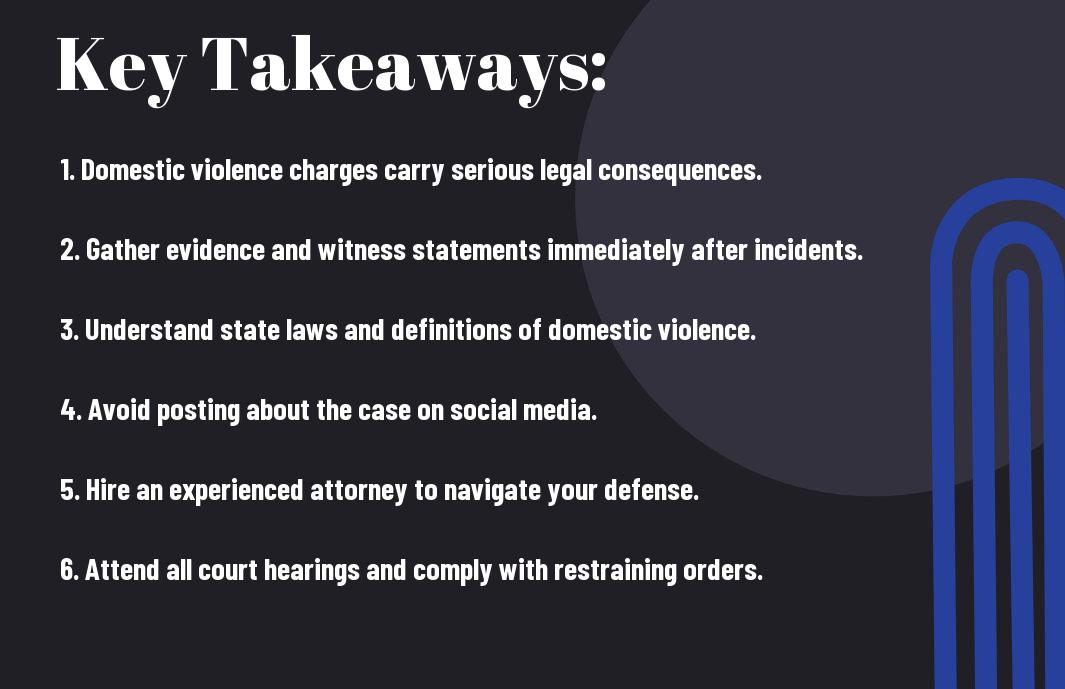
Considering all points, understanding domestic violence charges is imperative for your defense. You need to be aware of the legal implications and the potential consequences these charges may bring. Gathering evidence, seeking legal counsel, and knowing your rights can significantly impact the outcome of your case. By staying informed and proactive, you can navigate this challenging situation with clarity and ensure your voice is heard. Always prioritize your safety and well-being throughout the process.