

Most individuals might wonder whether they can face prosecution for the same offense more than once. This concept, widely known as “double jeopardy,” exists to protect you from being tried again after a verdict has been reached in your case. However, various legal nuances can complicate this issue, and understanding your rights and the legal framework is important. In this post, we will explore the double jeopardy rule, exceptions, and what it means for you in the event of a legal situation.
Understanding Double Jeopardy
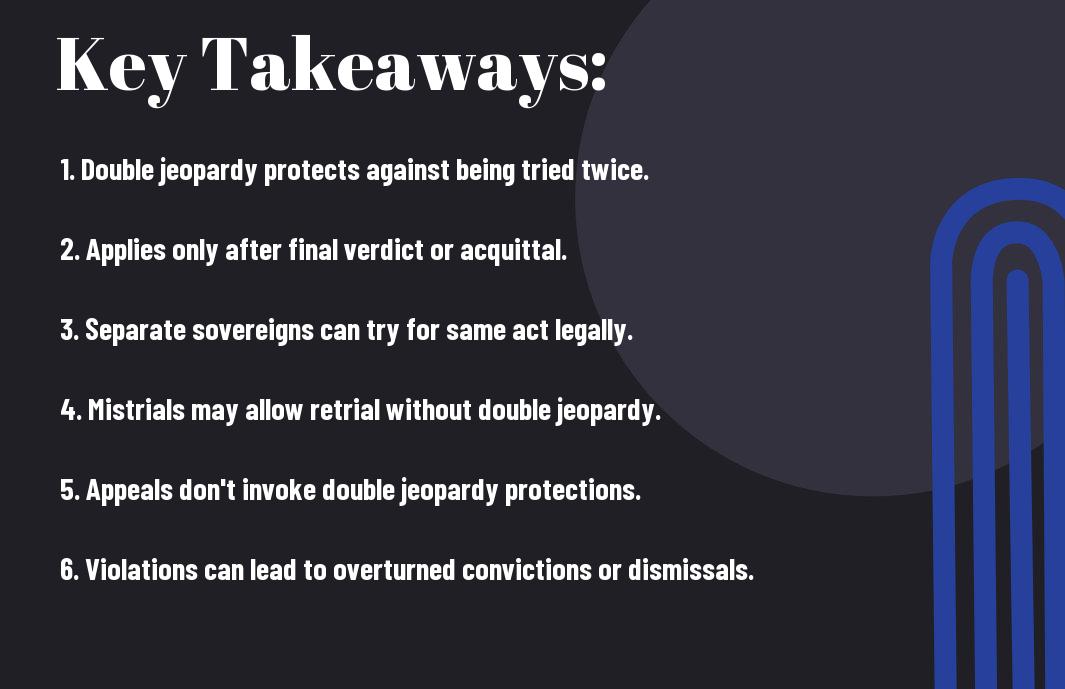
While navigating the complexities of the legal system, you may encounter the principle of double jeopardy, which protects individuals from being tried twice for the same crime. This legal doctrine is fundamental to ensuring fairness in the justice system, preventing the government from subjecting you to repeated trials for the same offense, which could be both financially and emotionally draining.
Definition and Legal Framework
At its core, double jeopardy is a legal safeguard embedded in the Fifth Amendment of the U.S. Constitution. This doctrine ensures that once you have been acquitted or convicted of a crime, the same government cannot initiate another prosecution for that identical offense, providing you with a sense of security in legal proceedings.
Historical Context
To fully grasp the significance of double jeopardy, it is helpful to look back at its historical roots. The concept dates back to ancient civilizations, including Greek and Roman law, which emphasized the necessity to protect citizens from being persecuted multiple times for the same act. Over time, this principle was adopted into common law, leading to its formal incorporation into the American legal system.
Understanding the evolution of double jeopardy illuminates its role in protecting your rights and freedoms. The principle was crafted to prevent the misuse of judicial power, ensuring that once you’ve faced justice, you can move forward without the constant threat of re-litigation. This history reflects a broader commitment to fairness and justice, key tenets in modern legal philosophy, ultimately giving you a foundation of security within the legal framework.

Exceptions to Double Jeopardy
One notable exception to the double jeopardy rule is the Separate Sovereigns Doctrine. This principle allows different jurisdictions, such as state and federal governments, to prosecute a person for the same offense without violating double jeopardy protections. Consequently, if you are acquitted in one jurisdiction, you could still face charges in another, as each government operates independently under its own laws.
Separate Sovereigns Doctrine
Across the United States, the Separate Sovereigns Doctrine is upheld, meaning that both state and federal authorities can pursue cases for the same conduct. For instance, if you are acquitted of robbery in a state court, the federal government could still prosecute you for violations related to interstate commerce stemming from that same incident. This allows for multiple prosecutions, provided they occur under different legal systems.
Civil vs. Criminal Cases
Sovereigns also delineate between civil and criminal cases, which significantly affects your legal standing. While the double jeopardy rule protects you from being tried multiple times for the same criminal offense, it does not extend to civil cases. Therefore, a civil lawsuit can be initiated against you even after a criminal trial concludes, allowing the victim to seek damages without infringing upon double jeopardy protections.
In fact, you could face a civil lawsuit for damages if found not guilty in a criminal trial for the same act. For example, if you are acquitted of assault in criminal court, the victim may still pursue a civil case against you for personal injury and seek compensation. This legal separation between civil and criminal matters means that the outcome of one does not determine the outcome of the other, allowing for different consequences under law.
The Role of Appeals
Unlike the initial trial, the appeals process allows you to challenge the outcome of your case based on legal grounds. This means you can seek a review of the trial’s procedures and findings to ensure that justice was served. An appeal does not typically re-examine the facts but focuses on whether errors in law or procedure may have influenced the verdict. Understanding this process is crucial if you wish to uphold your rights after a trial.
Impact of Successful Appeals
Among the various outcomes of the appeals process, a successful appeal can lead to a range of consequences, including the reversal of your conviction or a new trial. If the court finds significant legal errors during the original trial, it may determine that the initial ruling cannot stand. This can provide an opportunity for you to present your case again, potentially leading to a different outcome.
Retrials and New Evidence
Below the surface of successful appeals lies the possibility of retrials, particularly when new evidence emerges that could significantly alter your case. Such evidence may not have been available during your initial trial, often leading to a re-examination of the facts surrounding your case.
This new information can not only bolster your position but may also serve as the basis for a retrial. Courts typically allow new evidence to be presented if it is deemed relevant and substantial enough to merit reconsideration of the original verdict. You should note that these conditions can vary by jurisdiction, so understanding your specific legal context is key to navigating the complexities of a retrial. The potential for new evidence highlights the importance of ongoing investigation and legal representation throughout the appeals process.
Notable Cases and Precedents
Many landmark cases have shaped the understanding of double jeopardy in the United States. These precedents help you grasp the legal boundaries of being tried more than once for the same crime, providing context and insight into how the judiciary interprets this principle. This understanding is vital for anyone interested in criminal justice and the rights of the accused.
Landmark Supreme Court Decisions
Against the backdrop of double jeopardy, several Supreme Court decisions have established key legal frameworks. You should consider how these decisions not only interpret the law but also impact your rights as a defendant. Through these cases, the Supreme Court has reaffirmed the significance of protecting individuals from multiple trials for the same offense.
High-Profile Cases Involving Double Jeopardy
Cases like those of O.J. Simpson and Rod Blagojevich exemplify the complexities surrounding double jeopardy. You may find it fascinating how these high-profile scenarios brought national attention to the legal principle, highlighting the balance between justice and legal protection in your judicial system.
Another noteworthy case is that of O.J. Simpson, who was acquitted of murder charges in 1995 but later faced a civil trial for wrongful death. This instance illustrates how double jeopardy protects criminal defendants while still providing avenues for civil accountability. High-profile cases like this keep you aware of the ongoing discussions surrounding your rights under the law, particularly when the public eye is upon the courtroom dynamics. Understanding these examples can offer you a better perspective on how double jeopardy laws operate in real-life situations.

International Perspectives
Once again, the question of being tried twice for the same crime varies significantly around the globe, as different legal systems establish their own rules regarding double jeopardy. Many countries uphold the principle in their justice systems, while others navigate this issue with differing guidelines, offering insight into how diverse approaches to law can shape the outcomes of criminal trials.
Differences in Legal Approaches
International legal frameworks reflect varied perspectives on double jeopardy. Some nations, like the United States, allow defendants to be charged in both state and federal courts. In contrast, countries like the United Kingdom provide more stringent protections against retrials. Understanding these differences can help you navigate the complexities of international law.
Global Examples and Case Studies
With many countries experiencing unique legal scenarios related to double jeopardy, various case studies illustrate these differences effectively. Here are some notable examples:
- United States: A case in 2017 where a man was acquitted in state court but later charged federally for the same crime.
- United Kingdom: The 2016 landmark case where a man was retried after new evidence emerged, despite a previous acquittal.
- Australia: In 2018, a conviction was overturned and retrial permitted due to procedural errors, highlighting the nuanced application of double jeopardy laws.
- France: The legal system allows for retrials in cases of newly uncovered evidence, illustrating a more flexible approach.
- South Africa: A ruling in 2020 maintained that acquitted individuals could still face civil action for the same event.
Understanding these global examples enriches your perspective on double jeopardy laws, as they showcase how various jurisdictions handle the issue. Each case illustrates the balance legal systems seek to achieve between justice and protecting individuals from repetitive legal actions. By examining these instances, you gain insights into how different cultures and legal frameworks prioritize the rights of the accused versus the pursuit of justice.
Implications for Defendants and Victims
Not being tried twice for the same crime, known as double jeopardy, has significant implications for both defendants and victims. For defendants, it ensures legal protection from repeated prosecution, offering peace of mind after a verdict has been reached. Conversely, victims may feel a lack of closure, especially if they perceive that justice was not adequately served in the initial trial. Understanding these dynamics is vital for all parties involved in the legal process.
Legal Protections for Defendants
About the legal system, it provides clear protections for defendants against being tried more than once for the same offense. This principle serves to uphold fairness and prevent the government from using its resources to persecute individuals repeatedly. You can be assured that once a verdict is delivered, the outcome generally stands, thereby safeguarding your rights and allowing you to move forward.
Considerations for Victims’ Rights
Defendants are afforded protections against double jeopardy, but this can present challenges for you as a victim seeking justice. While the law aims to prevent wrongful prosecution, it may sometimes hinder your ability to see the perpetrator held accountable, particularly if new evidence arises post-trial. This scenario can create feelings of frustration and helplessness, especially when you believe the justice system has not fully addressed the crime committed against you.
Also, it’s important to consider that while double jeopardy protects defendants, as a victim, you might advocate for changes in the law to address such situations. Your voice can help influence whether legislative adjustments allow for exceptions in cases where new evidence emerges. Engaging with advocacy groups can empower you to push for a system that better reflects your needs and the pursuit of justice.
Final Words
With this in mind, you should be aware that the principle of double jeopardy generally protects you from being tried twice for the same crime in the same jurisdiction. However, exceptions can exist, such as mistrials or different sovereign jurisdictions. Understanding these nuances can empower you to navigate the legal landscape more effectively. If you find yourself in a situation where you question the implications of being tried again, seeking professional legal advice is important to safeguarding your rights and ensuring that you fully understand your circumstances.