

With the legal landscape constantly evolving, understanding what evidence can be used against you in court is important for protecting your rights. Whether you are facing criminal charges or involved in civil litigation, being aware of the types of evidence that may be presented during your trial is vital. From physical evidence and digital footprints to witness testimonies, each piece can have a significant impact on your case. In this blog post, we will explore the various forms of evidence that can be leveraged against you in court, ensuring you are well-informed and prepared.
Types of Evidence
While navigating the court system, it’s important to understand the various types of evidence that can be used against you. These can include:
- Witness Testimony
- Documentary Evidence
- Physical Evidence
- Digital Evidence
- Demonstrative Evidence
After recognizing these types, you’re better equipped to assess the implications of each in your legal situation.
| Type of Evidence | Description |
| Witness Testimony | Statements made by individuals who saw or heard relevant events. |
| Documentary Evidence | Written materials, such as contracts, emails, or reports. |
| Physical Evidence | Tangible items linked to the case, like weapons or clothing. |
| Digital Evidence | Data from computers or mobile devices pertinent to the case. |
| Demonstrative Evidence | Visual aids used to help illustrate facts in a trial. |
Physical Evidence
For any legal case, physical evidence plays a significant role as it encompasses tangible items that can directly connect you to an event. This can include anything from fingerprints to clothing found at a crime scene. Such evidence can be powerful in establishing facts that can work in both favorable and unfavorable ways for your situation.
Digital Evidence
Across virtually all legal matters today, digital evidence holds substantial weight and can come from a variety of sources, such as emails, social media posts, and text messages. This type of evidence can be easily accessed and used to substantiate claims or defenses in court.
Another aspect of digital evidence is its ability to depict your online actions or communications. Consider how social media activity, like posts and messages, can serve as evidence regarding your intentions or statements. Additionally, any data stored on electronic devices or cloud services may be scrutinized, potentially impacting the outcome of your case. Therefore, being aware of your digital footprint is important in preparation for a legal proceeding.
Witness Testimonies
Some witnesses may provide testimonies that can significantly impact your case. These accounts can take various forms, including firsthand observations or character references. Depending on the reliability and credibility of the witnesses, their statements may be used against you or in your favor. Understanding how these testimonies can shape the outcome of your trial is important.
Eyewitness Accounts
Around 75% of wrongful convictions involve inaccurate eyewitness identifications. Eyewitnesses may be confident in their observations, but their memories can be influenced by numerous factors, including stress and perspective. If someone claims to have seen you at the scene of a crime, their account can heavily sway a jury’s opinion about your involvement.
Character Witnesses
Testimonies from character witnesses can either support or undermine your case. These individuals, who know you well, aim to highlight your good character traits and establish your credibility. When called upon, they can provide insights into your behavior, ethics, and overall reputation, offering the court a broader understanding of who you are beyond the allegations.
In fact, character witnesses can play a pivotal role in shaping how the court perceives you. Their backing can mitigate the impact of negative evidence presented against you, establishing that you are generally a law-abiding citizen. However, it’s important to choose credible individuals who can provide honest, relevant testimonies, as any discrepancies or falsehoods can backfire and negatively affect your case.

Documentary Evidence
For many legal cases, documentary evidence plays a pivotal role in establishing the facts. This type of evidence encompasses various written materials, including contracts, agreements, emails, and any correspondence related to the matter at hand. If presented in court, documentary evidence can either support or undermine your position, influencing the outcome of your case significantly.
Contracts and Agreements
Below, you will find that contracts and agreements serve as binding documents that outline the expectations and obligations of all parties involved. Should a dispute arise, these documents can be pivotal in demonstrating what was agreed upon, making it imperative for you to fully understand their content and implications.
Emails and Correspondence
Before engaging in any written communication, consider that emails and other forms of correspondence can be used as evidence in legal proceedings. They may reveal your intentions, admissions, or vulnerabilities related to the case, thus keeping you mindful of what you say in your correspondence.
Plus, it’s important to note that emails can often contain timestamps and context that provide a clearer picture of the situation. When you send a message, you might inadvertently include information that could be construed as an admission of guilt or a lack of due diligence. Be cautious and precise with your written words, as they can carry significant weight in court.
Expert Testimonies
All expert testimonies can significantly impact your case in court. These professionals provide specialized knowledge and insights that can help the judge or jury understand complex issues related to your situation. Their opinions may sway the outcome based on credibility, education, and experience. Understanding how these testimonies work and what variables influence their effectiveness is vital for your defense strategy.
Forensic Experts
Along with their extensive training in scientific disciplines, forensic experts analyze evidence such as fingerprints, DNA, and ballistic data. Their findings can either strengthen or undermine your case, depending on how effectively their conclusions are presented in court. It is crucial to scrutinize the methodologies used in forensic testing, as any flaws could significantly affect your defense.
Subject Matter Experts
With their in-depth knowledge in specialized fields, subject matter experts provide opinions that help clarify technical aspects of a case. They can cover areas such as financial issues, medical conditions, or psychological evaluations. Their credibility is key, as their insights must be accepted by the court as reliable. Choosing the right expert, and ensuring they can communicate their findings clearly, can bolster your argument and influence the jury’s perception of your case.
Experts can examine into topics that the average juror may not fully understand. Depending on the nature of your case, these professionals can simplify complex data or explain specialized protocols, aiding in the jurors’ comprehension. Their testimony can also highlight inconsistencies in the prosecution’s narrative, offering a counter-narrative that supports your position. Therefore, aligning with a subject matter expert who can present compelling evidence is an important step toward a successful defense.
Admission of Guilt
Keep in mind that any admission of guilt can significantly impact your case in court. An admission may come in various forms, such as confessions or statements made to law enforcement, and can be used against you as strong evidence of your involvement in a crime.
Confessions
Around the country, confessions are among the most compelling types of evidence against a defendant. If you confess to committing a crime, this statement is often treated as conclusive proof by the courts. Therefore, it’s crucial to understand the weight such a confession holds and how it can be obtained, whether voluntarily or through coercive means.
Statements to Law Enforcement
Around any police encounter, what you say can be scrutinized and potentially used against you in court. Statements made to law enforcement can be interpreted as admissions of guilt if they imply your involvement in the crime. Law enforcement officers are trained to capture and document these statements, making it necessary for you to be aware of your rights and the implications of speaking without legal representation.
At the time of your questioning, it’s vital to be aware that any statements made to law enforcement can be recorded and replayed in court. These recorded statements can reveal inconsistencies or admissions that may harm your defense. Understanding the legal concept of self-incrimination ensures that you can make informed decisions about when to speak and when to seek legal counsel, safeguarding your case against self-destructive admissions.

Circumstantial Evidence
Unlike direct evidence, which directly proves a fact, circumstantial evidence relies on the inference of a fact through a series of related circumstances. This type of evidence can create a compelling narrative that implicates you or strengthens the case against you, even if it does not provide undeniable proof of guilt. In a court setting, jurors may weigh these circumstantial clues heavily, leading to potential assumptions about your actions or intentions.
Contextual Inferences
At times, circumstantial evidence can lead to contextual inferences that suggest your involvement in a crime or wrongdoing. These inferences are drawn from the surrounding circumstances or situational factors that may implicate you, such as your presence at a crime scene or possession of certain items relevant to the case. Such inferences can significantly influence the perception of your role in the situation.
Patterns of Behavior
Across various contexts, your established patterns of behavior can serve as circumstantial evidence in court. These patterns may include previous convictions, consistent habits, or similar actions that may link you to the current allegations against you. Prosecutors can draw upon these established behaviors to argue that your actions are consistent with criminal intent, further complicating your defense.
This pattern recognition can have a profound impact on your case, as jurors often rely on evidence of behavior trends to form their conclusions. If previous offenses or consistent behavior of a similar nature come to light, it may create a perception that you are prone to engage in illegal activities. Thus, understanding how your history may be interpreted is vital, as it influences both the prosecution’s arguments and the jury’s decision-making process.
To wrap up
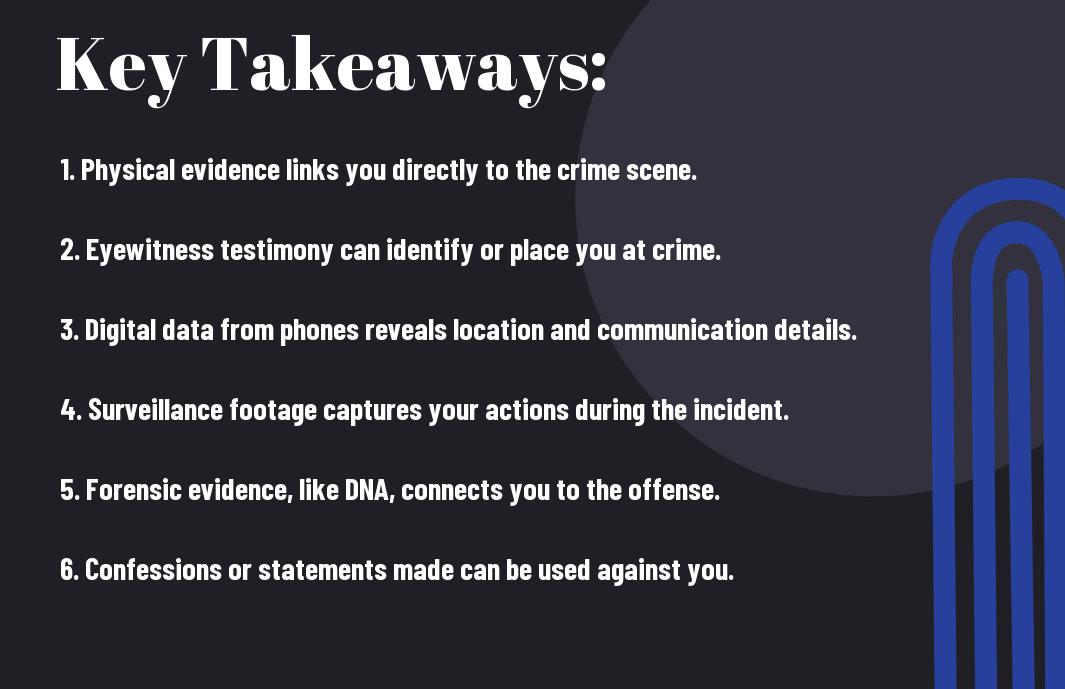
With this in mind, it’s crucial to understand that various forms of evidence can be used against you in court, including physical evidence, witness testimony, digital records, and confessions. Each type of evidence can significantly influence the outcome of your case. Knowing what may be used against you allows you to better prepare your defense, whether through legal representation or by understanding your rights during interactions with law enforcement. Awareness of these aspects can greatly impact your strategy and help you navigate the legal system more effectively.