

You may find yourself confused about the legal system, especially when it comes to understanding the difference between misdemeanors and felonies. These terms refer to different categories of crimes, each carrying distinct consequences and implications for your life. In this blog post, you will learn how these classifications differ in terms of severity, penalties, and long-term effects on your record. By grasping these distinctions, you can better navigate legal situations that may arise and make informed decisions regarding your rights and responsibilities.
Defining Misdemeanors
To understand misdemeanors, you need to know that they are less severe offenses than felonies, often resulting in less serious consequences for offenders. Typically, misdemeanors are punishable by fines, community service, or imprisonment for up to one year in local jails. These offenses vary widely, but they generally do not carry the same social stigma or long-term impact as felony charges. Knowing the difference can help you navigate the legal landscape, especially if you find yourself facing a misdemeanor charge.
Classification of Misdemeanors
Misdemeanors are usually classified into three categories: Class A, Class B, and Class C. Class A misdemeanors are the most serious and often involve significant fines and potential jail time up to one year. Class B misdemeanors are less severe, typically resulting in lighter penalties. Class C misdemeanors are the least serious, usually involving minimal fines and short-term incarceration. Each state may have its own specific classifications and penalties, so it’s imperative for you to understand the laws pertinent to your location.
Examples of Misdemeanor Offenses
Along with understanding classifications, knowing common examples of misdemeanor offenses can be beneficial. These may include petty theft, public intoxication, trespassing, and vandalism. While these offenses may seem minor compared to felonies, they can still lead to significant legal repercussions if not handled appropriately.
The range of misdemeanor offenses often covers behaviors that society generally considers unacceptable but not severe enough to warrant felony charges. Petty theft, for example, involves stealing items of minimal value, while public intoxication refers to being visibly drunk in public spaces. Trespassing is another common charge, which can arise from entering someone’s property without permission. Vandalism typically involves the intentional destruction of property. Each of these examples highlights the importance of understanding the potential consequences of your actions and navigating the legal framework that governs them.
Defining Felonies
Some offenses are classified as felonies, which are more severe crimes that typically result in heavier penalties, including imprisonment for more than one year. These serious offenses can deeply impact your future, affecting your job prospects, relationships, and reputation. Felonies vary by jurisdiction, but range from violent crimes like murder to non-violent crimes such as fraud.
Classification of Felonies
Before submerging into specific examples, it’s important to understand that felonies are often categorized based on their severity. For instance, many jurisdictions classify felonies into different degrees or classes, with first-degree felonies being the most serious and often punishable by lengthy prison sentences. Lower-degree felonies may carry less severe penalties but still have a long-lasting impact on your life.
Examples of Felony Offenses
On the topic of felony offenses, various crimes are recognized under law as felonies depending on their nature and severity. Common examples include violent offenses such as homicide, sexual assault, and robbery, as well as non-violent crimes like grand larceny and drug trafficking. Each of these offenses may carry significant penalties that can include substantial prison time, hefty fines, and lasting repercussions on your legal record.
Examples of felony offenses highlight the serious nature of these crimes. For instance, committing murder can lead to life imprisonment or even capital punishment in certain states. Similarly, engaging in sexual assault can result in decades behind bars, along with mandatory registration as a sex offender. Non-violent felonies, such as white-collar crimes involving large sums of money, can also have severe legal consequences, including lengthy prison sentences and financial restitution. Understanding these examples can help you grasp the far-reaching implications of felony convictions on your life.

Legal Consequences
After being charged with a crime, understanding the legal consequences is vital for navigating the justice system. The differences between misdemeanors and felonies extend beyond the severity of the acts; these classifications carry distinct ramifications that can impact your life for years to come. Each type of offense can lead to various penalties, which may affect your employment opportunities, housing options, and overall well-being.
Penalties for Misdemeanors
Below are the typical penalties you can expect for misdemeanor charges. These usually include fines, community service, probation, or incarceration for up to one year. The specific consequences may vary depending on the state and the nature of the offense, but they generally result in less severe impacts compared to felony charges.
Penalties for Felonies
Penalties for felonies can be significantly more severe, often involving lengthy prison sentences, hefty fines, and other long-lasting consequences.
Misdemeanors tend to have less overwhelming penalties, but felonies can carry prison terms typically exceeding one year. Some felonies may even result in life sentences for the most serious offenses. Additionally, a felony conviction can lead to loss of certain rights, such as voting or owning firearms, and create challenges in finding employment or housing. Therefore, understanding the implications of a felony charge is crucial for your future.
Impact on Personal Records
Not all criminal charges carry the same weight in your personal records. Understanding the distinction between misdemeanors and felonies is crucial to grasp how each level of offense can affect your future.
Criminal Records for Misdemeanors
Below the severity level of felonies, misdemeanors are less impactful on your criminal record. Generally, misdemeanor charges can remain on your record for several years but may be eligible for expungement sooner, depending on state laws. This means that while they do have an effect on your background checks, they are often easier to overcome when applying for jobs, housing, or educational opportunities.
Criminal Records for Felonies
Records of felony convictions can have a long-lasting impact on your life and personal records. Unlike misdemeanors, felony charges usually remain on your record indefinitely and can influence opportunities in various aspects, such as employment, housing, and even voting rights. Many employers and organizations conduct background checks where felony records may be visible, making it important to understand how to navigate these implications.
Criminal records for felonies signal serious offenses, leading to greater scrutiny in professional and social scenarios. Employment applications often ask about felony convictions, and certain professions may prohibit hiring individuals with such records. While you may eventually have avenues to seek expungement or restoration of rights, the initial impact can be daunting and requires careful consideration as you move forward in life.
Jurisdictional Variations
Many factors contribute to the discrepancies in how misdemeanors and felonies are classified and punished across different jurisdictions. Each state or federal jurisdiction has its own legal definitions and frameworks that determine the severity of a crime and its corresponding penalties. Understanding these variations can help you navigate the legal landscape more effectively and be informed about the legal implications in your specific location.
State vs. Federal Definitions
About the classification of crimes, state and federal laws often differ significantly. While both frameworks delineate misdemeanors and felonies, the criteria, definitions, and penalties vary widely. You may find that offenses considered misdemeanors at the state level could be classified as felonies under federal law, reflecting the complexities of the legal system.
Variations in Punishments
Jurisdictional differences also lead to variations in the punishments associated with misdemeanors and felonies. For instance, while a misdemeanor might carry a maximum sentence of one year in a local jail in one state, another state may enforce harsher penalties, including longer incarceration or fines. Make sure you understand the specific laws in your area so you are aware of the potential consequences you may face if charged with a crime.
At the core of these considerations is the reality that punishments for misdemeanors and felonies can range greatly not only by crime type but also depending on where the crime was committed. In some jurisdictions, the same offense may result in different penalties or legal outcomes. It is imperative to consult local laws or seek legal advice to grasp the specific repercussions within your jurisdiction, as this knowledge empowers you to make informed decisions and understand the potential legal consequences you may encounter.
Resolution and Rehabilitation
Keep in mind that resolving a criminal charge goes beyond punishment; it often involves rehabilitation to help you reintegrate into society. Misdemeanors typically offer opportunities for alternative sentencing, community service, or diversion programs aimed at preventing future offenses. Felonies, on the other hand, may result in more severe consequences but also provide access to more structured rehabilitation options. Your path to resolution is ultimately shaped by the nature of the offense, your personal circumstances, and the legal framework in your jurisdiction.
Options for Misdemeanor Offenders
With misdemeanors, you often have access to various options that focus on rehabilitation rather than incarceration. Community service, probation, and enrollment in treatment programs can help you avoid a criminal record while also addressing the underlying issues that led to your offense. These alternatives promote personal growth and allow you to contribute positively to society, making it easier for you to move forward without the burden of a conviction.
Options for Felony Offenders
Between misdemeanors and felonies, the options for felony offenders tend to be more complex and may include parole, rehabilitation programs, and reduced sentencing under specific circumstances. The legal system often emphasizes the importance of addressing the root causes of criminal behavior through structured programs designed for long-term change.
Options for rehabilitation in felony cases might include vocational training, counseling, and substance abuse treatment. These programs aim to equip you with the skills and support necessary for a successful reintegration into society. Engaging actively in these rehabilitative services can help mitigate sentencing and lead to a more positive outcome in your life, ultimately reducing the risk of reoffending.
To wrap up
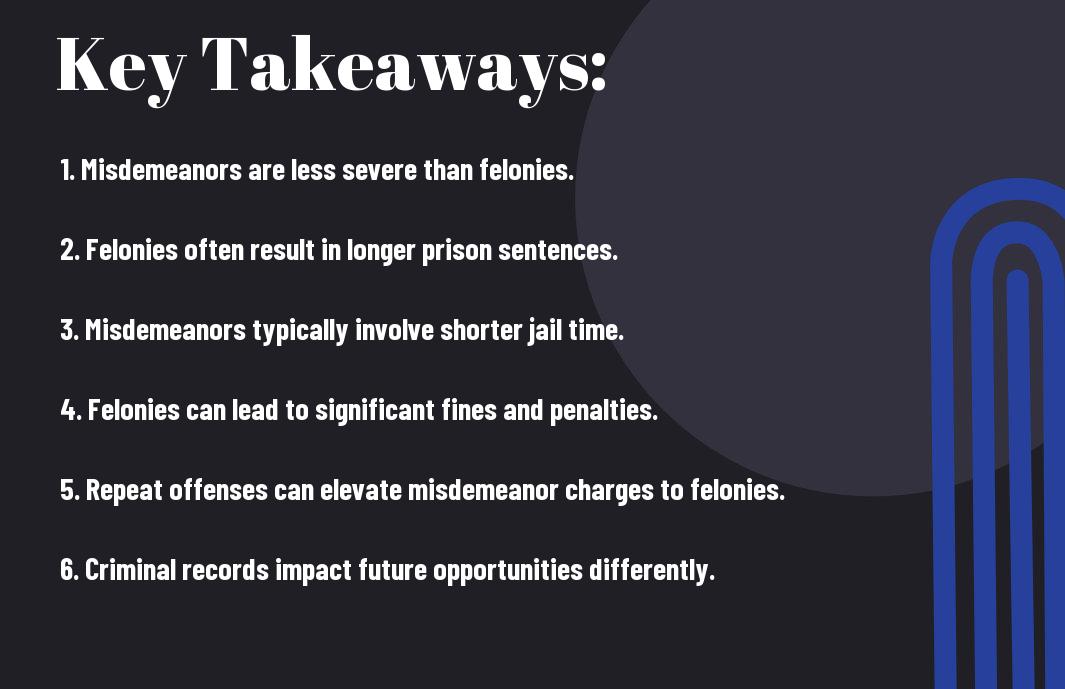
Considering all points, understanding the difference between misdemeanors and felonies is imperative for you as it directly impacts the legal consequences you may face. Misdemeanors are generally less severe offenses with lighter penalties, while felonies involve more serious criminal activities with harsher punishments, including possible prison time. This knowledge can help you make informed decisions, whether you are navigating a legal situation or simply seeking to better understand the justice system. Being aware of these distinctions equips you to engage more effectively with legal matters that may arise in your life.