

You may find yourself wondering about the distinctions between state and federal criminal charges, especially if you or someone you know is facing legal issues. Understanding these differences is necessary, as they significantly affect the nature of the charges, the legal processes involved, and the potential consequences. State charges are typically enforced by local or state authorities, while federal charges are brought by the federal government, often involving federal laws. In this post, you will learn about the key differences that could impact your case.

Overview of Criminal Charges
For individuals navigating the legal system, understanding the nature of criminal charges is key. Criminal charges represent formal accusations brought against individuals for violating laws, which can significantly impact your life. The distinction between state and federal charges can affect the legal process, potential penalties, and your defense options.
Definition of Criminal Charges
With a criminal charge, you are being accused of committing an offense that violates laws established by governing authorities. These charges initiate legal proceedings and can lead to various outcomes based on the severity and nature of the offense.
Types of Criminal Charges
Understanding the various types of criminal charges is important as they can be classified based on severity and the legal system handling them. Common categories include:
- Felonies
- Misdemeanors
- Infractions
- Violent Crimes
- Property Crimes
This classification helps you comprehend the potential repercussions of different offenses.
| Type of Charge | Description |
| Felony | Serious offenses punishable by more than one year in prison. |
| Misdemeanor | Less serious offenses typically resulting in less than one year of incarceration. |
| Infraction | Minor violations often subject to fines rather than jail time. |
| Violent Crime | Crimes involving force or threat against others. |
| Property Crime | Crimes involving theft or destruction of property. |
Understanding the different types of criminal charges can help you identify the risks and legal actions involved. Knowing the specific nature of your charge can guide you in seeking appropriate legal representation. Here are some key points about criminal charges:
- Each type carries different penalties.
- Some charges can involve more complex legal proceedings.
- Legal protections vary based on the type of charge.
- Your defense strategy may differ depending on the charge.
- Potential outcomes and repercussions vary significantly.
This knowledge equips you to make informed decisions regarding your case.
| Charge Type | Potential Outcomes |
| Felony | Long-term imprisonment and severe penalties. |
| Misdemeanor | Shorter jail time and fines. |
| Infraction | Minor penalties, such as fines or community service. |
| Violent Crime | Lengthy sentences and restitution to victims. |
| Property Crime | Possibility of jail time and obligation to compensate the victim. |

State Criminal Charges
The state criminal charges are offenses that violate the laws enacted by individual states. These charges are typically prosecuted by the state’s attorney or district attorney in a state court. The consequences for state criminal offenses can vary widely depending on the crime, ranging from fines and community service to imprisonment. Understanding the nature of state-level offenses is imperative for navigating the legal system effectively and ensuring that you are aware of your rights and obligations.
Jurisdiction and Authority
For a crime to be classified as a state charge, it must occur within that state’s borders, and the governing authority arises from the state legislature. Each state has its own laws and penal codes that outline the types of crimes and the corresponding penalties. Consequently, understanding jurisdiction is vital for recognizing your legal standing and the potential implications of your actions within that particular state.
Common State Crimes
About the types of crimes typically classified as state offenses, they can include theft, assault, DUI (driving under the influence), and drug offenses. These crimes can vary in severity, with some classified as misdemeanors and others as felonies. Each state has its own specific laws that govern these crimes, which can directly affect the penalties and consequences you may face.
Crimes such as theft involve unlawfully taking someone else’s property, while assault pertains to causing physical harm or the threat of harm to another person. DUI charges are serious offenses that entail operating a vehicle while impaired by alcohol or drugs. Drug offenses can range from possession of small amounts of illicit substances to trafficking larger quantities, each leading to significant legal repercussions. Understanding these common state crimes helps you navigate your legal landscape and make informed decisions should you find yourself entangled in legal proceedings.
Federal Criminal Charges
To understand federal criminal charges, you must recognize that they are brought under federal law and prosecuted in federal court. These charges typically involve offenses that cross state lines or arise under federal statutes, addressing issues such as immigration, drug trafficking, and white-collar crimes. Federal prosecution often involves more severe penalties than state charges due to the nature and complexity of the crimes involved.
Jurisdiction and Authority
An necessary aspect of federal criminal charges is the jurisdiction and authority of federal courts. These courts operate under the U.S. Constitution and federal laws, allowing them to act on matters that involve national interests or federal statutes. You may find that federal law supersedes state law in certain cases, meaning that if a conflict arises, federal law will prevail.
Common Federal Crimes
Jurisdiction over common federal crimes usually includes offenses such as drug trafficking, bank fraud, wire fraud, and immigration violations. These crimes can significantly impact national security or the economy, thus warranting federal enforcement. You should be aware that federal charges often carry harsher penalties, reflecting the seriousness of these offenses.
Federal offenses encompass a wide range of illegal activities. Federal law specifically targets crimes like money laundering, racketeering, and cybercrimes, which often have broader implications beyond local jurisdictions. Should you find yourself facing federal charges, it is necessary to consult with an attorney experienced in federal law to navigate the complex legal landscape and understand the potential consequences of your situation.
Key Differences Between State and Federal Charges
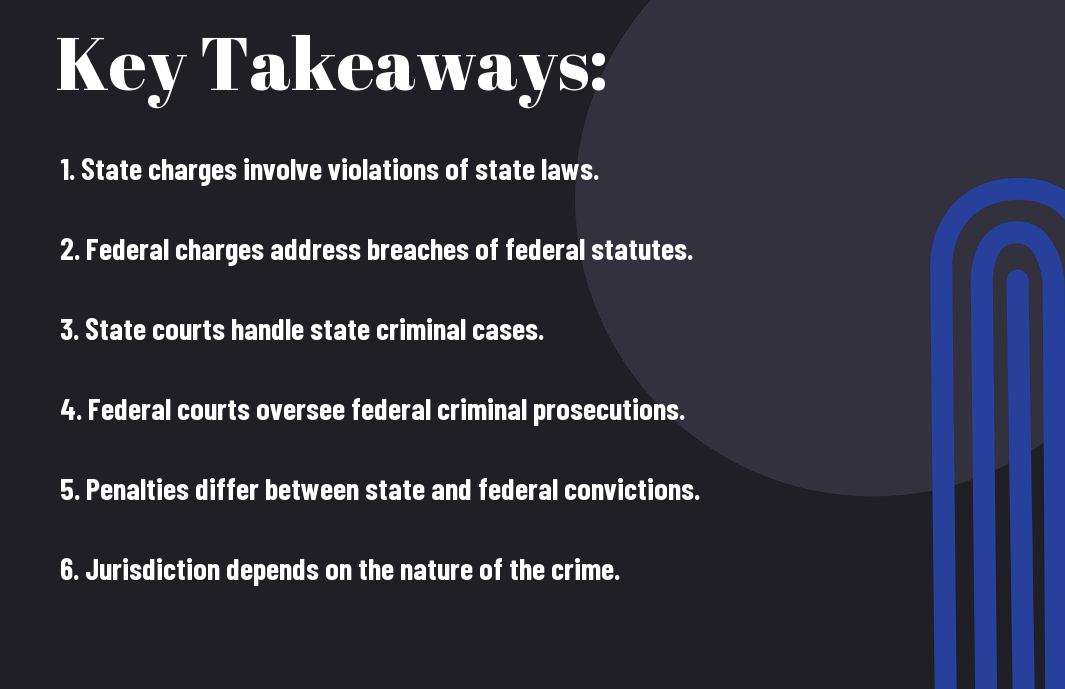
Despite both state and federal criminal charges addressing illegal activities, there are fundamental differences in jurisdiction, prosecution, and enforcement. State charges typically involve violations of state laws, while federal charges pertain to violations of federal laws. This distinction impacts how cases are handled, including the agencies involved and the severity of penalties. Your choice of legal representation may also vary based on the specific charges you face, leading to different legal strategies tailored to either state or federal court procedures.
Legal Procedures and Processes
At the core of the legal system, state and federal criminal charges follow distinct procedures. Federal cases are usually subject to stricter rules and regulations, such as grand jury indictments. You may encounter longer pre-trial processes and a formal discovery phase in federal cases compared to state charges, which might have more streamlined procedures. This difference can affect how quickly your case is resolved and the types of evidence presented during the trial.
Penalties and Sentencing
State charges often carry different penalties compared to federal charges, which can significantly impact your future. State penalties typically involve less severe consequences, focusing on rehabilitation and restitution. Federal charges, however, tend to result in harsher sentences, often including mandatory minimums, longer incarceration periods, and extensive fines.
With federal sentences typically being more severe, you may face longer prison terms and greater financial penalties when convicted of federal offenses. Additionally, state courts may offer more lenient sentencing options, such as probation or alternative sentencing programs. Understanding these potential ramifications is imperative in navigating your case effectively, as your defense strategy should align with the type of charges you are facing.
Impact on Defendants
All criminal charges can significantly affect a defendant’s life, influencing their future opportunities, employment prospects, and personal relationships. The nature of the charges—state or federal—can also determine the severity of potential penalties and the seriousness of the case. You need to understand how these differences can shape your legal outcome and everyday life, ensuring you are prepared for the challenges ahead.
Rights and Protections
One key aspect of criminal charges is your rights and protections under the law. State and federal systems offer different sets of rights, with federal cases often involving more comprehensive procedural safeguards. These protections can include your right to remain silent, the right to a fair trial, and the right to legal counsel. Understanding these rights is necessary for effectively navigating the legal process.
Legal Representation Options
Representation in criminal cases can vary significantly depending on whether you are facing state or federal charges. Each system has its own complexities that require specialized legal knowledge for optimal outcomes.
But navigating the landscape of legal representation can be daunting. In state cases, you may find local attorneys familiar with local laws and procedures, while federal cases often necessitate attorneys specialized in federal legislation. Choosing the right attorney with a solid understanding of your specific charges is vital in building a strong defense and protecting your rights. Assess their experience, reputation, and approach to ensure they align with your needs for the best possible outcome.
Conclusion
The difference between state and federal criminal charges significantly impacts your legal situation, including the severity of penalties and the court process involved. Understanding which jurisdiction applies to your case can aid in crafting a legal strategy. State charges often pertain to local laws, while federal charges involve violations of national laws. Engaging with a knowledgeable attorney can help clarify these distinctions and ensure you navigate your specific circumstances effectively.