

GunRights can be a complex area, especially when it comes to how criminal convictions impact your ability to own firearms. If you have a criminal record, it’s crucial to understand the legal ramifications that may affect your gun ownership rights. This post will guide you through the nuances of the law, helping you navigate how different types of convictions may restrict your access to firearms and what steps you might consider for reinstatement of rights, if applicable.
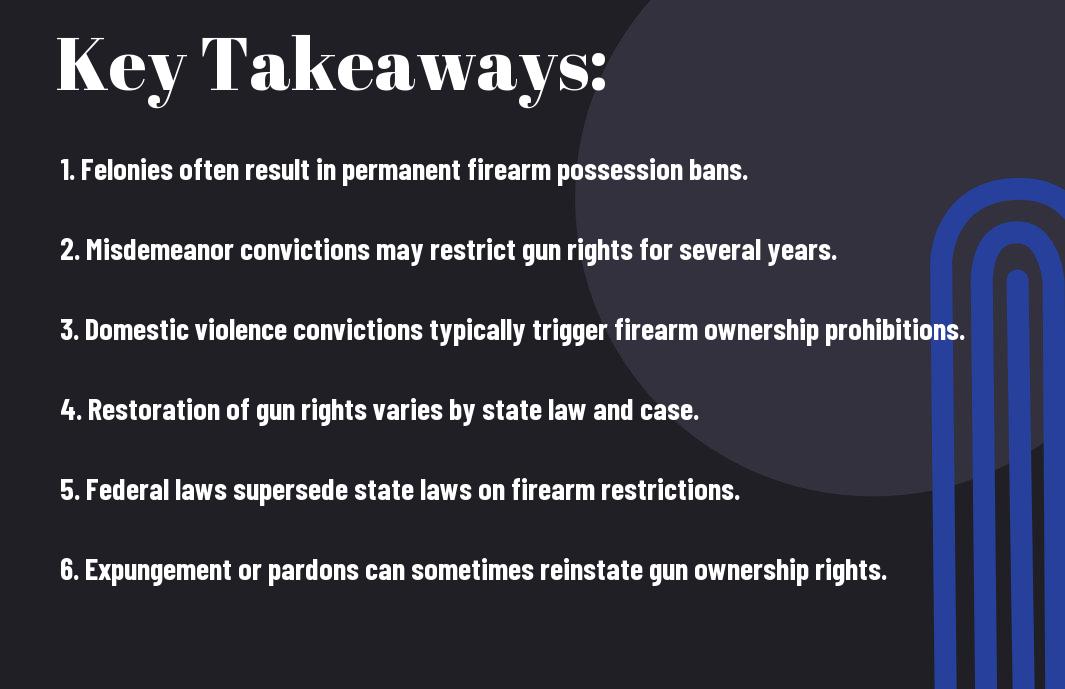
Overview of Gun Ownership Rights
While gun ownership rights are rooted in the Second Amendment of the United States Constitution, various factors influence who can legally own a firearm. It is necessary for you to understand that these rights can be impacted by criminal convictions, mental health considerations, and other legal stipulations. Your ability to purchase and possess firearms may change based on federal and state laws, making it important to be informed about the regulations that apply to your situation.
Federal Gun Ownership Laws
Beside the state-level regulations, federal laws establish baseline criteria for gun ownership in the United States. Under the Gun Control Act of 1968, individuals with certain felony convictions, domestic violence misdemeanors, or restraining orders may be prohibited from owning firearms. You should be aware that these laws serve as a framework across the country, affecting your eligibility to own guns based on specific criminal backgrounds.
State-Specific Regulations
Among the variations in gun ownership laws, state-specific regulations can further dictate your rights to possess firearms. Each state has the authority to create its own laws that may impose additional restrictions or provide more lenient standards than federal guidelines. Therefore, you need to consider both the federal and state laws applicable to your situation to fully understand your rights.
Hence, navigating state-specific regulations is necessary for determining your gun ownership rights. Some states may have waiting periods, licensing requirements, or additional checks that can affect your ability to purchase firearms. For example, states like California and New York enforce stricter laws that limit ownership for individuals with certain convictions, while others may have more lenient regulations. Understanding these nuances will help you comprehend how your criminal record, if applicable, can influence your eligibility for gun ownership in your respective state.
Impact of Felony Convictions
There’s a significant impact on your gun ownership rights if you have a felony conviction. Generally, a felony can lead to the loss of your right to purchase, own, or possess firearms. This restriction is designed to promote public safety, and it can affect you for years, or even a lifetime, depending on the nature of your conviction and the circumstances surrounding it.
Loss of Rights in Federal Law
Against federal law, individuals convicted of felonies are prohibited from owning or possessing firearms. This applies to any felony conviction, regardless of the specifics. Once you have been convicted, you need to navigate a complex legal landscape to potentially restore your rights, involving various legal processes and requirements.
Variations Across States
Behind federal law, individual states have their own regulations regarding gun ownership for those with felony convictions. While some states impose stringent restrictions, others may allow you to regain your rights after a certain period or through specific processes. Understanding your state’s laws is vital for determining your eligibility for gun ownership.
A closer look at state variations reveals a complex legal landscape. Each state sets its own rules about the restoration of gun rights following a felony conviction. Some states may automatically restore your rights after a parole period, while others require additional steps such as applying for a certificate of restoration or appealing for rights reinstatement. It’s vital that you familiarize yourself with your state’s laws to understand your rights and obligations regarding gun ownership.
Misdemeanor Convictions and Gun Rights
Now, understanding how misdemeanor convictions impact your gun ownership rights is necessary. While misdemeanors are less severe than felonies, they can still affect your ability to possess firearms in various states, depending on the nature of the offense and local laws.
Definition and Implications
Convictions for misdemeanors typically involve minor offenses, such as petty theft or simple assault. While these crimes may not carry the same weight as felonies, they can still lead to restrictions on your right to own or possess a firearm, especially if they are categorized as violent or involve a weapon.
State Responses to Misdemeanor Convictions
An increasing number of states are enacting laws that limit firearm access for individuals with misdemeanor convictions. The specific restrictions can vary significantly, influencing whether you can legally own a gun even after a minor offense.
Also, different states have different criteria regarding which misdemeanors can lead to gun ownership restrictions. Some states may impose a waiting period or require you to complete a rehabilitation program before regaining your rights. Others might restrict firearm possession only for certain violent misdemeanors, while others apply blanket restrictions. Understanding your state’s specific laws is vital to ensuring you remain compliant and informed about your rights.

Restoration of Gun Ownership Rights
Once again, restoring your gun ownership rights after a criminal conviction can be an intricate process, depending on the nature of your offense and the laws in your state. In some jurisdictions, a felony conviction leads to an automatic loss of your rights, while others may allow for a pathway to regain them. Understanding the specific requirements and procedures in your area is important for navigating this complex landscape.
Process for Gun Rights Restoration
About the restoration process, you may need to apply for a pardon or seek relief from disability through a petition, depending on your conviction. This process often involves submitting documentation, demonstrating rehabilitation, and sometimes appearing before a board or court. Each state has its unique requirements, so familiarizing yourself with the local laws regarding restoration will be vital.
Challenges to Restoration
Rights restoration often comes with numerous challenges that may complicate your path. Even if you meet eligibility requirements, bureaucratic red tape and varying state laws can hinder your applications. In addition, there can be stigma associated with your criminal record that makes navigating the system feel daunting.
And while you may fulfill all necessary criteria, delays in processing applications and the unpredictability of decisions can pose significant impediments. Eligibility does not guarantee success, and it is important to have patience and persistence throughout the process. Seeking legal counsel familiarity with gun laws can help you overcome these hurdles and improve your chances of restoring your rights.

Advocacy and Legal Assistance
All individuals affected by criminal convictions should be aware of the advocacy and legal assistance available to navigate the complexities of gun ownership rights. Engaging with organizations dedicated to restoring these rights can provide you with valuable resources and support tailored to your situation. Whether you’re seeking guidance on policy changes or assistance with your legal process, there are avenues to explore that align with your needs.
Organizations Supporting Restoration
About various organizations play a significant role in advocating for the restoration of gun ownership rights for those with criminal records. These organizations aim to educate you about your rights and assist you in the legal processes available to regain your rights, providing important resources and support throughout your journey.
Legal Resources Available
Behind the process of regaining your gun rights lies a wealth of legal resources designed to assist you in understanding the requirements and steps involved. From informational websites to legal clinics, there are resources that can guide you. Additionally, many attorneys specialize in this area, ready to provide tailored advice based on your circumstances.
Considering your options is vital when seeking legal assistance related to gun ownership rights. Numerous online platforms, local legal aid services, and law firms specialize in firearms law and can help you understand your state’s regulations. Engaging with these resources can clarify your path toward restoring your rights, ensuring you remain informed and prepared for the process ahead. You can take proactive steps to navigate this complex legal landscape with the right guidance.
Final Words
Taking this into account, it’s vital for you to understand how criminal convictions can significantly impact your gun ownership rights. Depending on the nature of the conviction, you may find yourself facing restrictions or even prohibitions on owning firearms. It’s advisable to familiarize yourself with local laws and regulations, as they can differ widely between jurisdictions. If you have concerns about how your record may affect your rights, consulting a legal professional can provide you with guidance tailored to your specific situation.