
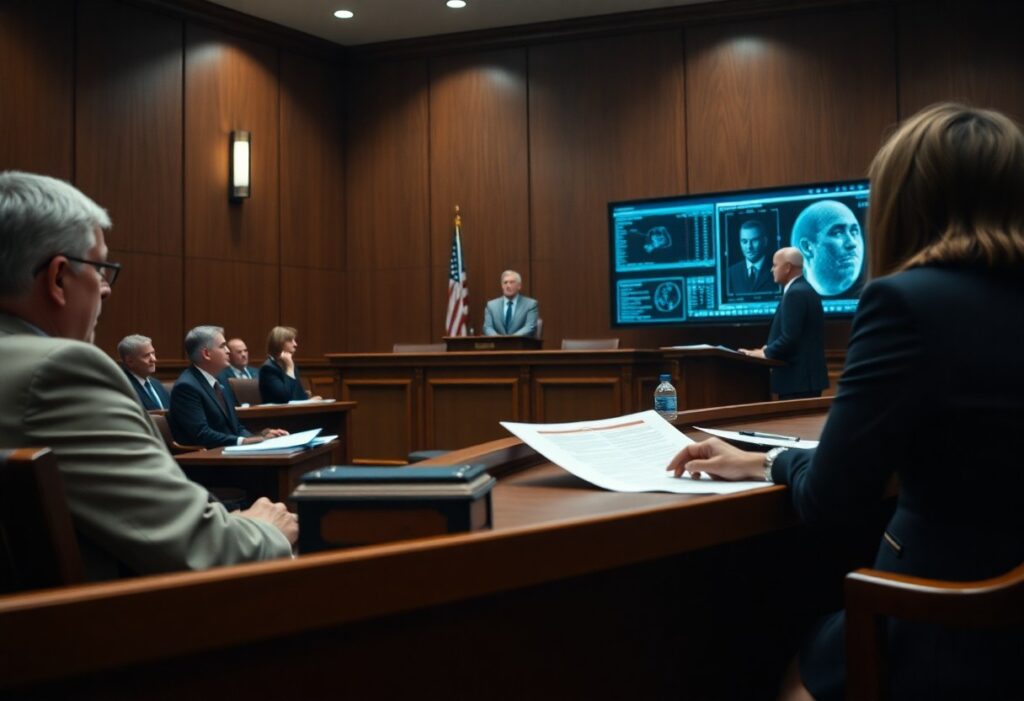
Many aspects come into play during criminal trials, but the role of evidence stands out as a fundamental element that shapes outcomes and influences justice. Understanding how various types of evidence—whether it be testimonial, physical, or circumstantial—impact a trial can provide you with insights into the legal process. This knowledge empowers you to appreciate the intricate relationship between evidence and judicial decisions, revealing how it not only determines guilt or innocence but also affects the broader implications for justice within society.
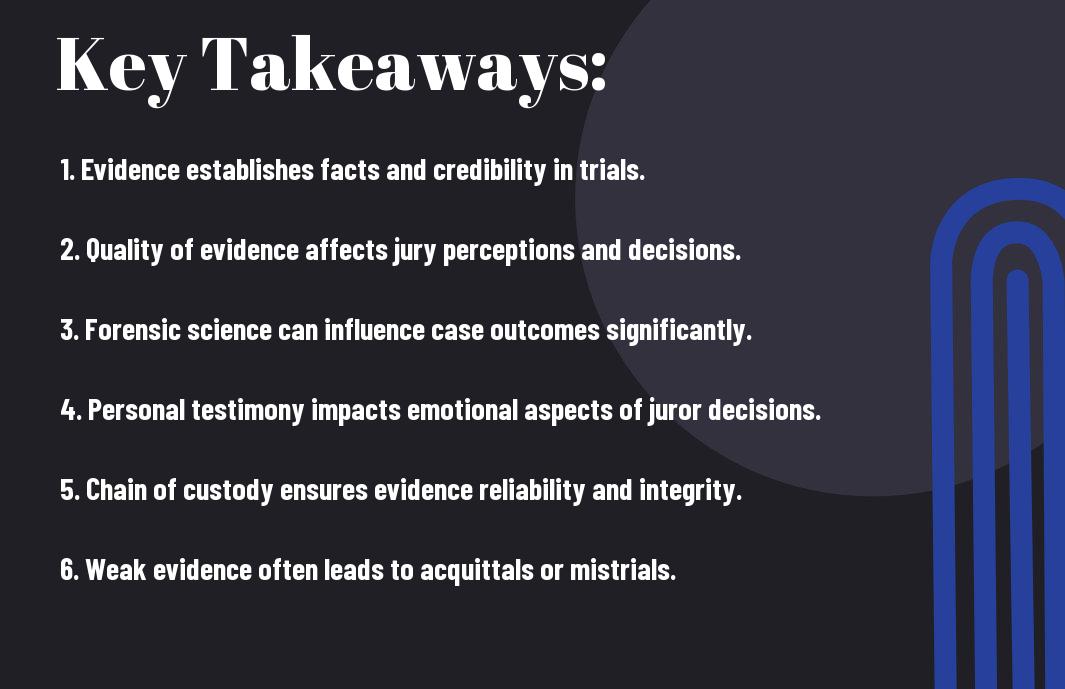

The Fundamentals of Evidence in Criminal Law
For anyone navigating the criminal justice system, understanding the fundamentals of evidence is vital. Evidence serves as the backbone for establishing facts in legal proceedings, influencing judgments and outcomes. The admissibility and weight of evidence can determine the course of trials, impacting both defendants and victims. Familiarizing yourself with types, standards, and best practices related to evidence is key to navigating criminal law effectively.
Types of Evidence: Direct, Circumstantial, and Documentary
For your case to be strong, you must understand the different types of evidence available.
| Type of Evidence | Description |
|---|---|
| Direct Evidence | Evidence that directly links a defendant to a crime. |
| Circumstantial Evidence | Evidence that implies a fact but does not prove it directly. |
| Documentary Evidence | Written or recorded evidence, such as documents or recordings. |
| Physical Evidence | Tangible items that can be presented in court, like weapons or DNA. |
| Testimonial Evidence | Statements made by witnesses under oath. |
- Direct evidence provides clear proof.
- Circumstantial evidence requires interpretation.
- Documentary evidence strengthens your case.
- Physical evidence offers tangible links.
- Testimonial evidence adds human perspective.
Any of these types can play a pivotal role in shaping the narrative of your case.
Standards of Admissibility: Relevance, Reliability, and Legal Constraints
To build a compelling case, you must grasp the standards of admissibility that govern evidence in criminal law. This ensures that the evidence you rely on is both pertinent to your case and trustworthy. Courts evaluate evidence based on its relevance to the case, its reliability, and whether it complies with legal constraints.
The determination of admissibility hinges on the relevance and reliability of the evidence presented. Evidence must sufficiently connect to the facts at hand, ensuring it aids in establishing your argument. Reliability demands that the evidence can withstand scrutiny, maintaining its integrity under examination. Legal constraints, such as the rules of procedure, dictate what may be permitted in court. By understanding these standards, you can better assess the strength and impact of the evidence in your criminal case.

Evidence Collection and Preservation
Now, you need to recognize that the integrity of evidence is vital in criminal trials. Proper collection and preservation techniques ensure that the evidence remains admissible and reliable in court. This process involves following established protocols, documenting everything meticulously, and handling items with care to prevent contamination or degradation that could compromise your case.
Chain of Custody Requirements
Any lapse in the chain of custody can jeopardize the validity of evidence presented in court. To maintain this chain, it’s necessary to document who handles the evidence, when they do so, and how it’s stored. Each individual involved must sign a custody form, thus confirming their responsibility in preserving the integrity of the evidence from the crime scene to trial.
Technological Advancements in Forensic Evidence Collection
Among the advancements in forensic science, you’ll find remarkable techniques that enhance the accuracy and reliability of evidence collection. For example, 3D scanning and digital imaging provide precise reconstructions of crime scenes, while advancements in DNA analysis allow for faster and more reliable results, helping to establish connections between suspects and the evidence.
For instance, DNA profiling has evolved significantly, enabling forensic scientists to analyze smaller samples with greater precision. Tools like advanced swabbing techniques and automated extraction processes allow you to gather crucial genetic material from crime scenes more efficiently. Additionally, the use of artificial intelligence in analyzing evidence can reveal patterns and connections that traditional methods might overlook, ultimately influencing case outcomes and the pursuit of justice.
Expert Testimony and Scientific Evidence
Once again, the integration of expert testimony and scientific evidence plays a pivotal role in criminal trials. These elements help clarify complex issues for the jury, offering specialized knowledge that shapes the understanding of critical facts. Whether it’s forensic analysis, psychological evaluations, or technical insights, expert evidence can sway the outcome of a case, affirming the importance of scientific credibility in the pursuit of justice.
Qualifying Expert Witnesses
Above all, qualifying expert witnesses is vital in ensuring that only those with relevant expertise provide testimony in court. This process typically involves demonstrating their qualifications, experience, and knowledge in a particular field. By adhering to established standards, courts can uphold the integrity of the trial, ensuring that jurors receive only reliable and pertinent information.
Challenges to Scientific Methodology and Reliability
On occasion, the methodology and reliability of scientific evidence can be questioned, raising doubts about its applicability in criminal trials. Challenges may arise concerning the techniques used for data collection, analysis, or interpretation, highlighting the potential for error and bias.
Expert testimony may not be infallible; various factors can challenge the scientific methodology and its reliability, such as the quality of evidence, interpretation by experts, or the reproducibility of results. Defense attorneys may scrutinize the methods employed by expert witnesses, questioning the assumptions underlying their conclusions. Additionally, the potential for human error or bias in interpretation can further complicate the validity of scientific evidence. Thus, you must be aware that while expert testimony can be influential, it is not beyond examination and critique, ensuring a thorough presentation of justice.

Constitutional Limitations on Evidence
Keep in mind that constitutional limitations are fundamental in shaping the admissibility of evidence in criminal trials. These limitations ensure that the evidence used against you is collected in accordance with your rights and upholds the principles of justice and fairness.
Fourth Amendment Protections Against Unreasonable Searches
Beside guaranteeing your right to privacy, the Fourth Amendment protects you from unreasonable searches and seizures by requiring law enforcement to have probable cause and a warrant. This safeguard ensures that the government cannot intrude upon your personal space without just cause, thereby maintaining the integrity of the evidence collected.
Exclusionary Rule and Fruit of the Poisonous Tree Doctrine
On the other hand, the Exclusionary Rule serves to deter law enforcement from violating your Fourth Amendment rights. Evidence obtained through illegal means is typically inadmissible in court, illustrating the principle that tainted evidence cannot be used against you.
In addition, the Fruit of the Poisonous Tree Doctrine expands upon the Exclusionary Rule by prohibiting not only the use of illegally obtained evidence but also any additional evidence derived from that initial taint. If the police obtain evidence through an unconstitutional search, any subsequent evidence that stems from that illegality can also be excluded. This doctrine aims to prevent law enforcement from benefiting from their unlawful actions and reinforces the importance of adhering to constitutional protections during evidence collection.
The Prosecution’s Burden of Proof
After an alleged crime occurs, the prosecution holds the responsibility to establish the defendant’s guilt. This burden of proof is a fundamental principle in criminal law, requiring the prosecution to present compelling evidence to secure a conviction. You should understand that this burden plays a critical role in maintaining justice, as it ensures that the state proves its case before any penalties are imposed on the accused.
Beyond Reasonable Doubt Standard
About the burden of proof in a criminal trial, it is vital to acknowledge the “beyond reasonable doubt” standard. This high threshold reflects the serious nature of criminal charges and prioritizes the protection of individuals’ rights. You will find that jurors are instructed to only convict the defendant if they are fully convinced of their guilt, minimizing the risk of wrongful convictions.
Impact of Evidence Quality on Conviction Rates
Doubt about the quality of evidence presented can significantly affect conviction rates. When evidence is weak or poorly collected, jurors may hesitate to convict, weighing justice heavily against the potential consequences of a wrongful judgment. Your understanding of this dynamic emphasizes the importance of robust and reliable evidence in influencing trial outcomes.
And the quality of evidence you encounter at trial often determines whether a jury feels confident in their verdict. High-quality evidence, such as forensic data or credible eyewitness accounts, can bolster the prosecution’s case and lead to higher conviction rates. Conversely, if you are faced with unreliable or circumstantial evidence, jurors may be less likely to find the defendant guilty. This relationship between evidence quality and conviction highlights your need to critically assess the reliability of the evidence presented throughout the trial process.
Defense Strategies in Evidence Presentation
Not all evidence presented in a trial is definitive. Defense strategies often focus on scrutinizing the prosecution’s evidence to identify weaknesses or biases. By challenging the credibility, reliability, and relevance of witness testimonies and physical evidence, you can create reasonable doubt in the minds of jurors, which may lead to a favorable outcome for the defendant.
Challenging Prosecution Evidence
Defense attorneys play a key role in dismantling the prosecution’s case by exposing flaws in their evidence. They analyze the methodology used to gather evidence, question the integrity of witness accounts, and highlight any procedural mistakes made during the investigation. By establishing inconsistencies or doubts, you can significantly undermine the prosecution’s narrative.
Affirmative Defenses and Supporting Evidence
On the other hand, affirmative defenses offer alternative explanations for your actions, often accompanied by supporting evidence. These defenses can turn the tide of a trial by providing an explanation that excuses or justifies behavior, thereby shifting the burden of proof back to the prosecution. Examples include self-defense, insanity, or alibi defenses.
Defenses in the affirmative category require you to present evidence that supports your claim, which might involve witness testimonies, expert opinions, or documentation. Successful implementation of these defenses not only provides a counter-narrative to the prosecution’s case but also illustrates a plausible reason for your actions. This approach can compel the jury to reconsider their stance, leading to a more favorable verdict. Your strategic presentation of evidence plays a vital part in substantiating these defenses and can ultimately influence the trial’s outcome.
Conclusion
Considering all points, your understanding of the role of evidence in criminal trials is vital to grasp how it shapes outcomes and influences justice. The types and quality of evidence presented can significantly sway jurors and judges and ultimately determine the verdict. By appreciating the complexities involved in evidence handling, collection, and interpretation, you are better equipped to recognize its profound impact on the legal system and the importance of maintaining integrity throughout the trial process.