

Many individuals find themselves uncertain about their rights when facing police questioning. It’s important to be informed about what to expect in these situations and how you can protect yourself effectively. This guide will walk you through the key rights you have during police interactions, provide insight into typical questioning techniques, and offer practical tips to ensure that you navigate these moments with confidence and awareness. Understanding your rights empowers you to remain calm and collected, no matter the circumstances.
Understanding Your Constitutional Rights
Your constitutional rights are designed to protect you during police encounters, ensuring you have the means to safeguard your freedom and express your autonomy. Familiarizing yourself with these rights can empower you to navigate police questioning effectively and minimize potential risks. The Fifth and Sixth Amendments are particularly significant as they set clear guidelines around self-incrimination and your right to legal representation.
The Fifth Amendment Right to Remain Silent
An necessary part of your legal protection is the Fifth Amendment, which grants you the right to remain silent during police questioning. This means you are not obligated to answer any questions that may incriminate you. Exercising this right can prevent misunderstandings and unwanted implications, allowing you to avoid self-incrimination.
The Sixth Amendment Right to an Attorney
Sixth Amendment rights afford you the opportunity to have legal counsel present during police questioning. This means you can request an attorney at any stage, ensuring you have guidance to navigate the complexities of the law and protect your rights. Having an attorney present can significantly alter the dynamics of the interaction, making it crucial to invoke this right if you feel uncertain about the questions being asked.
For instance, having an attorney can help you understand the nature of the questions posed and whether answering them is in your best interest. An attorney can also advise you on how to articulate your responses or if you should remain silent. This legal representation is vital to ensure that your rights are fully upheld and that you aren’t inadvertently undermining your defense during a critical interaction with law enforcement.

How Police Questioning Works
Clearly, understanding how police questioning operates can empower you during these encounters. When you are questioned by law enforcement, it’s important to know that it can take various forms, from informal inquiries to formal, recorded interrogations. Your rights are significant in these situations, and being aware of them can help you navigate the process more effectively.
Types of Police Encounters
To grasp police questioning, it’s important to recognize the types of encounters you may have. These can be characterized as follows:
| Type of Encounter | Description |
| Casual Encounter | Informal questioning without detention. |
| Stop and Frisk | Temporary detention for safety purposes. |
| Detention | Being held for further questioning. |
| Interrogation | Formal questioning post-arrest. |
| Search Warrant | Police may search you, your vehicle, or your home. |
This overview helps you identify the nature of your interaction with police and informs you of your rights during each scenario.
Tactics Used During Interrogations
During police interrogations, law enforcement often employs various tactics to obtain information from you. These techniques may include psychological pressure, leading questions, or even building rapport to create a false sense of security.
Understanding the tactics used during interrogations is vital for protecting yourself. Officers may utilize strategies such as presenting false evidence, minimizing the severity of charges, or appealing to your emotions. Being aware of these methods can help you remain composed and assertive during questioning, allowing you to make informed decisions about your rights and responses.

When You Must Identify Yourself
After being stopped by law enforcement, you may be required to identify yourself, especially if they have reasonable suspicion that you are involved in criminal activity. In these situations, the police may ask for your name, address, and date of birth. Failing to provide this information can lead to further complications, including detention. Knowing when you must provide your identity is vital for navigating your interactions with law enforcement.
Stop and Identify Laws
Assuming you live in a state with “stop and identify” laws, you are legally obligated to identify yourself to law enforcement when asked. These laws aim to protect officers while ensuring you do not face unwarranted scrutiny. Understanding what these laws entail can help you communicate effectively and protect your rights during a police encounter.
Differences Between States
Clearly, each state has its own regulations regarding when you must identify yourself to the police. While some states require you to provide identifying information upon request, others may only mandate identification if you’re formally arrested. It’s vital to familiarize yourself with your state’s laws to understand your obligations and rights during police interactions.
Plus, certain states may impose penalties for failing to comply with identification requests, while others might not enforce significant repercussions. It’s also important to note that states can differ in how they interpret terms like “reasonable suspicion.” Therefore, knowing the specifics in your area can significantly impact how you respond and protect yourself when facing police questioning.
How to Respond to Police Questions
Unlike casual conversations, interactions with police require careful consideration of your responses. It’s important to remain calm and polite while being mindful of what you say. You have the right to remain silent, so if you’re unsure about an answer, you can assert this right. Your responses can potentially be used against you, so think critically before speaking and seek legal counsel when necessary.
What to Say When Stopped
Assuming you are stopped by the police, it’s important to communicate clearly and confidently. Start by identifying yourself politely, stating your name, but avoid offering additional information unless legally required. You can ask if you are free to leave or if you are being detained. This approach helps establish the context of the interaction without giving unnecessary details.
How to Respectfully Assert Your Rights
Assert your rights by clearly stating them whenever necessary. You can express that you do not wish to answer questions without a lawyer present. Stay calm and maintain a respectful tone, as this can help de-escalate any tension. Your goal is to ensure your rights are upheld while also avoiding confrontation.
Respectfully, articulating your rights can make a significant difference in how the situation unfolds. Use clear language to express your stance, such as, “I choose to remain silent until I have legal counsel,” or “Am I free to go?” Doing so reinforces your understanding of your legal rights without provoking the police. Note, maintaining composure and showing respect can aid in navigating the interaction more smoothly.
Factors That May Impact Your Interaction
Despite your understanding of your rights, several factors can influence how police questioning unfolds. These include:
- The nature of the alleged offense
- Your demeanor and behavior during the encounter
- The presence of witnesses or bystanders
- Your physical or mental state
After considering these aspects, being prepared can help you navigate the situation better.
Location of Questioning
One important aspect to consider is the location where the questioning takes place. Whether you’re in a public space, on the street, or at the police station may affect how comfortable you feel and how the officers behave. Being aware of your surroundings can empower you to act wisely during the encounter.
Whether You’ve Been Arrested
Arrested individuals face different protocols during questioning compared to those who haven’t been detained. If you are arrested, you have specific rights, including the right to remain silent and the right to legal representation.
Questioning typically takes on a more formal tone once you have been arrested. It’s vital to understand that anything you say can be used against you in court. Therefore, exercising your right to remain silent and requesting an attorney can significantly impact the direction of your case and your overall legal protection during this critical time.

Tips for Protecting Yourself Legally
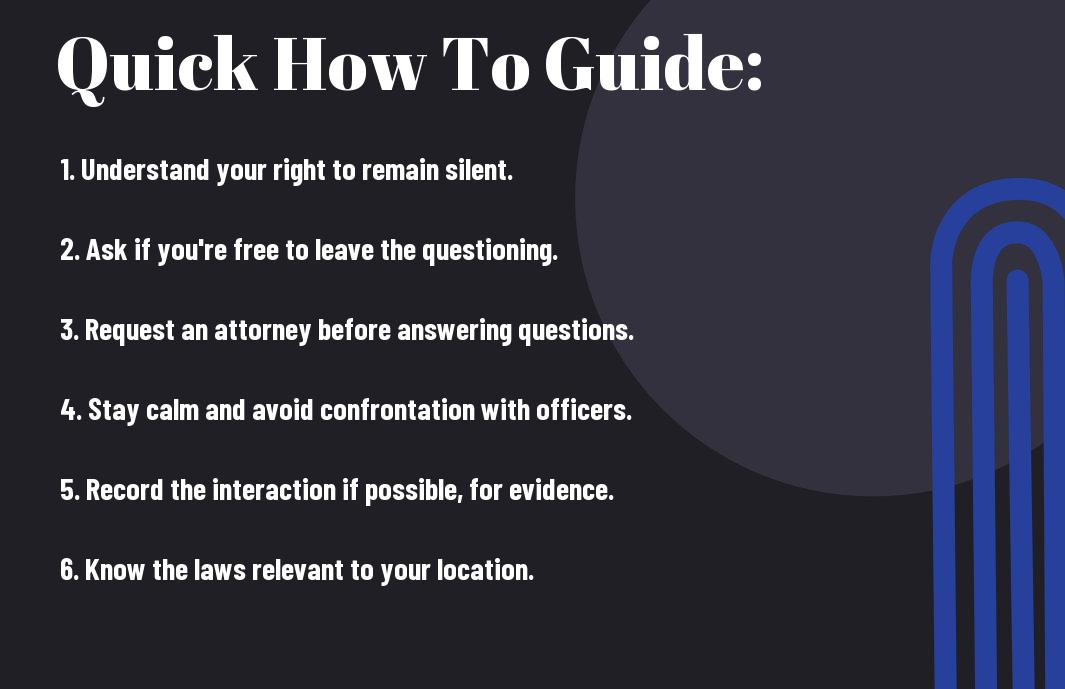
To safeguard your rights during police questioning, you should follow these important tips:
- Stay calm and collected to avoid escalating the situation.
- Clearly state that you wish to remain silent.
- Request an attorney before answering any questions.
- Never sign any documents without legal representation.
- Document everything that happens during the interaction.
This proactive approach can help protect you legally.
Documentation Strategies
Legally, maintaining thorough documentation is vital. Take notes on everything that occurs during the questioning, such as the names of officers involved, the time and location, and any statements made. If possible, request a copy of the police report when available. This detailed account can serve as an important reference should you need to establish a record of the event later on.
When to Contact an Attorney
The decision to contact an attorney should be made as soon as you feel uncertain about the situation. If the questioning escalates or you are arrested, seeking legal counsel immediately is advisable. An attorney can guide you on how to proceed and protect your rights throughout the process.
Contact your attorney without delay if you are faced with any form of police investigation or questioning. They can provide valuable assistance in navigating the complexities of the legal system, ensuring your rights are upheld. Furthermore, having legal representation can significantly impact the outcome of your case, providing you with peace of mind during a challenging time.
Summing up
Upon reflecting, it becomes evident that understanding your rights during police questioning is necessary for your protection. By knowing that you can remain silent and request an attorney, you equip yourself with the tools necessary to navigate these challenging situations. Always be aware of your environment and maintain composure, as your responses can significantly impact the outcome. Ultimately, prioritizing your rights ensures that you safeguard your well-being and legal standing when faced with law enforcement interactions.