

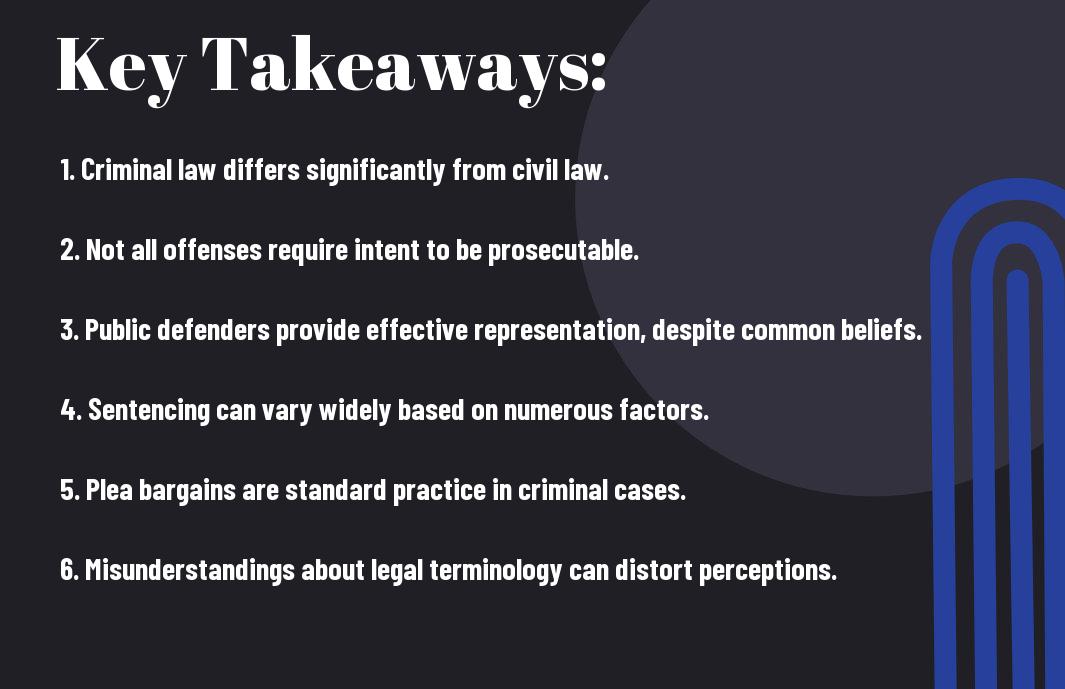
It’s time to set the record straight about criminal law. Many assumptions you may have picked up from media portrayals or casual conversations can lead to misunderstandings about how the legal system really works. In this post, you will explore and debunk some of the most prevalent myths surrounding criminal law, equipping you with accurate information that can influence your perspective and decisions related to legal matters. Understanding these misconceptions is necessary for anyone looking to navigate or comprehend the complexities of criminal law effectively.
The Criminal Justice System: Structure and Function
While understanding the criminal justice system can seem daunting, it is imperative to recognize its structure and function. This complex system encompasses the interconnections between law enforcement, the judiciary, and corrections, all working together to enforce laws, administer justice, and rehabilitate offenders. Each element plays a distinct role, contributing to the overall balance and effectiveness of the legal framework designed to maintain societal order.
The Three Branches of Criminal Justice
Among the fundamental components of the criminal justice system are the three primary branches: law enforcement, the judiciary, and corrections. Law enforcement agencies investigate and apprehend suspects, the judiciary ensures fair trials and legal representation, and corrections oversee the rehabilitation and reintegration of offenders. Understanding these branches can help you appreciate how they interact and uphold justice in your community.
How Cases Move Through the System
About the journey of a criminal case, it typically begins with an arrest, followed by a series of legal proceedings that include arraignment, trial, and sentencing. Each step involves specific legal procedures and safeguards to ensure that your rights are protected. This progression through the system is designed not only to determine guilt or innocence but also to establish appropriate consequences for criminal behavior.
System navigation is vital as it impacts the outcome of a case. Initially, an arrest occurs based on probable cause, followed by an arraignment where charges are presented. If the case proceeds, pre-trial motions may occur, leading to a trial where evidence is presented. Post-trial, if convicted, sentencing will determine penalties, potentially involving probation or incarceration. Understanding these steps can empower you with knowledge about your rights and responsibilities within the criminal justice system.
Legal Rights and Protections
Assuming you find yourself in a legal predicament, it’s important to understand your rights and protections under criminal law. These rights are designed to safeguard you during interactions with law enforcement and the judicial system. Familiarizing yourself with these provisions can empower you and ensure that you are treated fairly throughout the legal process.
Understanding Miranda Rights
Around the moment you are taken into custody, law enforcement officers are required to inform you of your Miranda rights. These rights include your right to remain silent and your right to an attorney. Understanding these rights can significantly impact your case, as anything you say can be used against you in court. Being aware of these protections enables you to navigate legal situations more effectively.
The Right to Legal Representation
Behind every effective defense is the right to legal representation, a fundamental principle that protects you during criminal proceedings. You are entitled to have an attorney represent you, ensuring that your interests are safeguarded and your rights are upheld throughout the process.
Rights granted to you for legal representation mean that you can seek the assistance of a qualified attorney, regardless of your financial situation. Public defenders are available for those who cannot afford private counsel, ensuring that everyone has access to legal guidance. Having an attorney who understands the intricacies of the law can make a significant difference in the outcome of your case, enabling you to present a robust defense and navigate the complexities of the criminal justice system with confidence.

Common Misconceptions About Criminal Charges
Now, many individuals have a distorted view of how criminal charges work. They often believe that all accusations lead to serious consequences or think that the legal process operates as seen on television. In reality, every case is unique, and the outcome can vary significantly based on a myriad of factors, including evidence, legal representation, and jurisdiction. Understanding these differences is key to navigating the complexities of the criminal justice system.
Misdemeanors vs. Felonies
Along with misconceptions about charges, the distinction between misdemeanors and felonies is often misunderstood. While both are types of criminal offenses, misdemeanors are generally less severe, typically resulting in smaller fines or short-term jail sentences. On the other hand, felonies are more serious charges that can lead to longer imprisonment and heavier penalties. This distinction can significantly impact your legal strategy, so it’s important to be aware of which category your charge falls under.
The Power of Prosecutorial Discretion
Around the criminal justice landscape, one key concept to grasp is the power of prosecutorial discretion. This refers to the authority that prosecutors have to determine whether to bring charges and what level of charges to file. This power can lead to significant variances in how cases are handled, affecting plea deals and sentencing outcomes.
For instance, a prosecutor may choose to offer a plea bargain for a lesser charge in a case with mitigating circumstances, or they may decide to pursue maximum penalties for repeat offenders. Their choices can influence not only the immediate outcomes for individuals involved but also the broader attitudes toward crime in your community. Understanding this aspect of the legal system can empower you to make more informed decisions if faced with criminal charges.
Evidence and Proof in Criminal Cases
Many people misunderstand the role of evidence and proof in criminal law. In a criminal case, the prosecution must present evidence that establishes a defendant’s guilt beyond a reasonable doubt. This high standard ensures that individuals are not wrongfully convicted based on insufficient or flimsy evidence, safeguarding your rights during legal proceedings.
Beyond Reasonable Doubt Standard
Below the standard of beyond a reasonable doubt is the foundation of criminal law, meaning that the evidence must leave you with no reasonable uncertainty regarding the defendant’s guilt. This high threshold emphasizes the principle that it is better for many guilty individuals to go free than for one innocent person to be wrongfully convicted.
Admissibility of Evidence
Across the courtroom, admissibility refers to whether certain evidence can be presented in a trial. Legally speaking, evidence must be both relevant to the case and obtained through lawful means to be accepted by the court. Ensuring that only credible evidence is considered protects the integrity of the judicial process.
Proof of admissibility often hinges on various legal standards, such as relevance, materiality, and reliability. The court evaluates whether the evidence can assist in resolving factual issues in your case. Additionally, evidence obtained illegally or through improper procedures may be excluded, highlighting the importance of adhering to procedural rules in criminal investigations.

Sentencing Realities
Keep in mind that sentencing is not always as straightforward as it may seem. Many people assume that a crime automatically leads to a specific punishment, but this isn’t the case. Factors such as the specific circumstances of the crime, prior convictions, and even the jurisdiction’s laws can significantly affect the outcome. Understanding these nuances will give you a clearer view of what sentencing may entail in different situations.
Mandatory Minimums and Sentencing Guidelines
Any discussion of sentencing would be incomplete without mentioning mandatory minimums and sentencing guidelines. These laws set specific minimum sentences for particular crimes, which can limit judges’ discretion. While designed to create uniformity in sentencing, these rules can occasionally lead to overly harsh penalties that do not consider individual circumstances.
Alternatives to Incarceration
Below you’ll find that not every sentence ends with prison time. Alternatives to incarceration, such as probation, community service, and restorative justice programs, offer different approaches aimed at rehabilitation and community safety. These options recognize that not all offenders need to be locked away to address their actions effectively.
Plus, exploring alternatives to incarceration can be beneficial for both you and the community. These methods often foster rehabilitation rather than punishment and can lead to lower recidivism rates. By participating in programs like counseling or vocational training, you can develop the skills needed for better life choices. Ultimately, these options can help you reintegrate into society, reducing the burden on overcrowded prisons while still holding you accountable for your actions.
The Role of Plea Bargaining
After understanding the basics of criminal law, it’s vital to explore the role of plea bargaining. This process allows defendants to negotiate a guilty plea in exchange for a lesser charge or reduced sentence, ultimately streamlining the judicial process and diminishing the burden on court resources. It is a prevalent practice that can significantly impact your case outcome and future. Knowing about plea bargaining can empower you to make informed decisions during legal proceedings.
Why Most Cases Never Go to Trial
To grasp the landscape of criminal law, it’s important to understand that most cases never make it to trial. This is largely due to the overwhelming number of cases in the system, coupled with the potential risks defendants face if they choose to go to trial. Many individuals opt for plea bargains to avoid lengthy legal battles and the uncertainties of a jury trial.
Negotiation Strategies and Limitations
Plea negotiations can vary in complexity and effectiveness, heavily influenced by the willingness of both parties to reach an agreement. However, you should also be aware of the limitations—lawyers may face restrictions based on the evidence available and the prosecutor’s stance. This dynamic can affect the range of offers you receive and what you can realistically accept.
A comprehensive understanding of negotiation strategies is vital for navigating plea bargaining effectively. Factors such as the strength of the evidence against you, prior criminal history, and the specific charges can dictate what offers are on the table. It’s vital that you work closely with your attorney to assess your situation, weigh potential risks, and develop an approach that maximizes your chances of a favorable outcome while considering the limitations you may encounter.
Conclusion
Considering all points, it’s clear that understanding criminal law requires you to look beyond common misconceptions. By debunking myths and grasping the realities of the legal system, you empower yourself with the knowledge needed to navigate potential legal situations. Your comprehension of terms, processes, and rights can significantly influence outcomes. Stay informed and be proactive in seeking accurate information, as this foundational knowledge will serve you well in both everyday situations and more serious matters that may arise.