

Over the course of a criminal proceeding, you may find yourself wondering how a judge determines the appropriate punishment for a crime. Understanding sentencing is vital, as it involves a complex interplay of laws, guidelines, and personal circumstances. Factors such as the nature of the offense, your criminal history, and any mitigating or aggravating circumstances all play significant roles. This blog post will help you navigate the intricacies of the sentencing process, shedding light on what influences outcomes and how these factors can affect your situation.
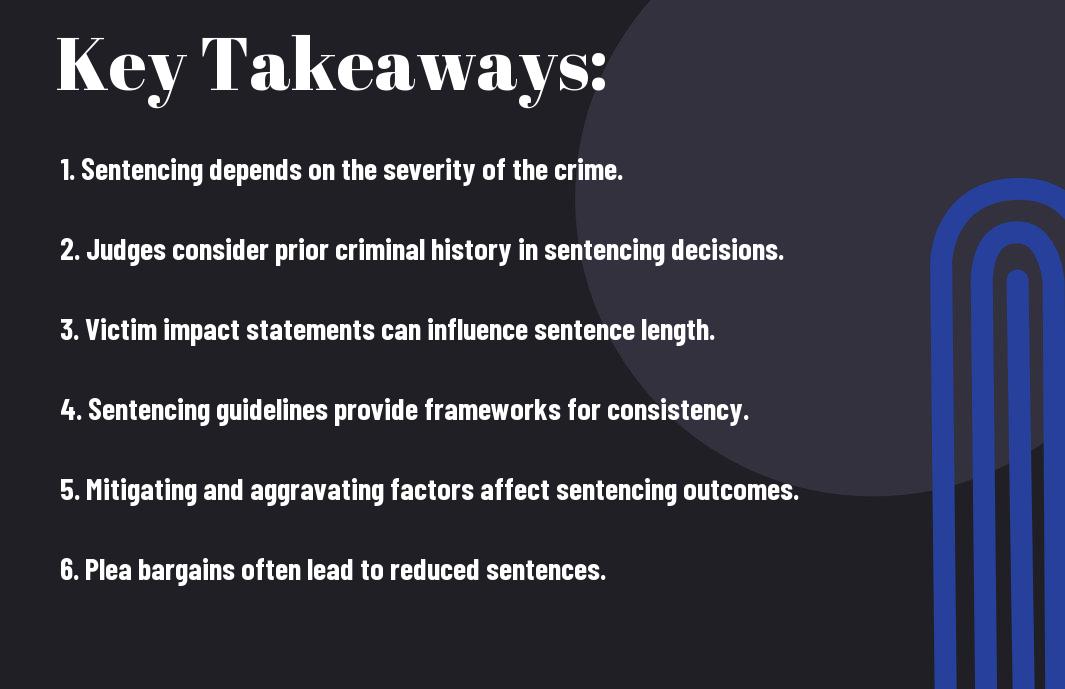
Overview of Sentencing
While navigating the complexities of the justice system, understanding sentencing is vital for recognizing how individuals are penalized for crimes. Sentencing encompasses the legal process in which a judge determines the appropriate punishment for a convicted offender, taking into account various factors that influence the decision-making process.
Definition of Sentencing
Sentencing refers to the formal pronouncement by a court of the punishment assigned to an individual found guilty of a crime. This decision ultimately reflects the law’s response to the offender’s actions and serves to provide a framework for justice within society.
Purpose of Sentencing
The purpose of sentencing extends beyond mere punishment; it encompasses several goals aimed at promoting justice, deterring future crimes, and rehabilitating offenders.
With each sentencing decision, you will find that the justice system strives to balance the need for societal protection with the opportunity for rehabilitation. Sentencing aims to discourage criminal behavior by setting clear consequences, while also ensuring the offender has the chance to reform. By understanding these aims, you can better appreciate the broader implications of sentencing decisions on both the individual and the community.
Types of Sentences
Any legal system offers different types of sentences designed to suit specific offenses and the circumstances surrounding them. Some common types include:
- Incarceration
- Probation
- Restitution
- Community Service
- Death Penalty
Thou should consider the nature of the crime, prior record, and specific laws when evaluating these options.
| Type of Sentence | Description |
| Incarceration | Imprisonment in a jail or prison |
| Probation | Supervised release instead of serving time |
| Restitution | Payment to victims for their losses |
| Community Service | Unpaid work benefitting the community |
| Death Penalty | Legal execution for serious offenses |
Incarceration
After a conviction, you may face incarceration as a form of punishment for your crime. This often takes place in local jails or state and federal prisons, depending on the severity of the offense and the associated laws. Incarceration serves not only as punishment but also aims to deter future offenses and protect the community from harmful individuals.
Probation and Parole
The option of probation offers an alternative to incarceration. In your case, you would fulfill certain conditions set by the court while remaining in the community. Parole, on the other hand, is a conditional release from incarceration, allowing you to reintegrate into society while still under supervision.
Indeed, probation and parole are often seen as more lenient options compared to incarceration. They allow you to maintain a certain level of freedom while still being held accountable for your actions. Both require adherence to specific conditions, which might include attending counseling sessions, abstaining from drugs or alcohol, and regularly reporting to a probation or parole officer. Failure to comply with these requirements can result in serious consequences, including revocation of the probation or parole and potential return to prison.
Factors Influencing Sentencing
To understand how sentencing is determined, you must consider various factors that influence the final decision. These factors can impact the severity of the sentence imposed on a defendant and include:
- The nature of the crime
- The defendant’s prior criminal history
- The circumstances surrounding the offense
- Recommendations from pre-sentence reports
- Victim impact statements
Any one or a combination of these factors may significantly alter the outcome of a sentencing hearing.
Statutory Guidelines
Factors defined by laws and statutes play a vital role in shaping sentencing outcomes. Statutory guidelines are established to provide judges with a framework for determining appropriate sentences, ensuring fairness and consistency across similar cases.
Judicial Discretion
After the application of statutory guidelines, judges exercise judicial discretion to tailor sentences to individual cases. This discretion allows judges to consider unique circumstances and adjust their sentences accordingly.
Considering the influence of individual case details is imperative. A judge may weigh specific aspects, such as the defendant’s character or the impact on the victim, allowing for a more personalized approach to sentencing. This flexibility can lead to variations in sentences for similar offenses, reflecting the unique aspects of each case and the broader goals of justice.
Mitigating and Aggravating Factors
After examining the facts of the case, you should consider mitigating and aggravating factors that can influence sentencing. Mitigating factors may lessen the severity of a sentence, while aggravating factors could increase it significantly. Examples include:
- Defendant’s age and mental health
- Remorse shown by the defendant
- Whether the crime was committed in a particularly heinous manner
- Any prior convictions or criminal behavior
The consideration of these factors helps to provide a more nuanced view of the defendant’s actions and intentions.
Factors that are viewed as mitigating can lead to reduced sentences, especially when they demonstrate that the defendant’s situation should be taken into account. Conversely, aggravating factors can lead to harsher penalties, as they may indicate a greater level of culpability or a higher degree of harm caused. The careful evaluation of these elements contributes to a more comprehensive understanding of the crime and its context.
- Severity of the harm inflicted
- Use of a weapon during the crime
- Previous attempts at rehabilitation
- Victim’s vulnerability
The influence of both mitigating and aggravating factors is integral in ensuring that justice is served appropriately in each case.
Role of Victim Impact Statements
For many victims and their families, the impact of a crime extends far beyond the immediate circumstances. Victim Impact Statements (VIS) provide a platform for you to express how a crime has affected your life emotionally, physically, and financially. These statements can significantly influence the court’s perception of the crime’s severity and, ultimately, the sentencing of the offender. By personalizing the experience, you help the court understand the true weight of the crime on your life and those around you.
Importance in Sentencing
Against what might be presumed, the emotional weight of your experience matters in the judicial process. Your Victim Impact Statement can persuade judges to impose harsher sentences, helping to ensure that the consequences fit the impact of the crime. They provide an important context, highlighting the human aspect of the legal proceedings and reminding the court that you are not just a case number but a real person affected deeply by the offender’s actions.
Legal Considerations
The use of Victim Impact Statements is governed by specific legal guidelines. The court must ensure that the content of these statements is relevant and not retaliatory. In some jurisdictions, the defendant also has the right to respond to or refute statements made. This balance aims to maintain fairness in the judicial process while allowing for the voices of victims to be heard.
At the core of the legal considerations surrounding Victim Impact Statements is the need to respect the rights of both the victim and the defendant. You should be aware that while your statement can significantly influence the case outcome, its admissibility is subject to legal scrutiny. Ensuring that your statement is focused on the genuine impacts of the crime, rather than personal grievances or inflammatory remarks, will strengthen its effectiveness and uphold its place within the courtroom’s deliberations.

Sentencing Disparities
Not all individuals receive the same sentence for similar crimes, leading to what is known as sentencing disparities. These variations can stem from numerous factors, including race, economic status, and geographic location. Understanding these disparities is vital to grasp the overall functioning of the criminal justice system.
Racial and Economic Factors
For many, the intersection of racial and economic factors plays a significant role in sentencing outcomes. Research consistently shows that racial minorities and individuals from low-income backgrounds often face harsher penalties. This can result in significant differences in how justice is served. Consider the following:
- Racial minorities may receive longer sentences compared to their white counterparts for similar offenses.
- Defendants without financial resources struggle to secure effective legal representation.
- Socioeconomic status can influence jury perceptions and the decisions made by the court, impacting sentencing.
Assume that you are examining cases in your area; you may notice these trends reflected in sentencing patterns.
Geographic Differences
By analyzing geographic differences, you’ll discover that sentencing outcomes can vary substantially from one location to another. This is often influenced by regional laws, local crime rates, and the community’s prevailing attitudes toward justice.
Sentencing can differ greatly between urban and rural areas, and even among different jurisdictions within the same state. Factors like local law enforcement practices, socio-economic conditions, and community values often shape how justice is administered. Higher crime rates might prompt harsher sentences in certain locales, while others may adopt more lenient approaches. Being aware of these geographic variations can provide a more comprehensive view of how and why sentences may differ significantly across different regions.
Appeals and Sentencing Reform
After a sentence is imposed, the appeal process allows the convicted individual to contest the verdict or severity of the punishment. This legal avenue provides a platform for addressing potential errors that occurred during the trial, ensuring that your rights are upheld in the judicial system.
Appeals Process
The appeals process entails reviewing the case by a higher court, which evaluates legal arguments presented by your attorney. This step is critical as it can lead to a confirmation, reduction, or even reversal of the original sentence based on procedural issues or misinterpretations of the law.
Current Trends in Sentencing Reform
With ongoing discussions surrounding mass incarceration and racial disparities in sentencing, many jurisdictions are focusing on reforming sentencing laws to foster fairness and rehabilitation. This includes evaluating mandatory minimum sentences and exploring restorative justice approaches that emphasize accountability over punishment.
To effectively address inequities, reforms are increasingly focusing on alternatives to incarceration, such as diversion programs and community service. These initiatives aim to reduce prison populations while still maintaining public safety. By understanding these trends, you can better navigate the complexities of the legal system and advocate for just outcomes in sentencing.
Final Words
Hence, understanding how sentencing works and the factors influencing it empowers you to appreciate the complexities of the justice system. Your actions, circumstances, and the nature of the offense play significant roles in determining the outcomes you may face. Awareness of these elements not only helps you navigate potential legal challenges but also informs your perceptions of fairness and justice within society. By recognizing the various influences on sentencing, you can foster a deeper comprehension of legal processes and their implications for individuals and communities alike.