

Interrogation is a process that can significantly impact your life, especially if you find yourself on the receiving end of police questioning. Understanding your rights during a police investigation and interrogation is crucial for protecting yourself and ensuring that your legal standing remains intact. You have the right to remain silent, to consult with an attorney, and to be treated fairly under the law. This blog post will explore these rights in detail, helping you to navigate the complexities of police interactions with confidence and knowledge.
Understanding Your Rights
Before engaging with law enforcement, it is vital to understand your rights. Knowing what protections you have can empower you during a police investigation or interrogation. These rights are designed to ensure fair treatment and help protect you from self-incrimination. Recognizing and exercising these rights can significantly impact the outcome of your situation.
Right to Remain Silent
By asserting your right to remain silent, you can avoid inadvertently providing information that may be used against you. Law enforcement is required to inform you of this right during an interrogation, and exercising it means you do not have to answer questions or make statements without legal counsel present.
Right to an Attorney
Rights related to having an attorney allow you to secure legal representation during police interactions. You have the right to contact an attorney before or during questioning, providing you with guidance on how to proceed. This can be instrumental in protecting your interests and ensuring that your legal rights are upheld.
At any point during a police investigation, you can request to speak with an attorney. This applies whether you have been formally charged or simply detained for questioning. An attorney can inform you of your rights, advise you on how to respond, and help you navigate the legal landscape. Having representation not only enhances your understanding of the situation but also fortifies your defense should the circumstances take a turn.

During a Police Investigation
The police investigation process can be daunting, but understanding your rights is important. You have the right to remain silent and the right to an attorney at any point during the investigation. Any statements you make can be used against you, so being informed about your rights can help protect you. Staying composed and aware of your legal entitlements during this time can significantly influence the outcome of the investigation.
What to Expect
One of the first things you can expect during a police investigation is a series of questions that the officers will pose to gather information. The atmosphere may vary, but you should remain calm. The questions can range from casual to probing, but you are under no obligation to answer anything without legal representation. Notably, having a lawyer present can greatly enhance your safety and rights.
Police Authority and Limitations
Around the world, police have specific powers and responsibilities, but these come with limitations as well. While they can investigate and gather evidence, they must also respect your constitutional rights. Officers cannot search you, your vehicle, or your property without probable cause or consent. Understanding these boundaries helps you navigate the investigation and ensures law enforcement operates within the law.
To enhance your understanding of police authority and limitations, it’s important to know that law enforcement must have a valid reason to stop or question you. They should be able to articulate reasonable suspicion or probable cause to justify their actions. If they are acting outside of these parameters, you have the right to politely refuse to answer questions or comply with searches. Being aware of these limitations not only protects you but also ensures that police conduct is constitutional and accountable.
During Interrogation
Once again, you find yourself in a high-pressure situation during a police interrogation. It’s imperative to approach this moment with an understanding of your rights and the tactics used by law enforcement. Your ability to navigate this experience can significantly impact the outcome of your case. Never underestimate the importance of knowing how to respond and protect yourself legally.
Techniques Used by Law Enforcement
Enforcement officers often employ various techniques to extract information during an interrogation. These may include psychological tactics, manipulation, or intimidation to create a sense of urgency. It’s vital to remain composed and recognize these strategies for what they are: tools to elicit a confession or information. Awareness of these methods can better prepare you to respond appropriately during questioning.
Your Rights in the Interrogation Room
Along with understanding interrogation techniques, knowing your rights is paramount. You have the right to remain silent, the right to an attorney, and the right to cease questioning at any time. These rights exist to protect you and ensure that any statement you make is voluntary and informed. Exercising them can significantly influence the legal ramifications of the situation.
Rights are not just legal concepts; they are your safeguards during an interrogation. Ensuring you are aware of these rights allows you to take control of the situation. By invoking your right to remain silent or requesting an attorney, you can avoid pitfalls that might arise from coercion or misunderstanding. Your informed decisions in this critical setting can shape the trajectory of your case and help protect your interests.
Filing a Complaint
Many individuals may feel compelled to file a complaint if they believe their rights have been violated during a police investigation or interrogation. It’s necessary to understand the avenues available to you for addressing misconduct, as this process can lead to accountability and necessary changes within law enforcement. Filing a complaint not only helps you advocate for yourself but also contributes to the broader effort for police reform.
When and How to File
After experiencing what you believe to be police misconduct, it is vital to file your complaint as soon as possible. Gather all pertinent information, including dates, times, locations, and the names of any officers involved. You can typically file your complaint with the police department’s internal affairs division or a civilian oversight board, depending on your jurisdiction.
Protecting Yourself from Retaliation
Any time you file a complaint against law enforcement, there is a risk of potential retaliation. It is necessary to protect yourself by documenting all interactions with the police and seeking legal advice if you feel that your safety or rights may be compromised as a result of your filing.
A proactive approach can help mitigate the chances of retaliation following your complaint. Consider discussing your situation with a lawyer who specializes in civil rights or police misconduct cases; they can offer guidance on safeguarding your rights and provide strategies for dealing with any backlash. Additionally, maintaining a detailed record of all incidents related to your complaint can serve as evidence should you face retaliation, reinforcing your position in any subsequent actions you may need to take.
Special Considerations for Minors
To ensure the protection of minors during police investigations and interrogations, specific guidelines and considerations are in place. These legal safeguards acknowledge the vulnerability of young individuals and recognize that they may not fully comprehend their rights or the implications of their statements. Always be aware that if you are a minor or if you are advocating for one, these special considerations are applicable to your situation.
Additional Protections
Between the legal provisions that exist, there are additional protections in place for minors during police questioning. These protections may include mandatory parental or guardian presence during interrogations and the requirement for law enforcement to provide clear information regarding rights, assuring that young individuals understand what they are facing. Such measures aim to create a more supportive environment for minors during these stressful encounters.
Role of Guardians
Below, it is important to understand the critical role guardians play during a police investigation involving a minor. Guardians, typically parents or legal representatives, are entitled to provide emotional support, ensure the minor’s rights are respected, and help the minor navigate the complexities of the legal system. Their presence can significantly impact the minor’s understanding of the situation and their ability to communicate effectively with law enforcement.
Understanding the role of guardians can greatly influence a minor’s experience during police interactions. Guardians are not just present for emotional support; they also serve as advocates ensuring that your rights are upheld. Legal counsel may be considered, as having a knowledgeable guardian can help you comprehend the procedures and rights pertinent to your situation. This guidance is necessary in ensuring that any statements made during the investigation are informed and voluntary.
Common Misconceptions
After discussing your rights during a police investigation, it’s important to address common misconceptions that may cloud your understanding. Many people assume that cooperating with law enforcement will automatically lead to leniency or a favorable outcome. In reality, naively trusting the interrogation process can jeopardize your rights and may lead to unintended consequences.
Myths About Police Interactions
Any interaction with law enforcement can be fraught with misunderstandings and myths. One common belief is that you must answer all questions posed by police, when in fact, you have the right to remain silent and seek legal counsel. This misunderstanding can lead to self-incrimination and complications in your case.
Facts You Should Know
Below are important facts about your rights during a police investigation and interrogation. You are entitled to request an attorney at any time, and law enforcement cannot compel you to provide information without your consent. Additionally, it is important to understand that anything you say can and will be used against you in court.
Further, being informed about your legal rights helps you navigate police encounters more effectively. If you’re ever uncertain about what to say or do during an interaction, it’s wise to assert your right to remain silent until you have legal counsel. This can protect you from inadvertently making statements that may harm your case later on. Ultimately, knowing these facts equips you to better handle situations involving law enforcement and ensures that your rights are respected.
Summing up
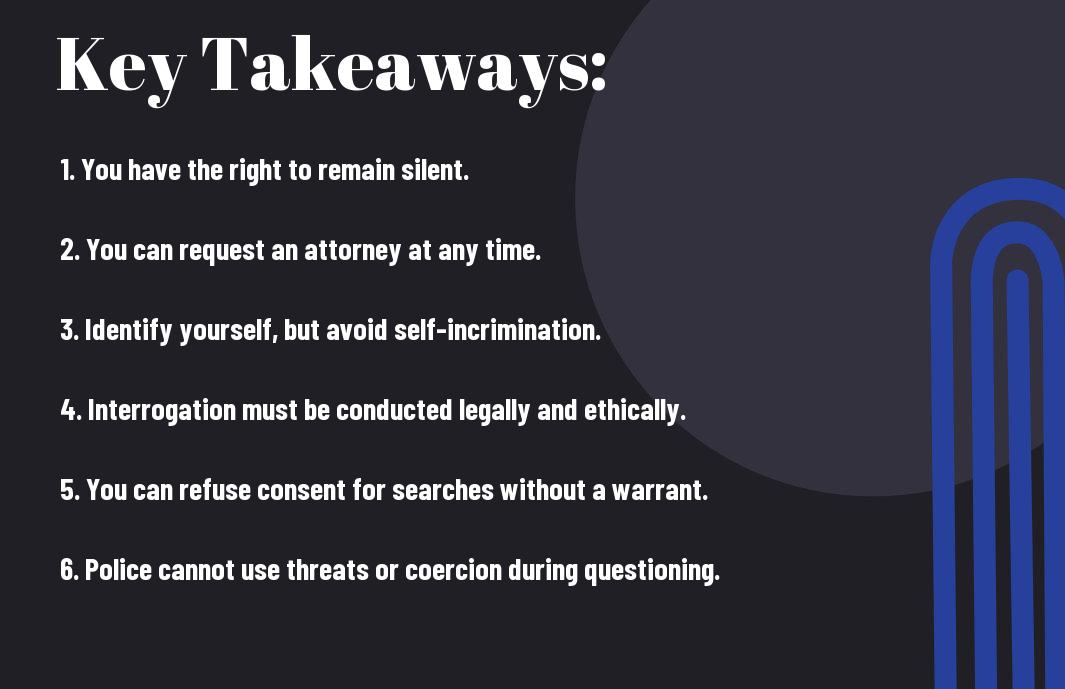
Conclusively, understanding your rights during a police investigation and interrogation is vital for protecting yourself. You have the right to remain silent and the right to an attorney, ensuring that you are not compelled to incriminate yourself. Familiarizing yourself with these rights can empower you and influence the outcome of your situation. Always assert your rights clearly and seek legal counsel whenever necessary to navigate your interactions with law enforcement effectively.