

There’s a lot to navigate when it comes to self-defense laws, and understanding these legal protections is important for your safety and peace of mind. You may find yourself questioning what constitutes reasonable force or how your rights are upheld in different situations. This post aims to clarify the various aspects of self-defense laws, equipping you with the knowledge needed to make informed decisions and act within the boundaries of the law if faced with threats to your personal safety.
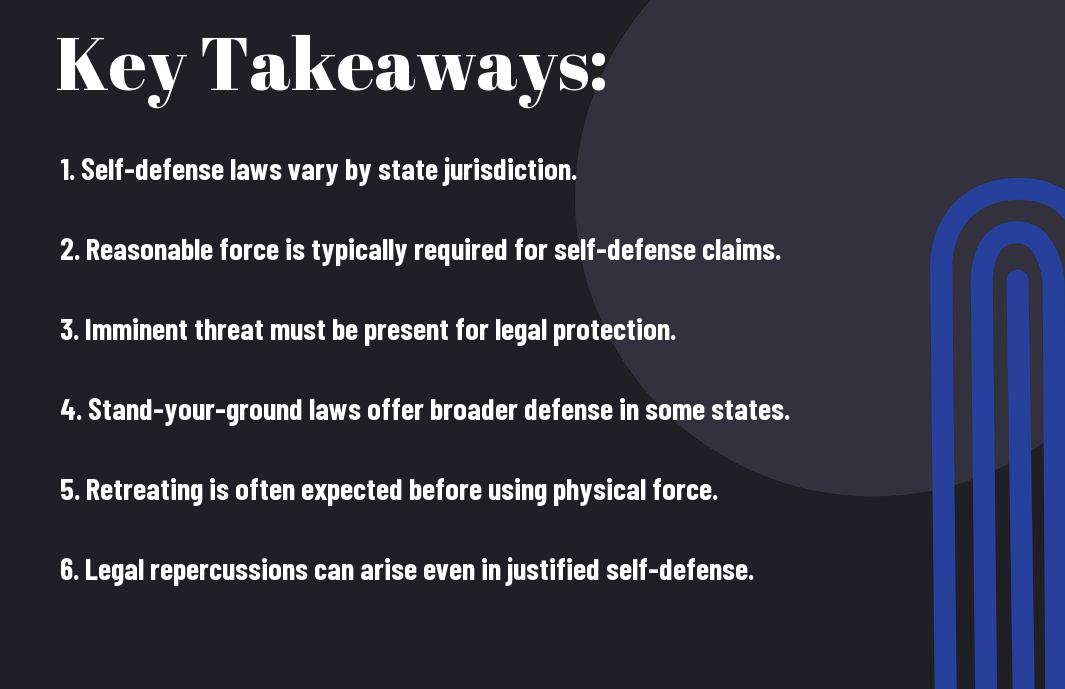

Overview of Self-Defense Laws
As you navigate the complexities of self-defense law, it’s necessary to understand its core principles and how they apply to your situation. Each jurisdiction may have specific definitions and interpretations regarding self-defense, but generally, the laws aim to protect individuals from harm while establishing boundaries on the use of force. Knowing these details can empower you to make informed decisions in challenging situations.
Definition of Self-Defense
After evaluating the circumstances, self-defense is the legal justification for using reasonable force to protect yourself from imminent harm. This concept allows individuals to respond to threats in a manner that is proportionate to the danger they face. It is a fundamental right designed to ensure your safety in life-threatening situations.
Key Legal Principles
Any discussion of self-defense laws revolves around a few necessary principles that guide their application. These principles include the necessity of immediate threat, proportionality of response, and the duty to retreat when safely possible. Each of these elements plays a vital role in determining whether your actions are legally justified in a self-defense claim.
At the heart of self-defense laws, the key legal principles serve as your compass. The necessity of an immediate threat means that you can only act in self-defense when there is an actual, pressing danger to your person. Proportionality requires that your response matches the level of threat faced; excessive force can lead to legal repercussions. Additionally, many jurisdictions impose a duty to retreat, allowing you to avoid confrontation if safe to do so. Familiarizing yourself with these principles enhances your understanding and preparedness in potential self-defense situations.
Types of Self-Defense
Some common types of self-defense include:
- Personal self-defense
- Defense of others
- Defense of property
- Stand your ground laws
- Castle doctrine
This overview provides insights into different scenarios where self-defense may be applicable, highlighting the importance of understanding your rights and responsibilities.
| Type | Description |
| Personal self-defense | Protecting yourself from immediate harm. |
| Defense of others | Intervening to protect someone else from harm. |
| Defense of property | Using reasonable force to protect your belongings. |
| Stand your ground | Not obligated to retreat if threatened. |
| Castle doctrine | Right to defend your home without duty to retreat. |
Reasonable Force
Across jurisdictions, the concept of reasonable force emphasizes that your response to a threat must be proportionate to the level of danger you face. This means that while you have the right to defend yourself, your actions should not escalate the situation unnecessarily. Knowing the legal standards of reasonable force can help you make informed decisions during critical moments.
Deadly Force
By understanding deadly force, you recognize that it is a legal term referring to force that is capable of causing serious bodily injury or death. The use of deadly force is typically restricted to situations where you genuinely believe there is an imminent threat to your life or the lives of others, which requires careful consideration.
Hence, the use of deadly force often comes with strict legal standards, demanding that you can demonstrate reasonable belief in an immediate threat. It’s vital to understand that the criteria for justifying deadly force vary by jurisdiction, including considerations of alternative options available to you, such as retreating or de-escalating the situation where feasible. Understanding these nuances can help you navigate potential legal consequences effectively.
Legal Protections for Defendants
Not only do self-defense laws allow you to protect yourself, but they also provide significant legal protections for those who are accused of using force in self-defense. These protections vary by state and can impact your case’s outcome based on the circumstances of the incident and the justifications presented during legal proceedings. Understanding these laws can help you navigate the complexities of self-defense claims and ensure your rights are upheld.
Castle Doctrine
One of the fundamental protections you may invoke is the Castle Doctrine. This legal principle asserts that you have the right to use reasonable force, including deadly force, to protect yourself in your home. Essentially, your home is considered a “castle,” and intruders may not claim self-defense if they unlawfully enter your property. This doctrine can significantly influence your legal standing when defending against assault or similar charges.
Stand Your Ground Laws
Laws vary widely concerning your right to use force in self-defense, particularly in public spaces. Stand Your Ground laws allow you to defend yourself without the duty to retreat when faced with a perceived threat. This means that if you feel your life is in danger, you can act in self-defense without having to escape from the situation first. Understanding these laws is imperative, as they empower you to protect yourself without the obligation to run away, thus providing you with more robust legal protections in confrontational scenarios.
In addition, Stand Your Ground laws can differ significantly from state to state, each with its specific criteria determining when and how you may use force. It’s important to consider the particulars of the law in your jurisdiction, as factors like the nature of the threat, the use of force, and whether the confrontation occurred in public or private can all influence your rights under these laws. Being informed about your state’s provisions can better equip you in case you find yourself in a self-defense situation.
Limitations and Exceptions
Many self-defense laws come with important limitations and exceptions that you need to understand. These include specific circumstances where your right to defend yourself might not be applicable, such as instances involving unlawful provocation or illegal entry. Knowing these limitations ensures that you remain compliant with the law while exercising your right to self-defense.
Duty to Retreat
For individuals in certain jurisdictions, there is a legal obligation referred to as the “duty to retreat.” This requirement stipulates that you must attempt to avoid using force when you can safely retreat from a threatening situation. Failing to do so can complicate your legal standing when claiming self-defense.
Provocation and Self-Defense
An important aspect of self-defense laws is the concept of provocation. If you instigate a conflict or provoke an aggressor, you may lose your right to claim self-defense if you retaliate. This means that your actions leading up to the confrontation can significantly impact your legal protections.
In addition to understanding provocation, it’s vital to recognize that self-defense claims can be weakened if you contributed to the escalation of the conflict. Engaging in aggressive behavior or making threats can reflect poorly in a legal context, potentially undermining your position. Courts often evaluate the totality of the circumstances, so practicing de-escalation techniques whenever possible supports your legal defense should the need for self-defense arise.
The Role of Law Enforcement
For individuals involved in self-defense incidents, law enforcement plays a pivotal role in the aftermath. They are responsible for assessing the situation, gathering evidence, and determining whether any laws were broken. Understanding how law enforcement operates can help you navigate the complexities that may arise during these challenging moments.
Investigation Process
To comprehend how self-defense cases are handled, it’s vital to understand the investigation process. Law enforcement officers will collect statements from witnesses, examine physical evidence, and possibly assess surveillance footage. The thoroughness of this investigation can significantly influence the determination of whether a self-defense claim is legitimate.
Prosecutorial Discretion
One important aspect of self-defense cases is prosecutorial discretion, which refers to the power of prosecutors to decide whether to file charges. Your case may be influenced by the strength of the evidence collected by law enforcement, as well as the prosecutor’s interpretation of the law regarding self-defense claims.
The decision on whether to prosecute a self-defense case involves an assessment of all gathered evidence and how it aligns with self-defense laws in your jurisdiction. Prosecutors may choose to decline charges if the evidence strongly supports your claim of self-defense or if they believe the case would not hold up in court. Understanding this aspect can help you grasp the potential outcomes of your situation and the factors that may affect it.
Navigating the Legal System
Despite the complexities of the legal system, understanding it is important for anyone facing self-defense allegations. Navigating through various legal statutes and court processes can feel overwhelming, but equipping yourself with knowledge can empower you. You need to be aware of your rights and available defenses, as well as the possible outcomes of your case. Engaging with the legal system may involve court appearances, filing paperwork, and potentially, working with legal representatives who can guide you through each step.
Hiring a Defense Attorney
By hiring a defense attorney, you enhance your chances of achieving a favorable outcome in your self-defense case. An experienced attorney can provide valuable insights into your specific situation, build a strong defense, and advocate on your behalf in court. It’s important to choose someone with a proven track record in self-defense cases, as they will understand the nuances and specific requirements of the law. Your attorney will also help you feel more confident and secure during this challenging process.
Understanding Court Proceedings
Understanding court proceedings is vital for effectively navigating your case. This involves familiarizing yourself with the structure of court hearings, the roles of various participants, and the procedural steps that will take place. Each court system may have its own protocols, so being prepared will help ease your anxiety and provide clarity as you move forward in your case.
Hence, grasping the sequence of events in a court proceeding—from arraignment to trial—can reduce uncertainty and increase your confidence in addressing the legal challenges you may face. You will likely encounter terms such as plea deals, motions, and jury selection, all of which hold significance to your defense. By understanding these processes, you not only empower yourself through knowledge but also equip your attorney to represent you effectively in court. Seek out resources, ask questions, and stay informed to ensure you are prepared for what lies ahead.
Summing up
Ultimately, understanding self-defense laws and the legal protections available to you is vital for navigating potentially dangerous situations. Knowing when and how you can legally defend yourself helps you make informed decisions that can impact your safety and well-being. By familiarizing yourself with the specific regulations in your jurisdiction, you empower yourself to act within the law while protecting your rights. Seek legal advice if needed, ensuring that you are adequately prepared and aware of your options should you ever find yourself in a situation requiring self-defense.