

Opportunities for career advancement can be significantly affected by criminal charges on your record. The repercussions extend beyond immediate job prospects, influencing your professional reputation and future employment chances. Understanding how these charges can alter your job search and networking potential is necessary. In this post, you will learn about the various ways criminal records can impact your career path and explore strategies to mitigate these effects, ultimately paving the way for a more promising future.
Overview of Criminal Charges
For individuals facing criminal charges, the implications on employment prospects and future opportunities can be significant. Understanding the nature of these charges and how they are perceived in society is important for making informed decisions and navigating any potential consequences.
Types of Criminal Charges
For those unfamiliar with the legal landscape, criminal charges can range from minor offenses to serious felonies. The type of charge you face often dictates the repercussions you may encounter.
- Misdemeanors
- Felonies
- Infractions
- White-collar crimes
- Drug offenses
Thou must be aware that each type of charge can have different implications for your employment opportunities and background checks.
| Charge Type | Potential Impact |
| Misdemeanors | Limited effect on job applications |
| Felonies | Significant impact on employment |
| Infractions | Minimal long-term effects |
| White-collar crimes | Can hinder positions of trust |
| Drug offenses | Restricted access to certain professions |
Legal Implications of Criminal Records
Behind the scenes, your criminal record can significantly affect your legal standing and future opportunities. Even after serving time or completing probation, having a criminal record can present challenges when seeking employment.
Implications of a criminal record go beyond potential job denials; it may also limit your ability to obtain licenses for specific professions, impact your credit score, and even restrict housing options. Understanding these legal ramifications is vital for you as you navigate your personal and professional landscape post-charge.
Employment Landscape
Even in today’s evolving job market, individuals with criminal charges often find themselves at a disadvantage. Employers may hesitate to consider applicants with such backgrounds, limiting your access to potential job opportunities. Understanding how criminal records influence hiring practices can help you navigate this landscape more effectively.
Employer Attitudes Towards Criminal Records
Employment opportunities can be significantly impacted by the attitudes that employers hold towards criminal records. Many employers conduct background checks and may be biased against candidates with a history of criminal charges, fearing trust and reliability issues. This can create barriers for you, even if you’ve demonstrated personal growth and rehabilitation since your conviction.
Industries Most Affected
Most sectors are increasingly sensitive to the implications of hiring someone with a criminal record, but some industries are more affected than others. Sectors such as finance, education, healthcare, and government often impose strict regulations regarding background checks, making it challenging for you to find employment in these fields.
Hence, you may face additional barriers in industries that prioritize safety and trust, such as healthcare, where patient well-being is paramount, and financial services, where integrity is non-negotiable. Moreover, roles that require proximity to vulnerable populations, like children or the elderly, often have stringent hiring practices that further complicate your job search. Recognizing these patterns can inform your approach as you pursue opportunities in these challenging sectors.

Impact on Job Opportunities
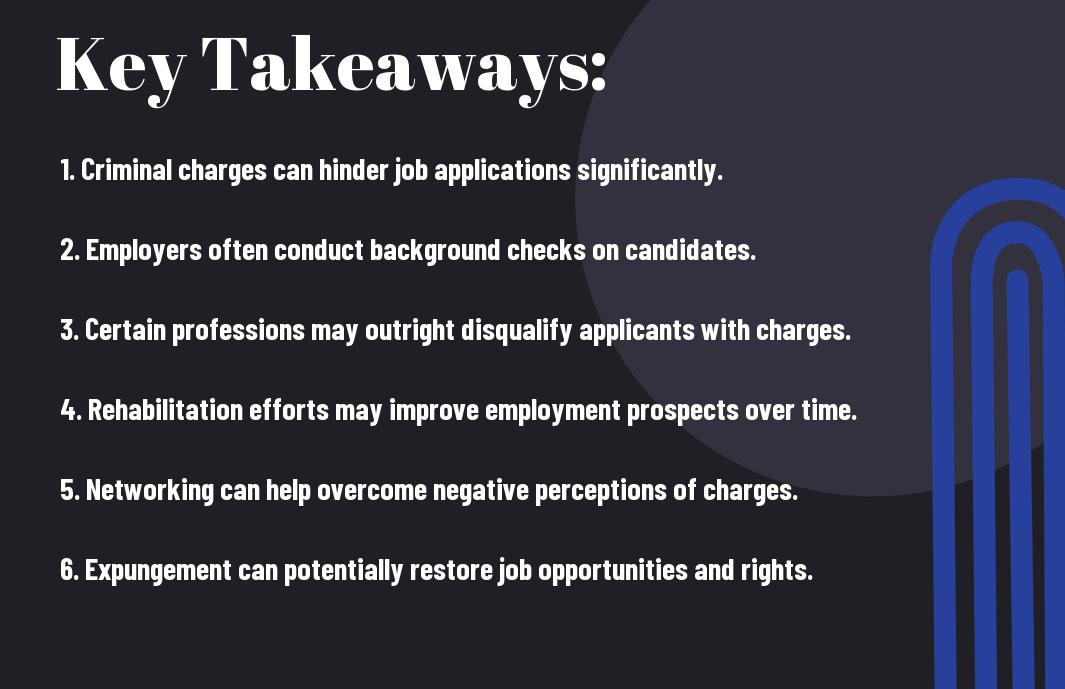
Once again, criminal charges can significantly hinder your job opportunities. Employers often conduct background checks, and a record may disqualify you from various positions, particularly in sensitive fields such as finance, healthcare, or education. Your professional reputation may suffer, limiting your access to networking connections and potentially leading to increased difficulty in securing interviews or landing job offers.
Hiring Trends and Challenges
Behind the scenes, hiring trends are shifting as more employers adopt stricter policies regarding criminal histories. Many companies may rely on automated systems that flag applicants with any notable charges, creating barriers to entry. This shift can lead to a more competitive job market where individuals with clean records are favored, further complicating your efforts to find employment.
Long-Term Career Paths
Around your long-term career prospects, facing criminal charges can alter your trajectory significantly. While some industries may remain open to rehabilitation and second chances, others may impose lasting restrictions that limit your growth potential within your chosen field.
Trends in employment indicate that many industries are becoming more inclusive and willing to embrace those with a past, particularly in areas like technology and skilled trades. However, challenges remain; persistent stigma and employer biases can restrict your opportunities. It’s necessary to be proactive in addressing your past when networking or interviewing, focusing on your skills and what you bring to the table. Engage in rehabilitation programs or volunteer work to demonstrate your commitment to positive change, and leverage any experiences as opportunities for personal growth. A strategic approach can help you navigate these hurdles on your path to a fulfilling career.
Rehabilitation and Second Chances
To navigate the journey from criminal charges to a fulfilling career, you must embrace the possibilities of rehabilitation and the concept of second chances. Employers increasingly value applicants who demonstrate personal growth and commitment to change. Understanding your potential for reintegration not only empowers you but also showcases your readiness to contribute positively to society and the workplace.
Programs Supporting Reentry
Below are several programs designed to assist individuals in reentering the workforce after facing legal challenges. These initiatives offer job training, educational resources, and mentorship opportunities tailored specifically for those with criminal records. By engaging with these programs, you can enhance your skills and bolster your confidence, making you more attractive to potential employers.
Success Stories
Below are real-life examples of individuals who successfully overcame their past and achieved professional success. Their journeys highlight the impact of determination and support systems that helped them secure meaningful employment despite prior criminal charges.
In fact, many who have faced similar challenges have gone on to build thriving careers, using their experiences as motivation to excel. These success stories serve as powerful testaments to the potential for transformation and redemption. By sharing their narratives, individuals inspire others in your situation to persevere and seek the tools necessary for a brighter future. Your story could also become a beacon of hope for those navigating similar paths, reinforcing the idea that change is indeed possible.
Legal Protections and Rights
Your legal protections and rights significantly influence how criminal charges impact your employment and future opportunities. Understanding these rights can empower you to navigate the complexities of the job market and safeguard your interests. Employers must adhere to specific laws that prevent discrimination based on past criminal convictions, giving you a fair shot at securing employment despite your history.
Fair Chance Laws
For many individuals with criminal backgrounds, Fair Chance Laws provide a vital opportunity. These laws prohibit certain employers from asking about criminal history until a conditional job offer is made. This enables you to demonstrate your skills and qualifications before potential employers assess your past, helping to reduce the stigma surrounding criminal records.
Expungement and Sealing of Records
Beside Fair Chance Laws, expungement and sealing of records offer additional pathways to minimize the long-term impact of criminal charges. When your record is expunged or sealed, it prevents potential employers from viewing your criminal history, allowing you to present yourself with a clean slate. This process can be instrumental in improving your chances of securing employment and pursuing future opportunities.
It is important to understand the specific criteria and processes involved in expungement and sealing of records, as these vary by state and the nature of the offense. To take this step, consulting legal experts or local resources can help. Successfully expunging or sealing your record can lead to restored rights and increased access to various opportunities, illustrating that everyone deserves a second chance in their professional journey.
Future Implications
Unlike the past, where a criminal charge could lead to a career-ending situation, today’s landscape allows for potential recovery. Understanding your rights and the evolving context surrounding criminal charges can reshape your future opportunities. It’s important to stay informed about the implications such charges may have on your career journey and to explore avenues for rehabilitation and reintegration into the workforce.
Evolving Attitudes Toward Criminal Records
Between changing societal norms and advocacy for second chances, employers are increasingly recognizing the importance of rehabilitation over mere past mistakes. Many organizations now adopt fair-chance hiring practices, which consider an individual’s qualifications and experiences more than their criminal history. This signifies a shift towards viewing individuals as rehabilitative rather than defined by their past actions.
The Role of Technology in Employment Background Checks
Across various industries, technology has transformed how employers conduct background checks, impacting your chances of employment if you have a criminal record. Modern tools can quickly access databases, offering a comprehensive view of your history, which often includes past charges. As technology continues to evolve, so does the capacity for employers to screen potential candidates efficiently.
Background checks are now conducted with advanced algorithms that can examine deep into public records, social media, and other online information. This technological shift brings both opportunities and challenges; on one hand, you may benefit from increased transparency in hiring practices, while on the other, an extensive search can potentially unearth past mistakes that you may wish to keep private. Understanding how these tools work can help you prepare and manage potential concerns that may arise during your job search.
Final Words
Following this, it is crucial to understand that criminal charges can significantly affect your employment prospects and future opportunities. Even a minor infraction can lead to heightened scrutiny during background checks, limiting your job options and career advancement. You should consider proactive measures, such as seeking legal advice or exploring expungement options, to mitigate these consequences. By being informed and taking strategic steps, you can work towards overcoming the barriers that accompany a criminal record, ultimately enhancing your chances for a more stable and rewarding future.