

Expectations can be daunting when facing a criminal trial, whether you’re a defendant, a witness, or simply interested in understanding the judicial process. Knowing what to expect in the courtroom can ease your nerves and prepare you for the various stages of the trial. From jury selection to closing arguments, each step plays a role in shaping the outcome. In this blog post, we’ll explore the key phases of a criminal trial, the roles of the participants, and what you should prepare for as you navigate this complex legal landscape.
Pre-Trial Proceedings
Before the trial begins, several important steps take place known as pre-trial proceedings. These steps help ensure that both sides are prepared for the trial and that the case can proceed as smoothly as possible. Pre-trial proceedings typically involve the review of evidence, legal arguments, and various motions that establish the framework for the trial. Understanding these processes can help you navigate the legal landscape and prepare for what lies ahead.
Arraignment and Plea
Before you go to trial, you will undergo an arraignment, where you will hear the charges against you and enter your plea. Your options typically include pleading guilty, not guilty, or no contest. This step is pivotal as your plea sets the stage for the next phases of your case and can significantly impact potential outcomes.
Discovery and Pre-Trial Motions
At this stage, both sides exchange information relevant to the case through a process known as discovery. This process allows you to review evidence, witness statements, and other documentation that the prosecution plans to use. Pre-trial motions may also be filed, which can request the court to make specific rulings regarding evidence or procedures before the trial begins.
And understanding discovery and pre-trial motions is imperative for building your defense. These motions can be used to suppress evidence that may be prejudicial to you or to dismiss charges entirely. Engaging with your attorney during this phase can help you strategize effectively, ensuring you are well-prepared for the trial and any potential outcomes. Your attorney will gather pertinent information to support your case and challenge any evidence against you, laying the groundwork for a stronger defense.
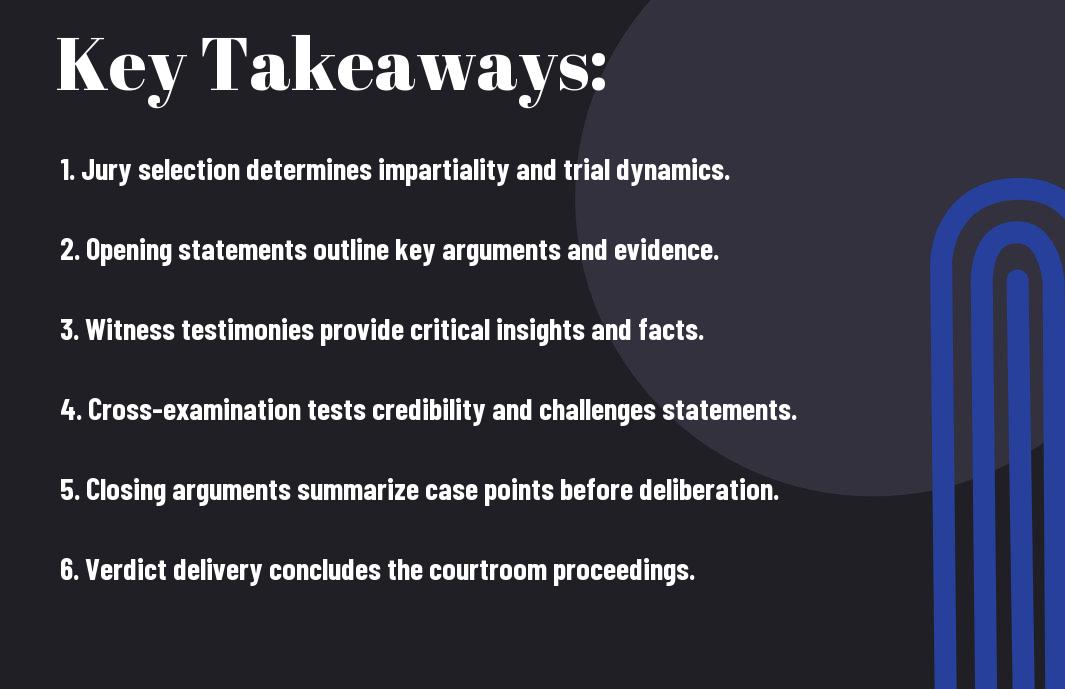
Jury Selection
If you find yourself in a criminal trial, one of the first steps you will witness is jury selection. This process aims to choose individuals who will fairly evaluate the evidence and reach a verdict based solely on that evidence. It is a fundamental component that can significantly affect the trial’s outcome, highlighting the importance of selecting the right jurors for your case.
Voir Dire Process
Voir dire is the preliminary phase of jury selection where potential jurors are questioned to assess their suitability. During this process, attorneys for both the prosecution and defense will ask questions related to biases, experiences, and beliefs. This helps them determine if a juror can remain impartial and make decisions based on the facts presented in court.
Challenges and Final Selection
Behind the scenes of jury selection, attorneys may use challenges to dismiss certain jurors. You may see them challenge potential jurors for cause, which involves specific reasons that could affect impartiality, or they might employ peremptory challenges, allowing them to dismiss jurors without providing a reason. This selection process is vital for ensuring that an unbiased jury is seated.
For instance, if a juror reveals a personal connection to the case or expresses a strong opinion about the charges, an attorney could challenge that juror for cause. Peremptory challenges are often used strategically, allowing attorneys to dismiss potential jurors who they feel may not align with their case’s needs, regardless of bias. This dynamic process ultimately shapes the jury that will hear your case, emphasizing the significance of thoughtful selection in achieving a fair trial outcome.
Opening Statements
Your journey through a criminal trial begins with the opening statements, which set the stage for the case. Both the prosecution and defense will present their initial arguments, providing an overview of the evidence they intend to present. This is your first glimpse into how each side perceives the case, and it may shape your understanding of the trial moving forward.
Prosecution’s Opening
Any case begins with the prosecution’s opening statement, where the prosecutor outlines the charges against the defendant. This statement aims to provide a clear narrative of the events leading to the alleged crime, highlighting key evidence and witnesses that will be presented during the trial. It is designed to convince you of the defendant’s guilt right from the start.
Defense’s Opening
Before the defense speaks, they have a chance to counter the prosecution’s narrative by presenting their own perspective. The defense’s opening statement aims to cast doubt on the prosecution’s claims, emphasizing any weaknesses in their case and introducing alternate theories of what might have occurred. This is where you will hear how the defense intends to protect the defendant’s rights and challenge the evidence presented against them.
At this stage, the defense will often discuss key points that will be elaborated on throughout the trial. They may introduce potential witnesses who will provide testimony to support the defendant’s innocence or highlight inconsistencies in the prosecution’s case. This is an opportunity for the defense to frame their case in a way that resonates with you, aiming to create a reasonable doubt about the prosecution’s assertions. By the end of the opening statements, you’ll have a clearer picture of the arguments that both sides will put forth in the upcoming trial.
Presentation of Evidence
After the opening statements, the court will enter the presentation of evidence phase, where both sides will present their arguments through evidence and witness testimonies. This stage is crucial for establishing the facts of the case, as you will see how each side crafts their narrative using tangible supports such as documents, recordings, and expert opinions. Observing this process will provide you with insight into how evidence is strategically introduced to strengthen a legal position.
Prosecution’s Case-in-Chief
Between the prosecution and defense, the prosecution bears the burden of proof. During their case-in-chief, they will present their evidence first, aiming to convince the jury of the defendant’s guilt. The prosecution typically calls witnesses to testify about the events surrounding the alleged crime, along with presenting physical evidence. This is your opportunity to understand how the prosecution constructs its case to meet the legal standard of “beyond a reasonable doubt.”
Defense’s Case
Among the most critical moments in a trial is when the defense has the opportunity to present its case. The defense will aim to create reasonable doubt regarding the prosecution’s claims, often introducing evidence or witnesses that may challenge the prosecution’s narrative or support the defendant’s innocence. The goal is to provide an alternative explanation for the evidence brought forth and to counters evidence presented.
This part of the trial is vital as it allows you to see how the defense strategically emphasizes its strengths while addressing potential weaknesses in the prosecution’s case. You may notice the introduction of expert witnesses who provide alternative viewpoints or evidence that supports the defendant’s innocence. Additionally, the defense may also refute the credibility of the prosecution’s evidence or witnesses, crafting a narrative intended to sway the jury toward acquittal.
Witness Testimony
For many, witness testimony is a fundamental part of a criminal trial, as it offers firsthand accounts that can influence the jury’s perception of the case. Witnesses may include victims, bystanders, or experts, and their credibility can significantly impact the outcome. You should prepare to hear varied accounts, as conflicting testimonies may arise, leading to a complex narrative that the jury must evaluate.
Direct Examination
At this stage, the attorney who called the witness will ask them a series of open-ended questions that encourage storytelling and detail. You will see how the witness presents their perspective, enabling the jury to understand the context and specifics of the case. This process is necessary in building the foundation for the evidence presented.
Cross-Examination and Redirect
Among the most intense moments of a trial is the cross-examination, where the opposing attorney challenges the witness’s version of events. This questioning seeks to uncover inconsistencies or biases, providing a different perspective for the jury to consider. After cross-examination, the original attorney may conduct a redirect to clarify any points raised during this questioning.
Hence, cross-examination plays a pivotal role in trials by testing the witness’s reliability and the validity of their statements. It can be aggressive, as opposing counsel aims to undermine their credibility. This back-and-forth not only serves to highlight any weaknesses in the testimony but also ensures that jurors receive a well-rounded view of the facts. Following cross-examination, the redirect offers your attorney a chance to reinforce the witness’s statements, addressing any misconceptions introduced during the cross-examination. This dynamic exchange is necessary for establishing the strength of each party’s case.
Closing Arguments and Jury Instructions
Many people may not realize that closing arguments are the final opportunity for both sides to make their case before the jury. This is a time when attorneys summarize the evidence presented, highlighting the strengths of their arguments while addressing counterpoints raised by the opposition. It’s crucial for you, as a juror, to pay close attention, as these summaries can influence your understanding of the case.
Final Arguments from Both Sides
One of the most impactful moments in a trial comes during closing arguments when both the prosecution and defense present their final perspectives on the evidence. This is your chance to see how each side frames their narratives and addresses the key points that may determine the outcome of the case. Each attorney will aim to persuade you by invoking emotion, logic, and the evidence presented throughout the trial.
The Judge’s Instructions to the Jury
Judges provide crucial instructions to the jury, outlining the law relevant to the case and clarifying the standards you must consider during deliberation. These instructions can help you navigate the complexities of the legal definitions and the differing burdens of proof that apply in criminal trials.
But understanding the judge’s instructions is vital as they set the legal framework for your deliberations. The judge will clarify the specific charges and the elements that the prosecution must prove beyond a reasonable doubt. Additionally, the judge may discuss issues like credibility and how to weigh evidence. Being attentive to these instructions will guide your decision-making process and ensure that your verdict is grounded in the rule of law.
Verdict and Sentencing
Despite the intensity of the trial leading up to this point, the culmination arrives with the jury’s verdict, which can significantly influence your future. If found guilty, the judge will proceed to sentencing based on various factors, including the severity of the offense, your prior criminal record, and any mitigating circumstances. Your attorney will play a key role in advocating for a fair sentence, potentially arguing for leniency or alternative sentencing options.
Deliberation and Verdict Announcement
Below the surface of the courtroom, the jury engages in deliberation to discuss the evidence presented and reach a unanimous verdict. Once a decision is made, it is announced in the courtroom, where you will hear their conclusion—either guilty or not guilty—while emotions run high. This moment is pivotal, and you may experience a mix of relief, fear, or anxiety as the jury’s decision impacts your life directly.
Post-Verdict Proceedings
Above the immediate reactions to the verdict, various post-verdict proceedings may occur. If you are found guilty, your attorney might explore options for an appeal, or if the verdict is not guilty, the prosecution may release their hold on the case. This phase can be just as demanding as the trial itself, with important decisions to be made regarding your next steps and the implications of the verdict.
With a guilty verdict, the court often sets a date for sentencing, during which you have the opportunity to present mitigating factors, such as personal circumstances or good character. Alternatively, if found not guilty, you will typically be released, but there may still be legal formalities to address. Understanding these post-verdict proceedings can help you navigate the next chapter of your legal journey effectively, whether preparing for sentencing or moving on after an exoneration.
Summing up
Upon reflecting, understanding the inner workings of a criminal trial empowers you to navigate through the complexities of the legal system with confidence. From jury selection to the final verdict, each phase plays a critical role in ensuring a fair process. Being aware of what happens inside the courtroom prepares you for your own experiences, whether as a defendant, a witness, or simply an observer. This knowledge helps manage expectations and fosters a deeper appreciation for the legal proceedings that uphold justice in society.