

Most people are unaware of their Miranda rights until they find themselves in a situation involving an arrest. Understanding these rights is vital to ensuring that you are treated fairly and that your legal protections are upheld. In this comprehensive guide, you will learn what Miranda rights are, the circumstances in which they are applicable, and how to assert your rights effectively. By familiarizing yourself with this imperative knowledge, you will be better prepared to navigate the legal system if confronted by law enforcement.
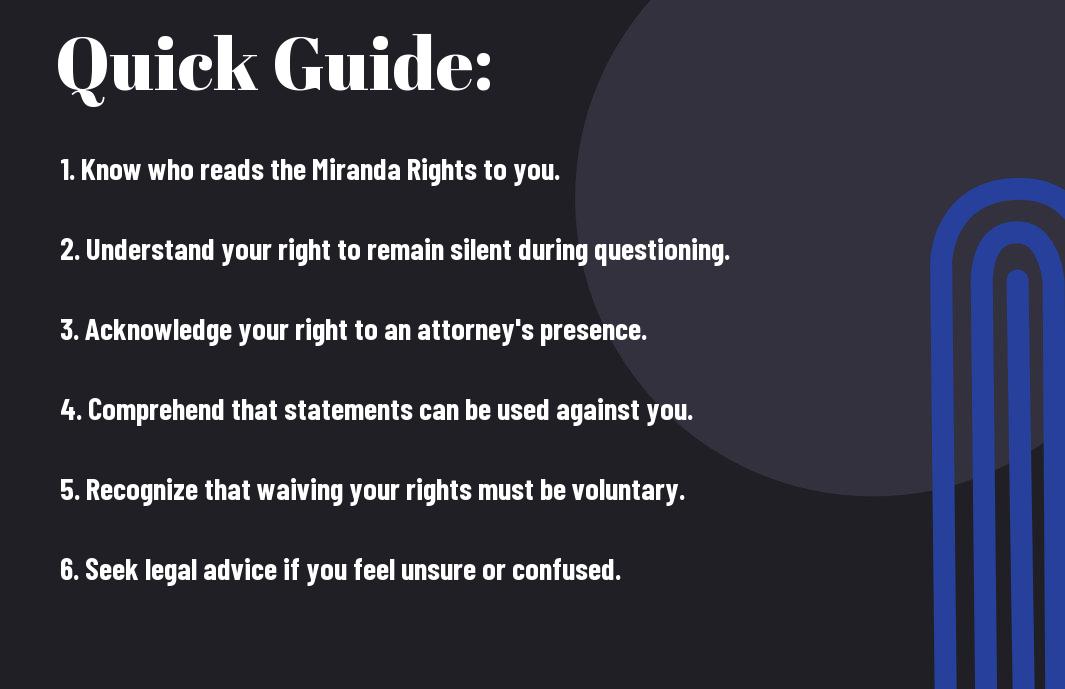

Understanding Miranda Rights: The Basics
The Miranda Rights are a vital legal safeguard that protects individuals during police interrogations. They ensure that you are informed of your rights before any questioning occurs, which is crucial to upholding the integrity of the justice system. Understanding these rights not only empowers you but also serves to protect your legal interests in potentially compromising situations.
What Are Miranda Rights?
You have the right to remain silent and the right to an attorney when you are in custody. These rights are designed to prevent self-incrimination and to ensure you have legal representation during questioning. If these rights are not communicated to you, any statements made may be inadmissible in court.
When Miranda Rights Must Be Read
On being placed in custody and before any interrogation, police must read you your Miranda Rights to ensure that you understand your legal protections. This occurs when there is a significant restriction of your freedom, making you feel as though you cannot leave.
Rights are triggered under specific conditions, primarily when law enforcement engages in questioning after you have been taken into custody. If you have not been officially arrested but are in a situation where your freedom is limited, officers may not be required to read you your rights. This fine line is critical to understanding when Miranda applies to your situation. Factors such as the environment and context of the interaction play a significant role in determining the need to issue the Miranda warning.
The Legal Foundation of Miranda Rights
Rights stem from the U.S. Supreme Court case Miranda v. Arizona (1966), which established that individuals must be aware of their rights to counsel and against self-incrimination. This landmark decision aimed to protect suspects from coercive police practices during interrogations.
Foundation for Miranda Rights is anchored in the Fifth Amendment of the U.S. Constitution, which safeguards individuals against self-incrimination. The ruling emphasized that law enforcement must ensure you are fully informed of your rights for any confession or statement to be considered valid in a court of law. This legal principle reflects a commitment to fairness and justice in the criminal justice process.
Types of Situations Where Miranda Applies
- Interrogation following an arrest
- Custodial questioning by law enforcement
- Traffic stops leading to serious charges
- Detentions under curtailment of freedom
- Offenses involving serious crimes
The importance of understanding where Miranda Rights are applicable cannot be overstated.
Any given encounter with law enforcement may lead to the application of Miranda Rights, but there are specific variables to consider. Situations that typically involve Miranda include, but are not limited to, arrests for serious offenses, custodial questioning, or any scenario where you feel your freedom is significantly restricted. Being aware of these contexts helps ensure your rights are observed.
Read the table below to gain a clearer understanding of when Miranda Rights come into play:
| Situation | Description |
|---|---|
| Arrest | When you are taken into custody by law enforcement. |
| Interrogation | When you are questioning related to a crime. |
| Custodial Detention | Your freedom of movement is curtailed. |
| Serious Offenses | Charges related to significant crimes. |
| Traffic Stop | When a stop escalates to an arrest. |
- The nuances surrounding the application of Miranda Rights are fundamental to your legal understanding.

The Four Essential Miranda Warnings
Clearly, understanding the four vital Miranda warnings is vital after an arrest. These warnings inform you of your rights and the legal protections you have during questioning. Recognizing and asserting these rights can significantly influence the outcome of your situation, ensuring you are treated fairly under the law.
Right to Remain Silent
Essential to your defense, the right to remain silent allows you to refuse to answer any questions posed by law enforcement. Exercising this right is a wise choice, as anything you say can be interpreted and used against you in court, potentially undermining your case.
Statements Can Be Used Against You
If you decide to speak with law enforcement, it’s important to understand that your statements can be used against you in legal proceedings. Being aware of this can help you make informed decisions about whether or not to engage in conversation.
Plus, anything you say in the presence of law enforcement can be documented and presented as evidence during your trial. Therefore, before providing any information or answers, consider the potential implications your words may carry and the possible effects on your case.
Right to an Attorney
Right to an attorney ensures that you have legal representation during police questioning. This right is foundational to ensuring that your interests are safeguarded, particularly if you are facing serious charges or complex legal situations.
Attorney access provides you with the advantage of having a knowledgeable professional who can guide you through the legal process, advise you on your rights, and help construct your defense. Seeking an attorney should be your priority if you find yourself in an arrest situation.
Right to Appointed Counsel
Attorney services may not always be financially accessible, but the right to appointed counsel guarantees that you can receive legal assistance regardless of your economic status. This right is pivotal in leveling the playing field, allowing you to effectively navigate the justice system.
Four fundamental rights extend to you under the law, ensuring that even if you cannot afford an attorney, one will be appointed to you. This serves to maintain fairness in the judicial process and protects your rights while you face legal challenges.
Step-by-Step: What Happens During the Miranda Warning Process
Many people may wonder how the Miranda warning process unfolds after an arrest. Below is a breakdown of the key stages:
| Stage | Description |
|---|---|
| 1. Arrest | You are taken into custody by law enforcement. |
| 2. Notification | Officers inform you of your Miranda rights. |
| 3. Acknowledgment | You are expected to acknowledge understanding. |
| 4. Waiver | You can choose to waive or assert your rights. |
Timing of the Warning
If the police are about to interrogate you while in custody, they must provide the Miranda warning before questioning can occur.
Proper Delivery Requirements
What you should know is that the Miranda warning must be delivered clearly and comprehensively for it to have legal standing.
Proper delivery typically includes explicitly stating your right to remain silent and your right to an attorney. The language should be understandable, and the officer should ensure that you comprehend your rights. Any ambiguity in delivery can affect the admissibility of your statements in court.
Documentation Procedures
Warning procedures often require that the police document the delivery of the Miranda warning during your arrest.
Documentation involves officers noting the time and situation under which the Miranda rights were conveyed to you. This record serves to protect both you and law enforcement, confirming that your rights were acknowledged and that any statements made afterward were done voluntarily and with full knowledge of your rights.
Waiving Your Miranda Rights
Rights can be waived, but you must do so knowingly and voluntarily.
Process of waiving your Miranda rights signifies that you understand the implications and choose to proceed with questioning without an attorney present. It is crucial that this decision is made without any coercion and is duly documented by law enforcement to uphold its validity in court.

Factors That Can Affect Your Miranda Rights
Now, various factors can impact the application of your Miranda rights following an arrest. These include:
- Your location during the arrest
- The presence of law enforcement
- Whether you’ve voluntarily waived your rights
- The context of your statements
Any of these elements may influence how effectively your rights are upheld during police interactions.
Custody Considerations
Affecting your Miranda rights, one key aspect is whether you are in custody. If law enforcement has formally arrested you or your freedom is significantly restricted, Miranda rights come into play.
Interrogation Environments
With regard to interrogation environments, where and how questioning occurs can greatly influence your rights. The setting, atmosphere, and nature of the interrogation can affect whether you feel compelled to speak or remain silent.
It is crucial to understand that an intimidating or coercive environment may pressure you into disclosing information without fully comprehending your rights. When interrogations happen in a confined space, such as a police station, this can heighten anxiety and alter your capacity to process the situation effectively.
Age and Mental Capacity
Factors like your age and mental capacity can significantly impact your understanding of your Miranda rights. If you are a minor or have cognitive impairments, you may not fully grasp the implications of waiving your rights.
Miranda rights must be understood in context, and vulnerable individuals may be less capable of making informed decisions about whether to speak with law enforcement. This can lead to an unfair disadvantage during questioning, affecting the protections intended by the law.
Language Barriers and Interpretation Issues
Now, if you face language barriers, understanding your Miranda rights can become complicated. If English is not your first language, it may result in misunderstandings about the rights available to you.
Language plays a pivotal role in ensuring that your rights are communicated effectively. Misinterpretations can lead to unintentional waivers of rights, rendering your legal protections inadequate. It’s crucial for law enforcement to provide proper translation services to guarantee you comprehend the information being conveyed and can make informed decisions regarding your interrogation.
Invoking Your Miranda Rights Effectively
Your ability to effectively invoke your Miranda rights ensures that you are protected during any interactions with law enforcement. By understanding how and when to assert these rights, you safeguard your interests and maintain control over the situation. Knowing the right strategies can make a significant difference in the outcome of your case.
Proper Phrasing to Assert Your Rights
There’s no need for convoluted language when asserting your rights. Simply stating, “I wish to remain silent” or “I want an attorney” is sufficient to make it clear that you are invoking your Miranda rights. Effective communication is key to ensuring your rights are acknowledged and respected.
Timing Considerations
Even when you feel pressured, it’s important to assert your rights promptly. The moment you are placed under arrest or subjected to custodial interrogation is critical; asserting your rights as soon as possible helps to prevent any self-incrimination or misunderstandings.
To optimize your protection, assert your rights immediately when the interaction shifts from casual questioning to questioning aimed at gathering evidence against you. The earlier you communicate your desire to invoke these rights, the better you can manage the situation, ensuring police respect your choices moving forward.
Common Mistakes to Avoid
Rights are often misunderstood, leading to common mistakes when invoking them. Many people mistakenly believe they can simply remain silent without explicitly stating their intention or that they can wait until later to ask for an attorney. Being unclear can result in unintended consequences.
Timing is necessary while asserting your rights. Delaying your assertion can lead to assumptions about your cooperation or willingness to speak, affecting your legal standing. Always express your desire to invoke your rights clearly right at the moment it feels necessary.
Reinitiating Communication
Clearly stating your demands is vital if you choose to reinitiate communication with law enforcement. If you feel that you’re ready to speak again after invoking your rights, you must do so explicitly. This ensures that law enforcement understands your change of intent.
Rights are not set in stone; you can reinitiate communication as long as you do so clearly and knowingly. Be aware that invoking your rights doesn’t mean you cannot speak to law enforcement later. Clarifying your intention to discuss matters again can allow for more productive interactions, provided it’s done voluntarily and without coercion.
Pros and Cons of Different Responses to Miranda Warnings
For you to make informed decisions after being read your Miranda rights, it’s important to weigh the pros and cons of various responses. The following table outlines the advantages and disadvantages of remaining silent, speaking without counsel, and requesting an attorney:
| Pros | Cons |
|---|---|
| Protects your rights | May appear guilty |
| Gives time to process | Limits your defense options |
| Encourages due process | May extend jail time |
| Reduces risk of self-incrimination | Potentially worsens police profile |
| Helps build a strong case | May hinder negotiation opportunities |
Advantages of Remaining Silent
Remaining silent allows you to avoid self-incrimination, ensuring that anything you say cannot be used against you in court. This strategy provides time to gather your thoughts and potentially consult an attorney, ultimately protecting your legal interests.
Disadvantages of Speaking Without Counsel
An unfortunate downside of speaking without legal representation is that your statements can be misinterpreted or used against you. This places your case at risk, which could lead to severe legal repercussions.
Speaking without counsel often results in unintentional admissions, as you might inadvertently provide details that could undermine your defense. In high-pressure situations, it’s easy to feel compelled to speak, but this can complicate legal proceedings and harm your position in court.
Benefits of Requesting an Attorney
To effectively navigate the complexities of the legal system, requesting an attorney ensures that your rights are protected. An attorney can provide guidance on legal processes, advise you on the best course of action, and create a tailored defense strategy.
Without an attorney, you might not fully understand the implications of your statements or the legal terminology involved. An experienced legal representative can help you communicate effectively, ensuring that your rights remain intact while also advocating on your behalf throughout the legal process.
Potential Consequences of Waiving Rights
Even if you choose to waive your Miranda rights, there are significant consequences that could impact your legal case. This decision can lead to the admissibility of self-incriminating statements in court, complicating your defense.
The risk associated with waiving your rights often includes providing statements that undermine your case or facing a more severe prosecution. This emphasizes the importance of fully understanding the weight of the choices you make when interacting with law enforcement.
Summing up
Drawing together the insights from ‘Your Rights Explained – A Comprehensive Guide To Understanding Miranda Rights After An Arrest,’ you now have a clearer understanding of your rights when facing arrest and interrogation. Knowing how to assert your rights effectively empowers you to navigate the legal system with confidence. It’s imperative to be aware of what you can do to protect yourself and ensure that your rights are respected during such critical moments. This guide serves as a valuable resource to help you remain informed and prepared in any situation involving law enforcement.