

It’s necessary to understand how bail functions and the implications it has for you if you or a loved one ever finds themselves in legal trouble. This guide will break down the bail process, explain various types of bail options, and highlight what you should be aware of when dealing with authorities or bail bondsmen. By gaining a clearer understanding of bail, you can make informed decisions that could significantly affect your situation.
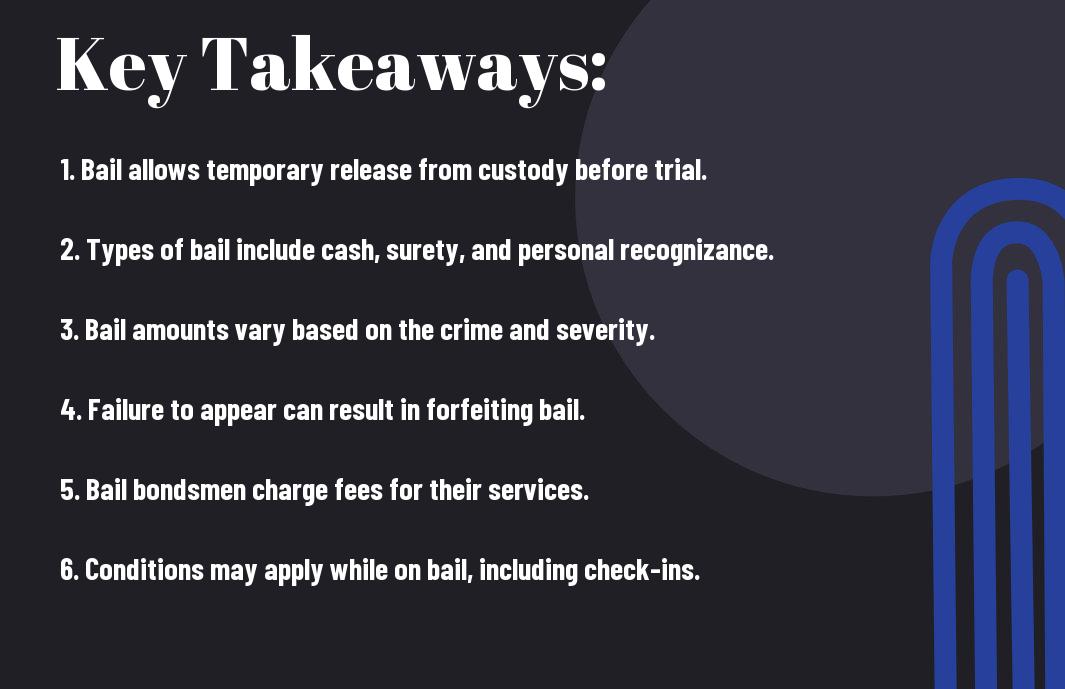
What is Bail?
Before you face legal challenges, it’s necessary to understand the concept of bail. Bail is a financial arrangement that allows you to secure your release from custody while awaiting trial. It acts as a form of insurance, ensuring that you appear in court as required.
Definition of Bail
Between the stages of being arrested and standing trial, bail provides you the opportunity to regain your freedom. Essentially, it’s the money or property you forfeit to the court to guarantee your future appearance.
Types of Bail
Against the backdrop of the legal system, various types of bail exist to fit different circumstances. Understanding these options can help you make informed decisions. Here are the common types of bail:
- Cash Bail
- Surety Bond
- Property Bond
- Personal Recognizance
- Release on Citation
Thou should consider which type best fits your situation.
| Type of Bail | Description |
| Cash Bail | Paying the full bail amount in cash. |
| Surety Bond | Using a bail bondsman to secure release. |
| Property Bond | Using property as collateral for bail. |
| Personal Recognizance | Released on your own promise to appear. |
| Release on Citation | A ticket allowing release without bail. |
Bail options can affect your financial obligations and conditions of release. You should analyze each carefully to choose what works best for you. Understanding this can significantly impact your legal proceedings and personal circumstances.
- Often you must pay a fee for a surety bond.
- Cash bail returns upon completion of your court appearances.
- Property bonds require a clear title or deed.
- Personal recognizance involves trustworthiness.
- Citation releases your right at the moment of arrest.
Thou should evaluate these options to make informed decisions for your case.
| Type of Bail | Important Considerations |
| Cash Bail | Can be refunded if all court dates are met. |
| Surety Bond | Typically costs 10-15% of total bail. |
| Property Bond | May take longer to process. |
| Personal Recognizance | Not available for serious offenses. |
| Release on Citation | Usually for minor offenses. |

The Bail Process
Assuming you or someone you know has been arrested, understanding the bail process is important. The process typically begins when a judge sets a bail amount during the initial court appearance. You can then secure the release of the accused by paying the bail, either in cash or through a bail bond service. This allows the defendant to await trial outside of jail, under the condition that they return for all required court appearances.
Steps in Posting Bail
Behind the scenes, posting bail involves several key steps. First, you must determine the bail amount set by the judge. Next, gather the necessary funds or contact a bail bondsman for assistance. Then, complete the necessary paperwork and provide any required collateral. Finally, present the payment to the jail or court for the release of the defendant.
Factors Influencing Bail Amount
To understand what influences the bail amount, consider several key factors that the judge evaluates:
- The severity of the crime committed
- The defendant’s criminal history
- The risk of flight
- Community ties and family support
This assessment determines how much bail you’ll need to pay for release.
Hence, the bail amount is not arbitrary; it reflects the court’s efforts to balance public safety and the defendant’s rights. The judge may take into account various elements, including:
- The seriousness of the charges
- The potential penalty if convicted
- Any prior warrants or failures to appear in court
- Your profession and lifestyle
This understanding can help you prepare for possible financial implications when facing the bail process.
Bail Bonds
Despite the challenges of navigating the bail system, bail bonds provide an alternative for those who cannot afford the full bail amount. A bail bond is importantly a loan provided by a bail bondsman, allowing you to secure your release from jail while awaiting trial. In exchange for this service, you typically pay a non-refundable fee, which is a percentage of the total bail amount. This option not only helps you regain your freedom but also offers peace of mind during a difficult time.
How Bail Bonds Work
Beside paying a fee to the bail bondsman, the process of obtaining a bail bond involves several steps. First, you or a representative will contact a bail bondsman, who will assess your situation and the associated risks. Next, after providing necessary information and signing a contract, the bail bondsman will post the bail on your behalf. This allows you to be released from custody while you await your court date, alleviating the stress of remaining in jail.
Responsibilities of a Bail Bond Agent
Across the bail bonds industry, agents play a key role in facilitating the process for you. Their primary responsibility is to ensure that you appear in court as scheduled. They may require collateral to secure the bond and, in some cases, may involve tracking if you fail to meet your court obligations. Understanding this dynamic can help you build a professional relationship with your bail bond agent, ensuring a smoother experience throughout the legal process.
Agent responsibilities also include conducting thorough assessments of your case and financial background to determine the risks involved. They are tasked with ensuring that you comprehend the terms of the bail agreement and the importance of attending all court appearances. By maintaining open communication, your bail bond agent can guide you through any complications that may arise, ensuring that you remain informed and prepared throughout the duration of your case.
Conditions of Bail
All individuals released on bail must adhere to specific conditions set by the court. These conditions are designed to ensure your appearance at future court dates and maintain public safety. Failing to follow these conditions could result in your bail being revoked, leading to serious legal repercussions. It’s important to fully understand the terms outlined by the judge and to comply with them during the duration of your bail.
Standard Conditions
Across most bail agreements, there are standard conditions that you are typically required to follow. These often include maintaining contact with your bail agent, not leaving the jurisdiction, and attending all scheduled court appearances. Additionally, you may be prohibited from engaging in criminal activity or using drugs or alcohol. Adhering to these conditions is imperative to demonstrate your commitment to complying with the law.
Special Conditions
Standard conditions may not cover every situation; therefore, judges can impose special conditions tailored to your specific case. These conditions can include restrictions on specific behaviors, such as no contact with certain individuals, mandatory counseling, or restrictions on travel. They are meant to address your circumstances and any potential risks you may pose. Special conditions are directly linked to the nature of your charges and can vary widely from case to case.
In addition, special conditions can significantly impact your daily life and routines. For example, if you are required to attend substance abuse treatment, this may influence your work schedule or relationships. It’s vital to take these conditions seriously and ensure compliance, as non-compliance can lead to your arrest and additional legal challenges. If you’re uncertain about any conditions set by the court, consulting with your attorney is advisable to navigate your obligations effectively.
Common Misconceptions About Bail
Now, it’s important to address the common misconceptions surrounding bail. Many people believe that bail is only for the wealthy, while in reality, there are various options available to suit different financial situations. Another frequent myth is that paying bail guarantees a favorable outcome in court; however, bail is simply meant to ensure your appearance at trial. By understanding these misconceptions, you can navigate the bail process more confidently.
Myths vs. Facts
About bail, there are several myths that can lead to confusion. For instance, some may think that bail is always a large sum of money, but bail amounts can vary greatly depending on the charges and your circumstances. Additionally, the idea that you cannot bail out a friend or family member unless you are related is false—anyone can assist in securing bail for someone in custody.
Legal Rights regarding Bail
With regards to the legal rights surrounding bail, you possess specific protections throughout the process. You have the right to request bail at your arraignment, and the court is required to set a reasonable bail amount based on the severity of your charges and your flight risk. Additionally, if you cannot afford bail, you can ask for alternatives, such as a release on your own recognizance or a bail hearing.
Hence, understanding your legal rights related to bail can significantly impact your situation. Knowing that you may challenge excessive bail amounts or argue for alternatives allows you to actively participate in the process and advocate for your own release. Being informed about these rights means you are better prepared to make decisions that can affect your case and future.
Consequences of Missing Bail
Unlike what many may believe, missing bail can significantly impact your life. When you don’t appear in court as required, a warrant for your arrest may be issued. This can lead to additional charges and a loss of any bail funds you have already paid. Plus, missing court dates can complicate your case, making it more challenging to negotiate a favorable outcome.
Legal Ramifications
Across the legal landscape, failing to appear for your bail can result in severe consequences. You may face additional charges for bail jumping or failure to appear, which can lead to increased fines and potential jail time. Courts take these matters seriously, and repeated failures to comply can negatively impact your criminal record.
Financial Implications
Besides potential legal troubles, missing bail can also have lasting financial implications. If you posted bail through a bail bondsman, you may forfeit the premium paid for the bond, which is generally non-refundable. You might also be responsible for the entire bail amount if the court deems it necessary.
Bail obligations often extend beyond initial costs. If you miss your court date, any amount posted as bail may be forfeited, resulting in a substantial financial loss. Additionally, if you used a bail bondsman, the fees you paid are typically non-refundable, regardless of your case outcomes. Furthermore, you could face escalating penalties and additional costs related to rescheduling court appearances or defending against new charges, substantially impacting your financial stability.
Conclusion
The process of bail can seem overwhelming, but understanding how it works is vital for navigating the legal system effectively. You should familiarize yourself with different types of bail, the factors influencing bail amounts, and the implications of failing to appear in court. By knowing your rights and options, you can make informed decisions that help secure your release while ensuring compliance with legal obligations. Armed with the right information, you can approach your situation with confidence and clarity.