

Many people underestimate the significant impact a criminal defense attorney can have on your court case. As you navigate the complexities of the legal system, your attorney serves as your advocate, ensuring your rights are protected and your voice is heard. They provide guidance on legal strategies, evidence presentation, and courtroom procedures, all while working tirelessly to achieve the best possible outcome for you. Understanding your attorney’s role can empower you during this challenging time and help you make informed decisions about your defense.
Understanding Criminal Defense
For anyone facing legal challenges, understanding criminal defense is important. A criminal defense attorney plays a vital role in navigating the complexities of the law, advocating for the rights and interests of individuals charged with crimes. They interpret legal terminology, protect against unjust prosecution, and work to achieve the best possible outcomes for their clients.
Definition and Purpose
Purpose is to provide a robust defense that ensures fair legal representation. This includes examining the evidence, leveraging legal knowledge, and utilizing strategic planning to protect the rights of the accused. Ultimately, the goal is to defend your innocence or mitigate the consequences of any charges.
Types of Criminal Cases
With a variety of criminal cases confronted in court, you must understand their classifications. Here are some types:
| Type of Case | Description |
|---|---|
| Felonies | Serious offenses often leading to imprisonment exceeding one year. |
| Misdemeanors | Less serious crimes punishable by fines or shorter jail time. |
| Infractions | Minor violations, generally resulting in fines rather than jail time. |
| White-collar Crimes | Non-violent crimes usually for financial gain, like fraud. |
| Drug Crimes | Offenses related to illegal substances, varying in severity. |
- Assume that your case falls under one of these categories; understanding its implications will help in your defense.
Criminal cases can range from minor infractions like traffic violations to severe felonies involving violence. Each type has its unique procedure and potential consequences, which can significantly affect your life. Therefore, knowing what type you are facing is important for building an effective defense strategy.
| Type of Crime | Potential Consequences |
|---|---|
| Sex Crimes | Severe penalties, including registration as a sex offender. |
| Theft | Jail time, fines, or restitution to victims based on the severity. |
| Assault | Charges can lead to imprisonment and restraining orders. |
| Alcohol Offenses | Penalties may include fines, community service, or treatment programs. |
| Cyber Crimes | Severe implications due to increasing digital vulnerabilities. |
- Assume that being informed about the nature of your case allows you to communicate effectively with your attorney.

The Role of a Criminal Defense Attorney
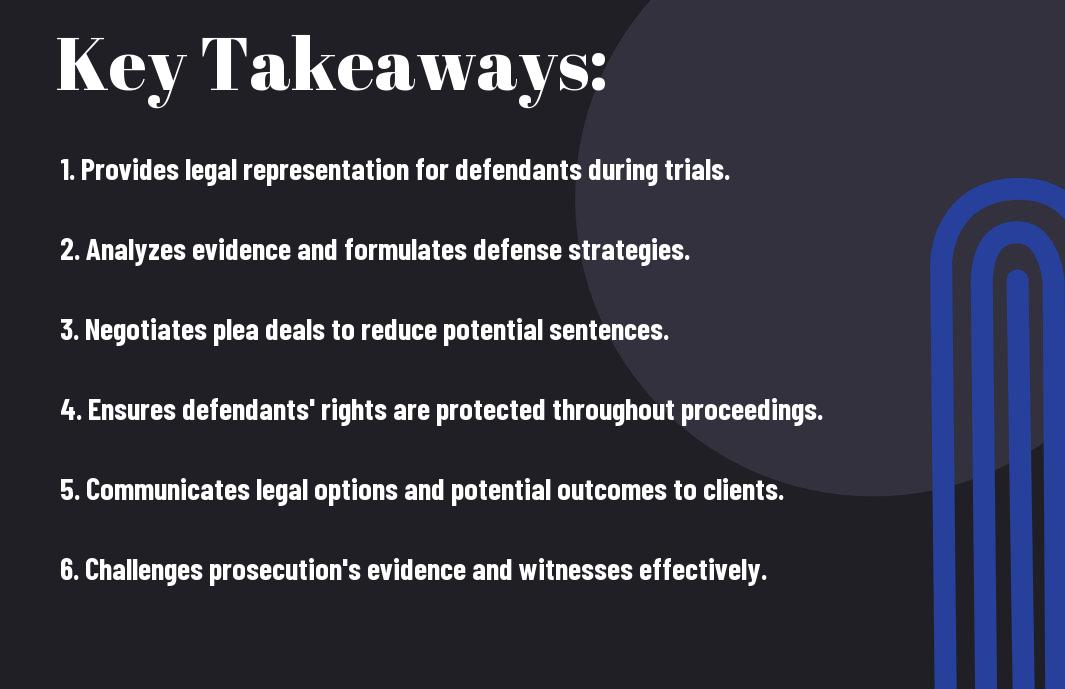
One primary function of a criminal defense attorney is to advocate for your rights throughout the legal process. They ensure that you receive a fair trial, challenge evidence against you, and provide guidance tailored to your specific situation. Their expertise helps navigate complex legalities, ultimately aiming for the best possible outcome for your case.
Pre-Trial Responsibilities
The pre-trial phase is imperative in building a strong defense. Your attorney will conduct thorough investigations, gather evidence, and interview witnesses to strengthen your case. They will also analyze charges, negotiate plea deals, and file necessary motions, ensuring you are well-prepared before entering the courtroom.
Trial Representation
Role of the criminal defense attorney during the trial is to present your case effectively, arguing on your behalf and cross-examining witnesses. They will challenge the prosecution’s evidence and highlight any inconsistencies to bolster your defense. This representation is critical for safeguarding your interests and managing courtroom dynamics.
Responsibilities of your attorney in trial representation include presenting compelling arguments, organizing substantial evidence, and crafting a coherent narrative that aligns with your defense strategy. They must be adept in courtroom procedures, ensuring that all legal standards are met. By staying focused on your case, they aim to enhance your chances for a favorable verdict.
Legal Strategies Employed
All successful criminal defense attorneys employ a range of legal strategies tailored to your specific case. These strategies include gathering evidence, questioning witnesses, and scrutinizing the prosecution’s case for weaknesses. By utilizing these techniques, your attorney can build a robust defense that aims to protect your rights and achieve the best possible outcome in court.
Defense Strategies
Legal defense strategies may vary widely based on the charges you face and the circumstances surrounding your case. Your attorney may choose to employ strategies such as self-defense, insanity, or alibi, all of which offer different avenues for challenging the evidence against you. By exploring these options, you give yourself the best chance at a favorable result.
Negotiations and Plea Bargains
Around the courtroom, negotiations and plea bargains play a significant role in criminal defense. Your attorney can engage in discussions with prosecutors to reach an agreement that may lead to reduced charges or a more lenient sentence, ultimately serving your best interests.
Plus, engaging in plea negotiations can often save you the time and stress of a lengthy trial. By opting for a plea deal, you may be able to avoid the uncertainty of court proceedings and secure a more favorable resolution to your case. This process allows you to make informed decisions about your future while working collaboratively with your defense attorney to achieve the best possible outcome.
The Importance of Client Communication
Keep in mind that effective communication is vital for a successful defense. It enables you to understand your case better, as well as the strategies your attorney intends to employ. Good communication ensures that your attorney is aware of your concerns, personal circumstances, and any vital information that could influence your defense. This collaborative effort is the foundation of a strong attorney-client relationship.
Building Trust and Rapport
With open and honest communication, you can foster trust and rapport with your attorney. This bond allows you to express your fears and uncertainties, enabling your attorney to tailor their defense strategy to your unique situation. When you feel comfortable discussing your case, it creates a productive environment where your attorney can advocate effectively on your behalf.
Keeping the Client Informed
Among the important aspects of client communication is ensuring you remain informed throughout the legal process. Understanding the progress of your case helps alleviate anxiety and prepares you for potential outcomes.
Consequently, your attorney should provide you with regular updates, explain legal terminology, and clarify any concerns that arise. Being kept in the loop not only empowers you but also strengthens your case as your attorney can make strategic decisions based on your input and understanding. An informed client is more likely to cooperate during the trial process, which ultimately leads to a more effective defense strategy.
Ethical Responsibilities
After you engage a criminal defense attorney, you enter a realm filled with ethical responsibilities that govern their conduct in court. These responsibilities are fundamental to ensuring justice prevails while protecting your rights. Your attorney’s commitment to maintaining integrity, respect, and professionalism is vital, as these guidelines shape their actions and decisions throughout your legal journey.
Confidentiality
To maintain your trust and confidence, your attorney is bound by strict confidentiality. This means any information you share regarding your case, no matter how sensitive, cannot be disclosed without your consent. This protection allows you to communicate openly with your attorney, helping them craft a stronger defense and represent your interests effectively.
Duty to the Court
Responsibilities extend beyond your interests to the court itself. Your attorney is obligated to uphold the law, ensuring that proceedings are conducted fairly and justly. This duty requires integrity in all representations and communication, reinforcing the legal system’s credibility and your right to a defense.
Hence, your attorney must navigate the balance between advocating for your interests and fulfilling their obligations to the court. This entails being honest in presenting facts, refraining from misleading the court, and ensuring that all legal processes are undertaken properly. By upholding these duties, your attorney champions not only your rights but also the overall integrity of the justice system.
The Impact of a Defense Attorney on Outcomes
Unlike many professions, the effectiveness of a criminal defense attorney can significantly alter the outcome of your case. A skilled attorney understands the intricacies of the law and court procedures, providing you with a higher chance of a favorable result. Whether you are facing misdemeanor or felony charges, their expertise can influence judgments, plea bargains, and even jury perceptions, shaping your future dramatically.
Case Outcomes
Before you go to court, having a competent defense attorney by your side can make a profound difference in your case’s outcome. This professional can analyze the evidence, identify weaknesses in the prosecution’s arguments, and help you develop a robust defense strategy tailored to your unique circumstances, ultimately leading to better plea options or acquittals.
Long-Term Consequences
At times, the outcome of your case might seem immediate, but the long-term consequences can follow you for years to come. A conviction can impact your employment, housing prospects, and relationships, making it crucial to have a defense attorney who not only focuses on short-term solutions but also considers how the case will affect your life in the future.
And while a defense attorney can work to achieve the best possible outcome during your trial, they can also provide invaluable advice on how to navigate the repercussions of that outcome. Understanding the long-term impact of a conviction, such as difficulties in employment or the loss of certain rights, can help you make informed choices. Your attorney can guide you through options for expungement or rehabilitation, ensuring you have the tools to move forward positively, regardless of the verdict.
Summing up
To wrap up, your criminal defense attorney plays a vital role in the court process, advocating for your rights and ensuring that you receive a fair trial. They are responsible for building a strong defense, negotiating plea deals, and representing you in front of a judge and jury. By effectively communicating the facts of your case, they help to mitigate consequences and defend against potential charges. Engaging a skilled attorney not only enhances your understanding of legal proceedings but also strengthens your position within the justice system.