

Just as you might tidy up your living space, you have the opportunity to clear your criminal history through expungement and record sealing. These legal processes can help you limit access to your past offenses, giving you a fresh start and opening doors to new opportunities. Understanding what expungement and record sealing entail can empower you to take control of your future. In this blog post, we will explore the distinctions between these options, the eligibility criteria, and the steps you need to take to clear your record effectively.
Understanding Expungement
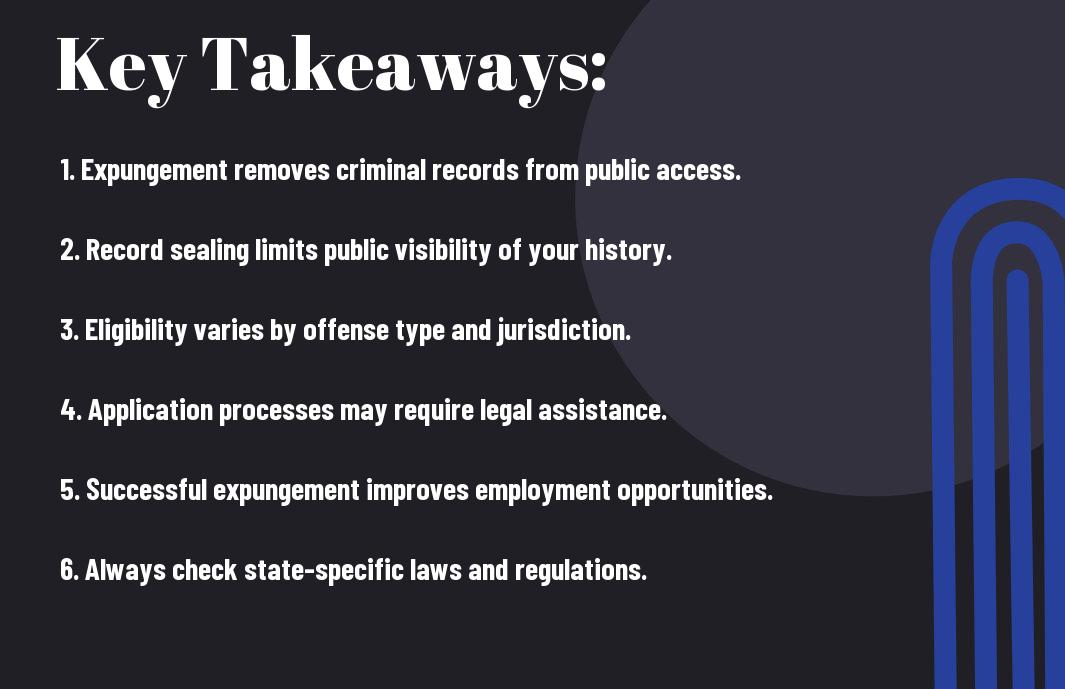
As you navigate through your criminal history, understanding expungement is necessary. This legal process allows you to remove certain criminal records from public access, which can significantly improve your opportunities for employment, housing, and overall peace of mind. Expungement is often viewed as a fresh start, enabling you to move forward without the burden of a past conviction affecting your present.
Definition and Purpose
About expungement, it is a legal process that typically results in the sealing or erasure of arrest or conviction records. This means that, legally, you do not have to disclose certain criminal history when applying for jobs, housing, or loans. The primary purpose of expungement is to give individuals a chance to rehabilitate and reintegrate into society without the stigma of a criminal record hindering their progress.
Eligibility Criteria
Beside understanding the process, you should also be aware of the eligibility criteria for expungement. Not every type of conviction can be expunged; your eligibility often depends on the nature of the offense, the time that has passed since your conviction, and whether you have fulfilled sentencing requirements. Generally, many jurisdictions allow expungement for minor offenses or situations where you completed rehabilitation programs.
Expungement eligibility varies significantly by state and the specifics of your case. There are typically requirements like waiting periods following your conviction, completion of community service, or fulfilling the terms of probation. Some offenses, such as violent crimes or certain felonies, might be excluded from expungement opportunities altogether. It’s advisable to research your local laws or consult a legal expert to understand your specific eligibility based on your circumstances.
The Record Sealing Process
Any individual seeking to clear their criminal history through record sealing will find that the process can be detailed and requires careful attention to procedures. It typically involves evaluating your eligibility, filing the appropriate paperwork, and potentially attending a hearing. Understanding the record sealing process is important for ensuring your application is successful and efficient.
Steps Involved
To navigate the record sealing process effectively, you will need to begin by gathering all necessary documentation related to your conviction. This may include obtaining court records and ensuring any waiting period has lapsed. Next, you will complete and submit a petition for sealing your records to the court, possibly requiring a hearing where you can present your case for record sealing.
Timeframes and Fees
To secure your records, you should be aware that timeframes and fees for the process can vary significantly based on your location and the complexity of your case. After submitting your application, you may wait several weeks to months for the court to process your request.
Plus, fees associated with record sealing are generally manageable, although they can differ depending on your jurisdiction. Some courts may charge filing fees, while others might have additional costs for obtaining records or attending hearings. It’s wise to budget accordingly and, if necessary, explore options for fee waivers if you qualify based on your financial situation.
Differences Between Expungement and Sealing
After navigating the complexities of criminal records, it’s important to understand the differences between expungement and record sealing. Expungement effectively erases your criminal record, allowing you to declare that the offense never occurred. In contrast, sealing a record restricts access to it, meaning the record still exists but is hidden from most background checks, allowing you a cleaner slate in many situations.
Legal Implications
Among the many considerations when contemplating expungement or sealing, the legal implications are significant. Expungement generally means that the court will formally erase the record, while sealing only restricts its visibility. Each option has its own eligibility criteria, which directly affect your legal rights and benefits moving forward.
Impact on Employment and Housing
Above all, the impact on employment and housing can be profound. Having a criminal record might limit your job opportunities or make finding suitable housing challenging. Both expungement and sealing can help mitigate these challenges by enhancing your prospects and providing you with a fresh start.
For instance, many employers and landlords conduct background checks before making decisions. If your record is expunged, you can confidently state that you have no criminal history. Even with a sealed record, you may still face some barriers; however, the limited visibility of your record may improve your chances of being considered for roles or rentals. Understanding these options can help you make informed decisions that benefit your future.
Common Myths and Misconceptions
Once again, many people have misconceptions about expungement and record sealing. A common myth is that once your record is sealed or expunged, it simply disappears from all databases accessible by employers, law enforcement, or the public. However, the reality is more complex, and understanding these myths can guide you in making informed decisions about your criminal history.
What Expungement Cannot Do
Between the benefits of expungement and record sealing, it’s important to understand their limitations. Expungement does not erase the memory of past actions, nor does it guarantee that your record will never be found. Some organizations may still access information even after it’s been expunged, which can leave you at a disadvantage in certain situations.
Misunderstandings About the Process
Beside confusion about what expungement can achieve, many misunderstand the application process. You might assume that obtaining an expungement is a straightforward endeavor, but in reality, it often involves navigating various legal procedures, which can be time-consuming and intricate without proper guidance.
Understanding the application process is vital for successfully expunging your record. You may need to gather specific documents, meet eligibility requirements, and possibly attend a hearing. Each state has its own rules and regulations, which means what works in one jurisdiction may not be applicable in another. Educating yourself about these intricacies can help you avoid delays and setbacks in your effort to clear your criminal history.

State-Specific Expungement Laws
Keep in mind that expungement laws can vary significantly from one state to another. Each jurisdiction has its own criteria for eligibility, application processes, and waiting periods. Understanding your state’s specific laws is important for you to navigate the expungement process effectively and make informed decisions about clearing your criminal history.
Variations Across States
Behind every state’s expungement law, there are unique regulations and requirements that reflect local policies and priorities. Some states may allow automatic expungement after completing your sentence, while others require applications and hearings. It’s beneficial for you to familiarize yourself with the variances to see how they impact your case.
Resources for State Laws
Behind the complexities of state-specific laws, various resources can assist you in understanding your options for expungement. Numerous websites, national organizations, and local legal aid offices provide information tailored to your state’s regulations, including eligibility criteria, application forms, and step-by-step guides to the process.
Due to the diverse nature of expungement laws across states, make use of these resources to ensure you have accurate and up-to-date information. Legal aid organizations and online databases can direct you to helpful materials such as state government websites, which typically outline the necessary steps for expungement. By relying on these resources, you can streamline your journey towards clearing your criminal record.
The Role of Legal Assistance
Unlike navigating the expungement and record sealing process alone, legal assistance provides you with invaluable expertise and guidance. An attorney specialized in this field can help you understand eligibility requirements, prepare the necessary documentation, and represent you in hearings, significantly increasing your chances of a favorable outcome. With their knowledge of local laws and court procedures, they can help streamline the process and alleviate the stress associated with clearing your criminal history.
When to Seek Help
By determining the complexity of your case, you may decide when it’s time to seek legal assistance. If you find the process overwhelming or if you have a history that complicates your eligibility, consulting with an attorney early can make a significant difference. Engaging a professional can save you time and ensure that you meet all necessary legal requirements effectively.
Choosing the Right Attorney
Above all, selecting the right attorney is vital for your expungement journey. Look for someone who specializes in criminal law and has a proven track record in handling record sealing cases. A knowledgeable attorney will not only understand the nuances of your case but also provide personalized attention to your unique circumstances, ensuring your legal needs are met efficiently.
Even after narrowing your choices, consider meeting prospective attorneys for consultations to assess their approach and experience. Ask about their familiarity with local courts and any prior successes in cases similar to yours. This will help ensure that you choose an attorney who is equipped to advocate effectively on your behalf, enhancing your chances of a successful outcome when clearing your criminal history.
To wrap up
Presently, expungement and record sealing offer you a valuable opportunity to clear your criminal history, enabling you to move forward with your life without the burden of past mistakes. By understanding the processes and requirements specific to your situation, you can take actionable steps to restore your reputation and enhance your future prospects. It’s imperative to be proactive and seek the guidance needed to navigate your unique path toward a cleaner slate, allowing you to embrace new opportunities with confidence.