

With the complexities of the criminal justice system, understanding plea bargains can significantly impact your legal journey. A plea bargain can resolve your case more quickly and with potentially lesser penalties compared to going to trial. This post will guide you through the mechanics of plea bargains, the advantages they offer, and the factors you should consider before deciding to accept one. By grasping these concepts, you can make informed choices that will affect your future.
Understanding Plea Bargains
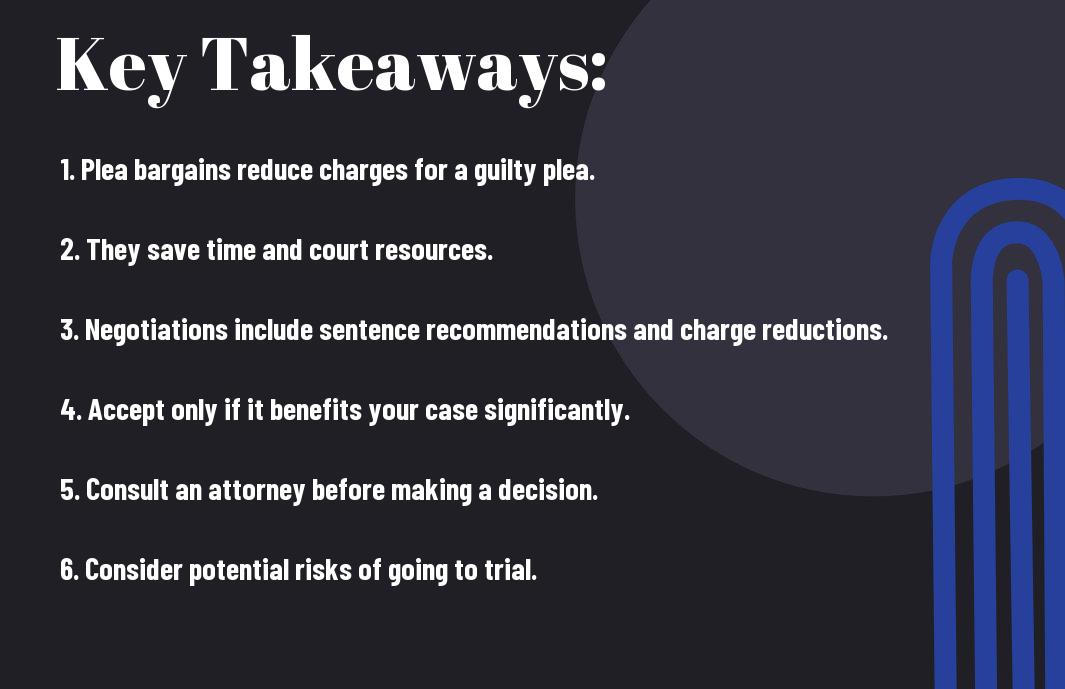
Your comprehension of plea bargains is necessary when navigating the legal system. They serve as a negotiation tool between the defendant and prosecution, allowing fewer charges in exchange for a guilty plea. By understanding how they function, you can make more informed decisions regarding your case, which may impact the outcomes significantly.
Definition of Plea Bargains
An effective definition of a plea bargain is a legal agreement in which a defendant agrees to plead guilty to a lesser charge or receive a lighter sentence in exchange for various concessions, such as avoiding trial and ensuring a swifter resolution. This helps alleviate court backlog and offers benefits for both sides.
Types of Plea Bargains
There are several types of plea bargains, each with unique characteristics that can affect your case. The most common types include:
- Charge Bargain: Pleading to a lesser charge.
- Sentence Bargain: Agreed upon sentence in exchange for a guilty plea.
- Fact Bargain: Agreement on specific facts that will be presented in court.
- Count Bargain: Pleading guilty to fewer counts than originally charged.
- Cooperation Bargain: Offering information in exchange for leniency.
Perceiving these distinctions can greatly influence your strategy during negotiations.
Bargains often provide a practical approach in resolving cases efficiently. Familiarizing yourself with the different types can aid you in deciding which option is best suited for your circumstances. Here’s a breakdown of plea bargain types:
| Type of Plea Bargain | Description |
| Charge Bargain | Pleading to a lesser charge. |
| Sentence Bargain | Agreed upon sentence for a guilty plea. |
| Fact Bargain | Agreement on specific facts presented in court. |
| Count Bargain | Pleading guilty to fewer counts than charged. |
| Cooperation Bargain | Offering information for leniency. |
Definition of these types is fundamental in navigating the legal landscape. Understanding their implications allows you to tailor your approach accordingly. Consider the potential outcomes before committing to any of these arrangements.
The Plea Bargaining Process
While navigating the complexities of the legal system, understanding the plea bargaining process is imperative. This process typically involves negotiations between you and the prosecution, where you might agree to plead guilty in exchange for reduced charges or a lighter sentence. Engaging in this dialogue can significantly impact the outcome of your case, so it’s vital to be informed and strategic in your approach.
Steps Involved
Among the steps in the plea bargaining process, the initial phase involves discussions between your legal counsel and the prosecutor. Both parties evaluate the evidence and potential outcomes, leading to an agreement on the charges and possible penalties. Once a deal is reached, it must be presented to a judge, who can accept or reject it based on its fairness and legality.
Role of Legal Counsel
Against the backdrop of plea negotiations, your legal counsel plays a pivotal role in ensuring your best interests are represented. They will guide you through the process, analyze the evidence against you, and advise you whether accepting a plea deal is beneficial.
Also, your attorney’s experience can be invaluable during plea negotiations. They have insights into the prosecution’s strategy and can assess the strength of your case. By working closely with you, your legal counsel ensures that you understand the implications of any plea deal, helping you make informed decisions that align with your personal circumstances and legal goals.
Advantages of Accepting a Plea Bargain
Unlike going to trial, accepting a plea bargain can offer you several significant advantages, such as a lesser sentence and the ability to maintain some control over the outcome of your case. This can lead to reduced stress and uncertainty, allowing you to move forward without the burden of a lengthy trial. By negotiating a plea bargain, you can sometimes avoid the harsh realities of a full court proceeding.
Potential Sentence Reduction
On accepting a plea bargain, you often open the door to a potential reduction in your sentence, which can be particularly beneficial if the evidence against you is strong. This reduction can lead to less severe penalties, such as shorter jail time or lower fines, making it an appealing option when faced with overwhelming evidence.
Case Resolution Efficiency
Accepting a plea bargain can drastically streamline the resolution of your case, enabling you to avoid the complexities of a trial and receive a quicker outcome.
Plus, when you choose to accept a plea bargain, you not only save time but also reduce the emotional toll associated with lengthy court proceedings. Trials can drag on for months or even years, while a plea deal allows you to resolve your situation much more quickly, enabling you to plan your future with more certainty and less anxiety. Engaging in negotiations with the prosecution can lead to an outcome that wraps up your case efficiently, allowing you to move forward in your life without the lingering uncertainty of a trial hanging over your head.
Disadvantages of Accepting a Plea Bargain
Keep in mind that accepting a plea bargain can come with several disadvantages. First, you may end up facing a conviction for a crime you didn’t commit, merely to avoid the uncertainty of a trial. Additionally, the pressure to accept a deal can cloud your judgment, causing you to choose a less favorable outcome than you might achieve in court.
Possible Innocence Implications
Implications of a plea bargain can lead to wrongful convictions. By accepting a deal, you might inadvertently admit guilt for a crime you didn’t commit, resulting in a permanent mark on your record and a tarnished reputation. This can be particularly concerning if new evidence later proves your innocence, leaving you with few options for recourse.
Long-term Consequences
One significant disadvantage of accepting a plea bargain lies in the long-term consequences it can impose on your life. A conviction, even for a lesser charge, can affect job prospects, housing applications, and even relationships. The stigma of a criminal record may follow you for years, limiting your opportunities and affecting your personal and professional life.
Even after you have served your sentence, the repercussions of your plea bargain may linger. You’ll likely face challenges when seeking employment, as many employers conduct background checks and may hesitate to hire someone with a criminal record. Moreover, certain professions may be entirely off-limits to you due to the nature of your conviction. Thus, it’s important to weigh these potential long-term impacts before deciding to accept a plea bargain.
Factors to Consider Before Accepting a Plea Bargain
Once again, before you accept a plea bargain, consider several factors that can influence your decision:
- The severity of the charges against you
- Your current relationship with the legal system
- The potential consequences of a conviction
- The strength of the prosecution’s case
- Your personal and financial circumstances
Any of these factors can significantly impact whether accepting the plea bargain is in your best interest.
Case Strength and Evidence
Accepting a plea bargain often depends on the strength of the evidence against you. If the prosecution has substantial evidence that makes a conviction likely, it may be wise to consider a plea deal. Conversely, if there are weaknesses in their case or lack of evidence, you might choose to fight the charges in court. Be sure to assess both your own evidence and what the prosecution has when making this decision.
Personal Circumstances
Above all, your personal circumstances can play a significant role in the decision to accept a plea bargain. Factors like your job stability, family obligations, or health issues might make a trial not only stressful but also potentially detrimental to your life.
Also, consider the impact of potential incarceration on your loved ones and financial stability. A plea bargain might offer a quicker resolution, allowing you to maintain some control over your life. Evaluating how the outcome affects your future will guide you in making this important decision, so take time to reflect on what matters most to you.

When to Reject a Plea Bargain
Not all plea bargains are in your best interest, and there are times when rejecting one may be more advantageous. If the proposed deal does not adequately address the severity of the charges or ignores your rights, you should consider walking away. An experienced attorney can help you assess your specific situation and guide you in making an informed decision about whether to accept or reject the offer.
Evaluating the Risks
Behind every plea bargain, there are potential risks that could impact your future. Before accepting any deal, it’s crucial to weigh the consequences that a conviction may have on your life, including possible jail time, fines, and a permanent criminal record. Understanding these implications will help you decide if the plea bargain is worth accepting or if fighting the charges is a better option.
Situations Favoring Trial
One situation where you might favor going to trial is when the evidence against you is weak or circumstantial. If you believe that you can convince a jury of your innocence or if there are significant legal defenses available, taking your case to trial may be a viable option. Additionally, if the potential sentence from a plea deal is excessive compared to what you might face at trial, it may be worth pursuing your case before a judge and jury.
Reject any plea offer if the prosecution’s evidence is not compelling or if there are significant legal issues that could lead to a dismissal. If the potential penalties outlined in the plea bargain far exceed what you could face at trial, it may also be wise to pursue a trial. Consult with your attorney to evaluate the specific strengths and weaknesses of your case, ensuring you make a decision that aligns with your best interests.
Conclusion
From above, it is clear that understanding how plea bargains work is imperative for navigating the legal system. When considering whether to accept a plea bargain, weigh the potential benefits against the risks of going to trial. Assess your situation thoroughly, taking into account the evidence against you and the possible outcomes. Consulting with a skilled attorney can provide valuable insights tailored to your case, ensuring you make an informed decision that aligns with your best interests.