

Legal challenges can arise unexpectedly, and facing wrongful accusations is both stressful and overwhelming. It’s necessary for you to understand the strategies available to protect your rights and secure your defense. By grasping the various legal options, you can navigate this daunting process more effectively. This blog post will explore key tactics tailored to help you formulate a solid defense against false allegations, ensuring you are well-prepared to reclaim your reputation and safeguard your future.
Understanding Wrongful Accusations
To navigate the complexities of wrongful accusations, it’s vital that you recognize the various dynamics at play. These accusations can arise from misunderstandings, false information, or malicious intent. Understanding the motivations behind such claims helps in crafting an effective defense strategy, allowing you to address the situation directly and mitigate the potential damage to your reputation and personal life.
Common Types of Wrongful Accusations
To identify the forms of wrongful accusations, you should be aware of their common types, which include:
- Assault or Domestic Violence
- Sexual Harassment or Assault
- Theft or Fraud
- Drug-Related Offenses
- Defamation or Slander
Recognizing these types can help you determine the best approach to defend against them.
| Type of Accusation | Description |
| Assault | Allegations of physical harm to another person |
| Sexual Assault | Claims involving non-consensual sexual acts |
| Theft | Accusations regarding the taking of someone else’s property |
| Fraud | Allegations of deceit for personal gain |
| Defamation | False statements damaging a person’s reputation |
Psychological Impact on the Accused
Across the spectrum of wrongful accusations, you might face significant psychological stress, which can manifest in various ways including anxiety, depression, and a sense of helplessness. Your mental well-being may suffer as you navigate the uncertainty of public perception and the fear of potential legal consequences.
Wrongful accusations can take a profound toll on your mental health, leading to long-lasting emotional effects. It’s not uncommon for individuals to experience feelings of isolation, stress, and insecurity, which can hinder your ability to carry on with daily life. The stigma often attached to being accused can further exacerbate these feelings, making it vital to seek support during this challenging time. Having a solid defense and supportive network can significantly help in managing the psychological impact of these accusations.

Legal Rights of the Accused
One of the fundamental principles of justice is that every individual accused of a crime possesses specific legal rights designed to protect them throughout the judicial process. Understanding these rights empowers you to navigate the complexities of a wrongful accusation while ensuring that you are treated fairly. These legal protections are integral to upholding the integrity of the justice system and helping to prevent miscarriages of justice.
Presumption of Innocence
Accused individuals are entitled to the presumption of innocence until proven guilty. This principle ensures that you are not treated as a criminal merely based on allegations against you. The burden of proof lies with the prosecution, obligating them to present sufficient evidence to demonstrate your guilt beyond a reasonable doubt before any conviction can occur.
Right to Legal Representation
About your legal journey, it is imperative to understand your right to legal representation. This right ensures that you can seek assistance from a qualified attorney who can advocate for your interests, navigate the legal system, and provide guidance tailored to your specific circumstances.
A skilled attorney will help you to understand your rights and options in the face of wrongful accusations. They will gather evidence, prepare your defense, and represent you during negotiations or court proceedings. With competent legal representation, you can significantly enhance your chances of achieving a favorable outcome and ensuring that your voice is heard throughout the legal process.
Gathering Evidence
Keep in mind that gathering strong evidence is necessary in defending against wrongful accusations. The right evidence can support your claims, disprove the allegations, and create a compelling narrative for your case. A systematic approach to evidence collection can significantly impact the outcome of legal proceedings.
Importance of Evidence
Below are some key points highlighting the importance of evidence in your defense strategy:
| Supports Your Defense | Strengthens your position in court. |
| Disproves Allegations | Challenges the credibility of accusers. |
| Establishes Facts | Helps paint a clear picture of the events. |
| Influences Outcomes | Can lead to favorable plea deals or dismissals. |
| Builds Credibility | Enhances your reliability in the court’s eyes. |
Types of Evidence to Collect
Any effective defense should include a variety of evidence types. You should gather physical, digital, documentary, and testimonial evidence to create a well-rounded case. Each type plays a vital role in supporting your claims and affecting the judicial process.
- Documents (e.g., contracts, emails)
- Witness statements
- Surveillance footage
- Physical evidence (e.g., objects at the scene)
- Digital evidence (e.g., phone records)
Assume that gathering diverse evidence will strengthen your defense. The following are examples of evidence types you should consider:
| Physical Evidence | Items or objects relevant to the case. |
| Digital Evidence | Includes emails, texts, or online activity. |
| Witness Testimonies | Statements from individuals present during the events. |
| Expert Reports | Analysis from professionals in relevant fields. |
| Documentary Evidence | Official records and legal documents. |
With a comprehensive approach to evidence collection, you can enhance your defense strategy. Focus on assembling these types of evidence to ensure that you have a broad and solid base to work from.
- Identify valuable witnesses for statements.
- Gather digital records that support your narrative.
- Locate physical evidence relevant to your case.
- Compile documentation that supports your claims.
- Consult experts for their insights or professional evaluations.
Assume that thorough preparation in gathering the right evidence will significantly influence your case’s outcome.
Legal Defenses
Your approach to defending against wrongful accusations may involve various legal strategies tailored to your situation. Understanding the legal defenses available to you is crucial, as they can significantly impact the outcome of your case. Familiarizing yourself with these defenses enables you to make informed decisions on how to respond and protect your rights effectively.
Alibi Defense
Behind an alibi defense lies the assertion that you were not present at the location where the alleged crime occurred. This defense requires you to provide credible evidence—such as witnesses or video footage—that places you elsewhere at the time of the incident. Establishing a solid alibi can be instrumental in refuting claims against you.
Self-Defense Claims
Across various jurisdictions, self-defense claims provide you with a legal basis to justify your actions when defending yourself from imminent harm. If you can demonstrate that you reasonably perceived a threat and your response was necessary, this defense could exonerate you from liability.
Hence, when employing a self-defense claim, it’s vital to illustrate that your response was proportional to the threat you faced. This involves proving that you acted with the intent to protect yourself rather than to retaliate or escalate the situation. The nuances of self-defense law vary by state, so consulting with a legal professional to navigate these complexities is advisable.
Working with Legal Counsel
After facing a wrongful accusation, securing experienced legal counsel is vital. Your attorney will guide you through the complexities of the legal system, ensuring you understand your rights and options. Establishing trust and open communication with your lawyer enhances your chances of mounting a robust defense. They will play a key role in analyzing evidence, formulating strategies, and representing you effectively in court.
Choosing the Right Attorney
By considering factors such as experience, specialization, and track record, you can select an attorney who best aligns with your needs. Look for someone familiar with wrongful accusation cases and dedicated to achieving the best outcome for you. Trust your instincts, as a strong rapport is crucial for effective representation.
Communication and Strategy
At the heart of a successful defense lies clear communication between you and your attorney. Establishing a strategy early on allows both of you to remain aligned on goals and expectations throughout the process.
Counsel will help you outline a strategy that best supports your case. This includes gathering evidence, preparing for court appearances, and identifying potential witnesses. Regular updates and discussions about your case’s progress ensure that you remain informed and engaged in your defense. By providing your attorney with all necessary information and being open to their guidance, you fortify the approach to counteract wrongful accusations effectively.
Dealing with the Consequences
Not everyone understands the gravity of a wrongful accusation and its resulting impact on your life. You may face various consequences, including social ostracism and emotional distress. Navigating these repercussions requires a careful approach to restore your sense of normalcy and community.
Emotional and Social Impacts
Around you, relationships may shift as friends and family grapple with the implications of the accusations. You could experience feelings of isolation, anxiety, and frustration due to misunderstandings. It’s vital to seek support from trusted individuals who can help you process these feelings and provide reassurance during this challenging time.
Rebuilding Reputation
Between the stigma of wrongful accusations and the damage to your reputation, the journey to reclaim your image can seem daunting. You will need to proactively engage in strategies that focus on transparency, accountability, and positive outreach to restore faith in your character.
With time and effort, you can take steps to rebuild your reputation. Start by addressing the allegations head-on if appropriate, and communicate openly with those affected. Highlight your positive contributions and engage with community initiatives to effectively showcase your character. Building alliances with trustworthy individuals can also aid in vouching for your integrity, creating a foundation to restore public perception over time.
Summing up
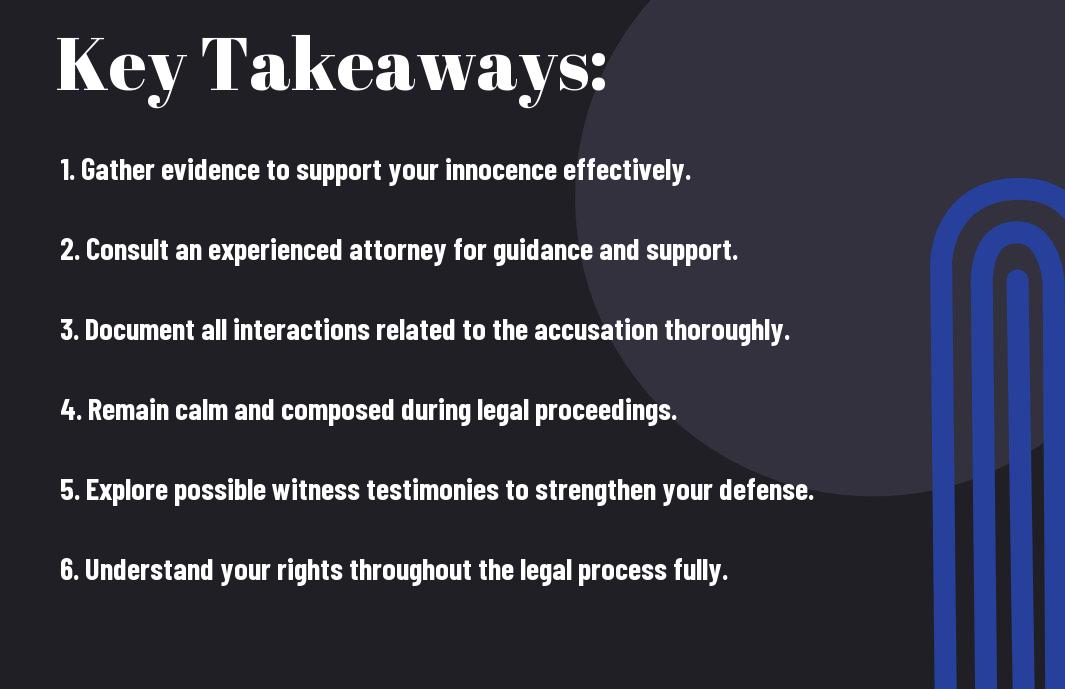
Conclusively, defending against wrongful accusations requires a proactive approach that emphasizes the importance of gathering evidence and securing legal representation. You should consider presenting clear counter-evidence, engaging expert witnesses, and maintaining a consistent narrative. It’s crucial to understand the legal framework applicable to your case, as well as your rights throughout the process. By staying informed and prepared, you can effectively navigate the challenges and work toward a favorable resolution in your defense.