

Over the course of a criminal court case, understanding the trial process can significantly influence your experience and outcomes. This informative guide will walk you through each stage of the trial, from pre-trial preparations to closing arguments, so you know what to expect when you step into the courtroom. By familiarizing yourself with the proceedings, you can better navigate the complexities of your case and engage effectively with your legal team, ultimately empowering yourself during this challenging time.
Overview of the Criminal Trial Process
Before you enter a criminal trial, it’s important to understand the process that unfolds in court. A criminal trial is a structured procedure where both sides present evidence and arguments regarding your case. You will witness several key phases, each serving a distinct purpose in determining your guilt or innocence, as well as any potential repercussions. Understanding what to expect can help alleviate some anxiety during this challenging experience.
Key Terminology
Before exploring into the trial, familiarize yourself with some key terminology. Terms like “defendant,” “prosecution,” “plea bargain,” and “witness” are pivotal in understanding the legal proceedings. Knowing these terms can empower you as you navigate through the complexities of the trial process, ensuring you are better equipped to engage with your legal representation.
Stages of a Criminal Trial
Trial stages outline the progression of your case from initiation to conclusion.
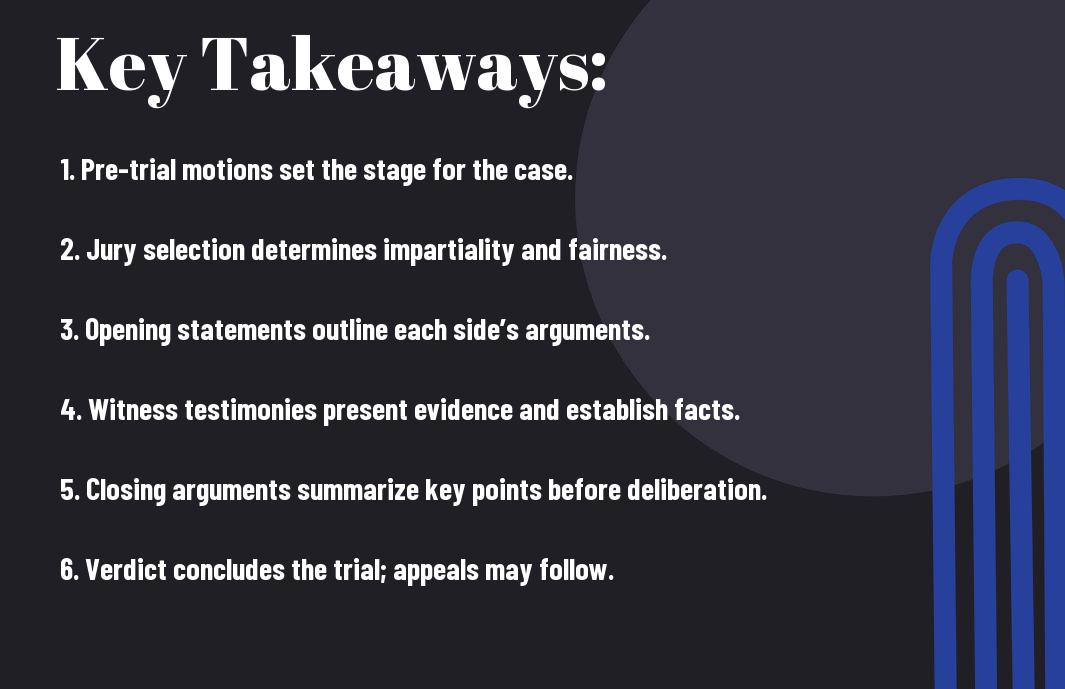
Hence, your criminal trial generally follows several stages: jury selection, opening statements, presentation of evidence, witness testimonies, closing arguments, jury deliberation, and finally, the verdict. Each stage serves a significant purpose—jury selection ensures an impartial jury, while the opening statements allow both sides to frame their cases. During evidence presentation, you will see witnesses called to testify, and both parties will have opportunities to challenge their credibility. Closing arguments summarize the case before the jury deliberates and reaches a verdict, determining the outcome of your trial. Understanding these stages will help you stay informed and engaged throughout the process.
Pre-Trial Activities
Clearly, pre-trial activities set the stage for what to expect in a criminal court case. This phase includes important components such as arrest, preliminary hearings, and plea bargaining, each playing a vital role in your legal journey. Understanding these steps can help you navigate the complexities of the judicial process with confidence.
Arrest and Charges
The process begins with your arrest, where law enforcement detains you based on probable cause. Following this, you will face formal charges that outline the specific crimes you are accused of committing. It’s important to understand the nature of these charges, as they will guide the subsequent steps in your legal proceedings.
Preliminary Hearing
At this stage, a preliminary hearing allows the prosecution to present evidence, helping the judge determine whether there is enough evidence to proceed to trial. You have the opportunity to challenge the prosecutor’s case and present evidence in your favor. Understanding this hearing is vital as it can significantly influence the direction of your case.
Even if the preliminary hearing seems straightforward, it serves as an important filter that determines if the prosecution has sufficient evidence to take your case to trial. Participating in this hearing can also provide insight into the strengths and weaknesses of the case against you, allowing you to make more informed decisions as your trial date approaches.
Plea Bargaining
Arrest process may lead to plea bargaining, a process where you negotiate with the prosecutor to plead guilty to a lesser charge in exchange for a lighter sentence. This option can often resolve cases more efficiently than going to trial, saving time and resources for both you and the court.
This negotiation can significantly impact the outcome of your case, allowing you to potentially avoid severe penalties. It’s important to weigh the pros and cons of accepting a plea deal carefully, as doing so may affect your future plans, including employment opportunities or travel. Consulting with your attorney during this process ensures you make a well-informed decision that aligns with your best interests.
Jury Selection
All criminal court cases involve a process called jury selection, where a group of individuals is chosen to evaluate the evidence and reach a verdict. This selection is vital, as it determines who will be responsible for deciding the outcome of your case. During this phase, both the prosecution and defense present their arguments and can challenge potential jurors to ensure a fair trial.
Voir Dire Process
For jury selection, the voir dire process is employed, allowing both sides to interview prospective jurors. This phase ensures that jurors can remain impartial and base their decisions solely on the evidence presented in court. It’s crucial for you to understand that this process not only helps in choosing jurors but also lays the groundwork for a fair trial.
Challenges and Impartiality
Dire challenges can arise during jury selection, aimed at ensuring that the jurors are unbiased. The prosecution and the defense may use various strategies to identify any potential prejudice that could impact the trial’s outcome. It’s important for you to be aware of these dynamics, as a fair and impartial jury is indispensable for justice.
For instance, both sides may employ peremptory challenges and challenges for cause to dismiss potential jurors. A peremptory challenge allows attorneys to reject a juror without giving a reason, while a challenge for cause requires them to provide a valid explanation. The goal is to ensure that the jurors chosen can be objective and unaffected by personal biases. This meticulous vetting process is vital to establish a fair environment, giving you the reassurance that your case will be evaluated without prejudice.
Opening Statements
Not only do opening statements set the stage for the trial, but they also provide an overview of what each side intends to prove. During this phase, both the prosecution and the defense will outline their positions, helping you understand the key issues and the evidence that will be presented. This is your first glimpse into how the trial will unfold and what arguments you might hear throughout the proceedings.
Prosecution’s Statement
The prosecution’s statement aims to present a clear and compelling narrative that outlines the charges against the defendant. They will summarize the evidence they plan to present and explain how it supports their case. This is their opportunity to persuade you of the defendant’s guilt based on the facts and testimonies they intend to reveal.
Defense’s Statement
To counter the prosecution’s assertions, the defense will offer their interpretation of the case and argue why you should find the defendant not guilty. They will highlight weaknesses in the prosecution’s case, introduce alternative explanations, and establish reasonable doubt in your mind regarding the evidence presented.
Statement by the defense is an imperative element of the trial process, as it provides a counter-narrative to the prosecution. During this phase, the defense will clarify their stance and detail how the evidence might actually exonerate the defendant. They will focus on inconsistencies in the prosecution’s story, present alibi witnesses, or offer evidence that suggests another explanation for the events in question. By articulating their perspective, they aim to create a persuasive case that resonates with you, ultimately striving to secure a favorable outcome for their client.

Presentation of Evidence
Your case becomes clearer during the presentation of evidence, where both the prosecution and defense share their materials and witness testimonies. This stage is vital as it allows you to understand the strength of each side’s arguments. Evidence can encompass various forms such as documents, physical objects, and expert testimonies, all aimed at supporting your case or challenging the other party’s assertions.
Prosecution’s Case
Around the courtroom, the prosecution will first present their case, laying out the facts and evidence they believe demonstrate your guilt. This involves calling witnesses and introducing physical evidence to establish a timeline of events. The prosecutor’s goal is to persuade the judge or jury beyond a reasonable doubt that you committed the alleged crime.
Defense’s Case
At this point, you will have the opportunity to present your defense, aimed at disproving the prosecution’s claims. The defense can introduce evidence, present witnesses, and provide expert testimonies to support your position and highlight any reasonable doubts surrounding the prosecution’s case.
Also, during the defense’s case, it is vital to strategically counter the evidence presented by the prosecution. You may choose to assert an alibi, present witnesses who can attest to your character or refute the prosecution’s claims. The defense aims to create a strong enough case to either prove your innocence or cast doubt on the prosecution’s narrative, showcasing any inconsistencies in their claims.
Closing Arguments
Unlike earlier phases of the trial, closing arguments provide you with a final opportunity to distill the case’s key points. Both the prosecution and defense will summarize their positions, emphasizing the evidence presented and your narrative. This persuasive part of the trial holds significant weight, as it’s your chance to bring everything together and make a compelling case for the jury’s consideration.
Summarizing the Case
Below, you’ll hear a concise overview of the arguments, the evidence presented, and how they connect to the charges at hand. This summary aims to refresh the jurors’ memories and clarify how the evidence supports your stance. The goal is to make sure they leave the courtroom with a strong understanding of your perspective.
Jury Instructions
With closing arguments completed, the judge provides jury instructions, outlining the legal standards and guidelines that the jurors must follow when deliberating the case. These instructions help clarify the legal definitions that are pertinent to the charges, ensuring that you understand what is required to reach a verdict.
Jury instructions are an important part of the process, as they outline the specific charges against you and the relevant legal principles that guide the jury’s decision. The instructions will specify the standard of proof needed, typically “beyond a reasonable doubt” for criminal cases, and what constitutes evidence. You should pay close attention to these instructions, as they directly impact the jurors’ decision-making process and how they interpret the evidence you presented during the trial.
Final Words
With these considerations, you should now have a clearer understanding of what to expect during the trial process in a criminal court case. Being prepared will help you navigate through various stages such as jury selection, opening statements, witness testimonies, and closing arguments. Familiarizing yourself with these elements not only empowers you but also reduces uncertainty, allowing you to engage more effectively with your legal team. Ultimately, being informed is key to ensuring your rights are upheld throughout this complex process.