

There’s a profound impact that forensic evidence can have on criminal trials, shaping the outcome of cases in ways you might not expect. From DNA analysis to fingerprint identification, this type of evidence plays a pivotal role in establishing guilt or innocence. Understanding how this evidence is collected, analyzed, and presented in court can help you grasp its significance in the legal process. You’ll discover how it can sway juries and affect the credibility of testimonies, ultimately influencing the fate of those involved in the trial.
The Role of Forensic Evidence in Criminal Trials
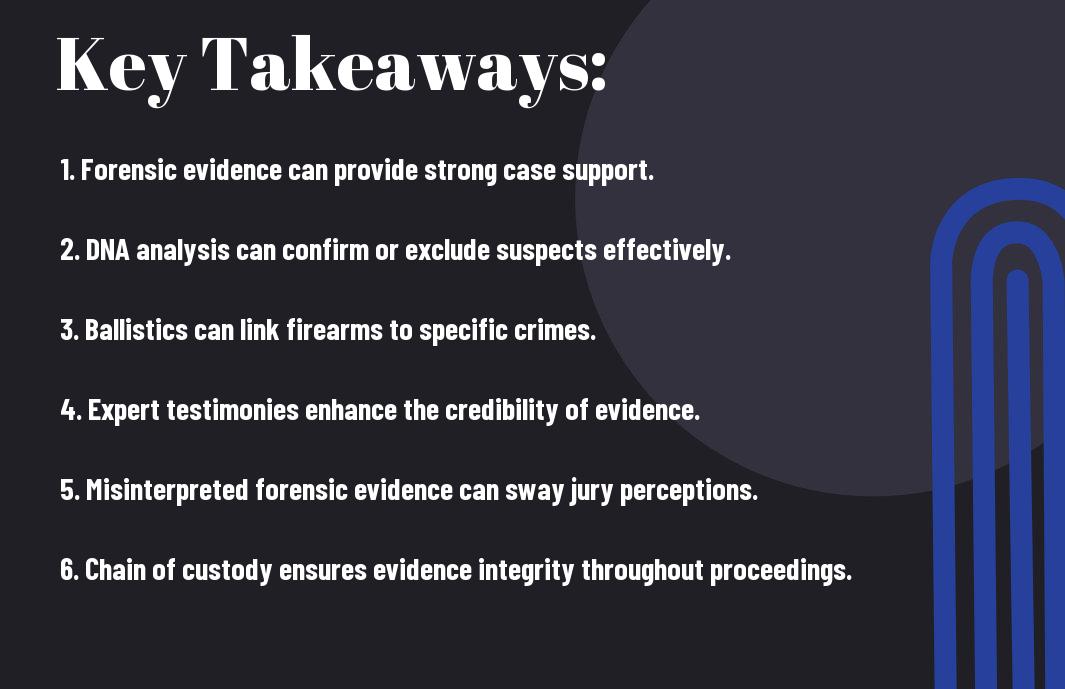
To understand the importance of forensic evidence in criminal trials, it helps to recognize how it serves as a vital tool for establishing facts in a case. Through various scientific methods, forensic evidence can confirm or disprove elements of a crime, providing clarity that can influence the outcome of legal proceedings. It can aid in identifying suspects, validating alibis, and ultimately, securing a fair trial.
Definition and Types of Forensic Evidence
To comprehend forensic evidence, you should know that it encompasses various scientific techniques used to investigate and elucidate criminal activities. Here are just a few types:
- DNA Analysis
- Fingerprint Analysis
- Ballistics
- Digital Forensics
- Toxicology
Any evidence gathered can play a vital role in determining the course of a trial.
| Type of Evidence | Description |
| DNA Analysis | Identifies biological materials and links suspects to crime scenes. |
| Fingerprint Analysis | Matches fingerprints found at a crime scene to individuals. |
| Ballistics | Examines firearms and ammunition used in crimes. |
| Digital Forensics | Analyzes electronic devices for evidence of criminal activity. |
| Toxicology | Studies substances to determine their effects and presence in a victim. |
The Process of Collecting Forensic Evidence
The process of collecting forensic evidence involves a systematic approach to ensure integrity and reliability. Proper collection techniques are necessary to avoid contamination and preserve the evidence’s value in court.
Collecting forensic evidence typically begins at the crime scene, where investigators meticulously gather physical items, document the surroundings, and use specialized tools to secure samples like blood or other biological materials. Chain of custody is critical; each piece of evidence must be recorded and tracked from the moment it is collected to ensure its admissibility in court. Through careful handling, you can significantly enhance the integrity of the evidence that will play a pivotal role in the trial.
The Impact of Forensic Evidence on Jury Decisions
It is no secret that forensic evidence plays a significant role in shaping jury decisions. When jurors are presented with scientific data, such as DNA matches or ballistic analysis, they tend to assign greater weight to this information, which can significantly influence their verdict. The confidence in forensic evidence often sways jurors toward a more definitive conclusion, impacting the overall outcome of a case.
Perception and Credibility
Jury members typically view forensic evidence as more objective and reliable than testimonial evidence. This perception enhances the credibility of the prosecution or defense’s case, leading you to consider forensic findings as a cornerstone of proof. As a result, your judgment may lean heavily on the scientific backing presented during the trial, underscoring the importance of the forensic evidence in your decision-making process.
Case Studies Illustrating Influence
With many cases highlighting the influence of forensic evidence on jury verdicts, you may find the following examples particularly enlightening:
- 1. The O.J. Simpson Trial (1994-1995): The introduction of DNA evidence resulted in juror skepticism about police procedures, ultimately leading to a not guilty verdict.
- 2. The Steven Avery Case (2005): Despite overwhelming forensic evidence, jurors were divided, yet DNA analysis significantly influenced their perceptions of guilt.
- 3. The Amanda Knox Case (2007): DNA evidence was pivotal in shaping jury views, leading to a complex legal battle with shifting verdicts.
- 4. The Adnan Syed Case (1999): Forensic evidence prompted a consensus among jurors that contributed to the current reevaluation of his conviction.
And these case studies illustrate how forensic evidence can profoundly affect jury perception and decision-making. For example, in the O.J. Simpson trial, DNA evidence was pivotal, yet it was the conflicting interpretations and procedural doubts that played a crucial role in the jury’s verdict. In the case of Steven Avery, despite compelling forensic findings, the emotional weight of the evidence left you in a state of deliberation. Each case signifies that while forensic evidence is impactful, it must be viewed in the context of the entire trial strategy.
Limitations and Challenges of Forensic Evidence
Despite its significant role in criminal trials, forensic evidence is not without its limitations and challenges. Factors such as the quality of the evidence collected, the expertise of those analyzing it, and the methods used can all affect its reliability. Furthermore, flaws in the forensic process can lead to wrongful convictions or acquittals, underscoring the importance of a thorough understanding of these challenges in any legal context.
Potential for Contamination
The integrity of forensic evidence can be compromised by contamination during the collection, handling, or analysis stages. Even minor environmental factors or human error can introduce unwanted substances, leading to misleading results. To mitigate these risks, it’s vital to follow strict protocols and maintain a controlled environment throughout the forensic process.
Misinterpretation and Misuse
Limitations in forensic evidence often arise from misinterpretation and misuse, impacting the outcome of criminal trials. The complexity of scientific data can lead to divergent opinions among experts, with some findings being overstated or taken out of context, causing juries to form erroneous conclusions based on incomplete or inaccurate information.
Even the most advanced forensic techniques are not immune to interpretation errors. For instance, different forensic experts may analyze the same DNA evidence and reach contradictory conclusions due to varying methodologies or subjective judgment calls. This inconsistency can weaken the credibility of forensic evidence in court, putting your case at risk. It’s vital to ensure that any forensic evidence presented is subject to rigorous peer review and is interpreted by qualified professionals to minimize the potential for misinterpretation and ensure that justice is served appropriately.

Advancements in Forensic Technology
Not long ago, forensic science was limited by the technology available, but breakthroughs in the field have transformed how evidence is collected and analyzed. Modern advancements allow law enforcement and legal professionals to gather more accurate and reliable data, leading to better outcomes in criminal trials. You can see how these developments have made a significant impact on the justice system, shaping the future of investigations and trials alike.
New Techniques and Methods
Technology in forensic science has evolved significantly, introducing innovative techniques that enhance evidence accuracy. Methods such as DNA analysis, digital forensics, and advanced ballistics analysis enable you to uncover critical insights from crime scenes. These new capabilities allow investigators to piece together evidence more effectively, improving the chances of both conviction and exoneration.
Future Implications for Criminal Justice
Criminal justice is on the cusp of transformative changes due to ongoing advancements in forensic technology. You will witness an increase in the use of artificial intelligence and machine learning, which can expedite evidence processing and improve case outcomes. This evolution will likely lead to more reliable verdicts and a greater ability to prevent wrongful convictions.
Hence, as forensic technology continues to advance, the implications for criminal justice will be immense. You may find that these innovations not only enhance the investigative process but also reassess established legal standards and practices. With the integration of cutting-edge technology, the justice system is poised to become more efficient, transparent, and equitable, giving you greater confidence in its ability to uphold the law. As these changes unfold, staying informed about advancements will equip you to better understand their impact on your community and legal systems.
Ethical Considerations in the Use of Forensic Evidence
Forensic evidence plays a significant role in shaping criminal trials; however, its use raises ethical questions that must be navigated carefully. Ensuring the integrity of evidence, respecting privacy, and maintaining objectivity are vital as you probe into the complexities of forensic analysis. Balancing the interests of justice with ethical responsibilities is critical to fostering trust in the legal system and protecting the rights of all parties involved.
Rights of the Accused
Against the backdrop of forensic evidence, the rights of the accused must always be upheld. You should be mindful that individuals have the right to a fair trial, which includes access to any forensic evidence used against them. It’s vital to ensure that this evidence is obtained, analyzed, and presented in a manner that does not infringe on your constitutional protections, thus preserving the standards of due process.
Responsibilities of Forensic Professionals
Rights of forensic professionals extend beyond technical expertise; you must also commit to ethical practices in your work. Adhering to established protocols, maintaining chain of custody, and providing accurate interpretations are foundational responsibilities that ensure the credibility of forensic evidence. You play a pivotal role in the justice system, and your professional integrity directly impacts the outcomes of criminal trials.
Professionals in the forensic field must prioritize accuracy, objectivity, and adherence to legal standards. Your responsibilities also include continuous education and staying updated on best practices within your discipline. Engaging in peer review and following ethical guidelines fosters accountability and enhances public trust, ensuring that the evidence you present contributes positively to the pursuit of justice.
The Future of Forensic Evidence in Criminal Trials
Once again, your understanding of forensic evidence will be key as advancements unfold in criminal trials. With the emergence of new technologies and methodologies, you can expect forensic practices to become more refined, ensuring even greater accuracy in evidence analysis. Furthermore, the intersection of forensic science with artificial intelligence and machine learning holds the potential to revolutionize investigative processes, providing law enforcement with powerful tools to solve cases more efficiently and effectively.
Trends and Predictions
Before you explore into the evolving landscape of forensic evidence, it’s important to appreciate the current trends shaping its future. Increased collaboration between forensic scientists and legal professionals is on the rise, leading to a more holistic approach to evidence assessment. Moreover, ongoing developments in DNA analysis, including quicker testing methods, will likely enhance the reliability of evidence presented in the courtroom.
The Role of Education and Training
Below, your approach to training and educating personnel involved in forensic processes will significantly impact the integrity of criminal trials. With the field constantly evolving, continuous education for forensic professionals ensures that they remain updated on best practices and emerging technologies, ultimately contributing to more reliable evidence presentation in court.
Consequently, investing in education and training for forensic experts is imperative. When you prioritize professional development and training programs, you equip these individuals with the necessary skills to navigate complex technological advancements. By fostering a culture of lifelong learning, you ensure that those responsible for analyzing and presenting forensic evidence are well-prepared to meet the demands of an ever-changing legal landscape. This commitment helps maintain the integrity of the criminal justice system and ultimately reinforces public trust in forensic processes.
To wrap up
Taking this into account, you can see how forensic evidence plays a significant role in influencing the outcome of a criminal trial. This type of evidence, whether it involves DNA analysis, fingerprints, or digital forensics, can either bolster your case or weaken it dramatically. It provides a foundation upon which juries make their decisions, often tipping the scales of justice in your favor or against you. Understanding the power of forensic evidence allows you to better prepare and engage with your legal team to navigate the complexities of the trial process.