

Most people think of crime as an act of violence or theft, but white-collar crime offers a different, often overlooked perspective. You may be surprised to learn that fraud and embezzlement can have devastating effects on individuals and businesses alike. In this post, you will gain a clear understanding of what constitutes white-collar crime, its various forms, and how it can impact your life or workplace. By delving into the nuances of these financial crimes, you’ll be better equipped to recognize and respond to them in today’s complex economic landscape.
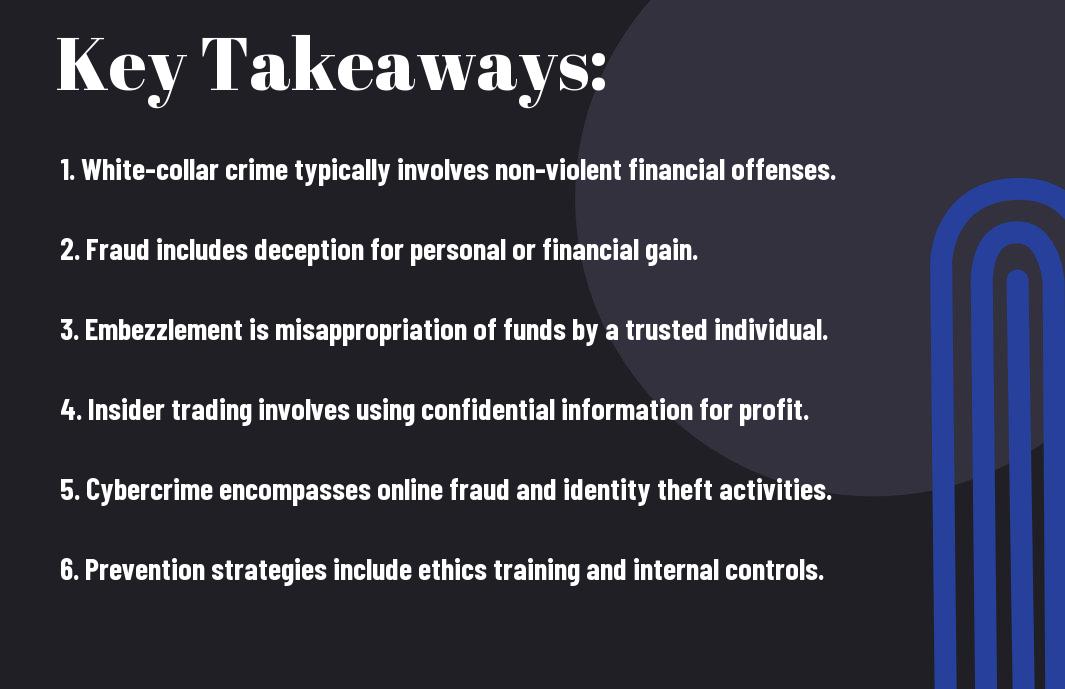
Defining White-Collar Crime
While traditional crimes often evoke images of violence or theft, white-collar crime encompasses non-violent, financially motivated acts committed by individuals, businesses, or government entities. These crimes typically occur in professional settings and can result in substantial economic damage to individuals and society at large, often through deceit or fraud rather than physical force.
Characteristics of White-Collar Crime
At the heart of white-collar crime lies a few distinguishing characteristics, including deceit, concealment, and systemic trickery. White-collar criminals usually operate within legitimate business frameworks, exploiting trust and authority to manipulate systems for personal gain. They often aim for significant financial rewards while maintaining an appearance of legitimacy.
Types of White-Collar Crimes
Crime encompasses various categories, each with its unique methods and impacts. Here are some common types of white-collar crimes:
- Fraud
- Embezzlement
- Money laundering
- Insider trading
- Identity theft
This classification helps you understand the breadth of white-collar criminal activity and the diverse strategies employed by offenders.
| Type | Description |
| Fraud | Deceptive practices to secure unfair or unlawful gain. |
| Embezzlement | Misappropriation of funds entrusted to an individual’s care. |
| Money laundering | Concealing the origins of illegally obtained money. |
| Insider trading | Buying or selling securities based on undisclosed information. |
| Identity theft | Using someone else’s personal information for fraudulent purposes. |
In fact, understanding these types of white-collar crimes is important in recognizing warnings signs and protecting yourself. Each category of crime presents unique challenges and risks, and being aware can help you avoid becoming a victim. Here are the notable types of white-collar crime:
- Fraud
- Embezzlement
- Money laundering
- Insider trading
- Identity theft
This awareness allows you to identify potentially harmful situations and make informed decisions in your professional or personal life.
| Type | Description |
| Fraud | Manipulating information for financial gain. |
| Embezzlement | Taking funds that are entrusted to you. |
| Money laundering | Transforming illegal earnings into legitimate funds. |
| Insider trading | Utilizing confidential information for trading advantages. |
| Identity theft | Stealing personal data for fraudulent use. |
Understanding Fraud
Even the most diligent professionals can fall prey to fraud, highlighting its insidious nature. This financial deception takes various forms, often affecting both individuals and organizations. Understanding fraud is imperative for recognizing its signs and implementing preventive measures, ensuring you safeguard your assets and maintain trust in your business relationships.
Common Types of Fraud
Common fraud schemes can have significant repercussions. Familiarizing yourself with these types can help you and your organization recognize potential threats:
- Credit Card Fraud
- Insurance Fraud
- Investment Fraud
- Online Scams
- Identity Theft
After understanding these types, you can better detect and prevent fraudulent activities.
| Type of Fraud | Description |
| Credit Card Fraud | Unauthorized use of someone’s credit card information. |
| Insurance Fraud | Submitting false claims to an insurance provider. |
| Investment Fraud | Misleading investment strategies promising high returns. |
| Online Scams | Fraudulent schemes occurring over the internet. |
| Identity Theft | Stealing personal information to conduct fraud. |
Psychological Factors Behind Fraud
To grasp the complexity of fraud, it’s imperative to explore the psychological factors influencing individuals who commit such acts. Many times, motivations stem from personal circumstances, societal pressure, or a lack of moral integrity:
- Greed or financial desperation
- Low risk perception
- Pressure from peers or employers
- Rationalization of unethical behavior
- Opportunity and ease of execution
Assume that you understand these factors, as they can lead to a better comprehension of why some individuals engage in fraudulent activities.
Behind every act of fraud, there are often deeper psychological motives. Understanding these aspects can help you identify at-risk individuals and foster a culture of integrity:
- Desire for status or recognition
- Emotional instability or behavioral issues
- Influence of organizational culture
- Familiarity with accepting risk
- Justifying unethical actions for personal gain
Assume that this knowledge will empower you to cultivate ethical environments and deter fraud from occurring.
Embezzlement: A Deep Dive
Many people may not realize that embezzlement, a form of white-collar crime, can have devastating effects on businesses and individuals alike. It involves the theft or misappropriation of funds placed in one’s trust or belonging to one’s employer, and understanding its mechanisms is necessary for prevention and detection. In today’s increasingly complex financial landscape, being aware of how embezzlement can occur and identifying notable case studies will help you safeguard your interests and recognize potential threats.
How Embezzlement Occurs
Behind many instances of embezzlement lies a breach of trust, often perpetrated by employees in positions of financial responsibility. Common methods include falsifying records, creating fictitious vendors, or manipulating accounting software to redirect funds for personal use. These tactics exploit opportunities within organizational weaknesses, emphasizing the need for robust internal controls and monitoring systems to prevent such criminal behavior.
Case Studies of Embezzlement
For a more comprehensive understanding of embezzlement, examining real-world case studies can provide valuable insights into its tactics and impacts. Here are some notable examples:
- Case 1: The case of Rita Crundwell, a former comptroller for Dixon, Illinois, who embezzled approximately $53 million from the city over more than two decades.
- Case 2: The scandal involving Scott London, a former partner at KPMG, who admitted to leaking confidential information and accepting bribes, leading to over $8 million in fraudulent gains.
- Case 3: In 2019, an employee at a Michigan-based automotive company diverted more than $1 million in funds to personal accounts through fake invoices.
- Case 4: The embezzlement of over $17 million by former New Orleans Mayor Ray Nagin, who was convicted on multiple counts of bribery and conspiracy.
Also, these case studies highlight the varying scales and methods of embezzlement. Your awareness of such cases can sharpen your vigilance against potential fraud, as they reveal common patterns and warning signs. Addressing these risks proactively is necessary for protecting yourself and your organization from financial harm.
Impacts of White-Collar Crime
Your understanding of white-collar crime must include its far-reaching impacts. These offenses not only affect individual victims but also shake the foundations of organizations and the economy at large. The ripple effects can lead to financial instability, loss of jobs, and shattered trust within communities and industries. Ultimately, the consequences can affect you, whether personally or professionally, as the fallout often spreads beyond the immediate victims.
Economic Consequences
Impacts of white-collar crime can significantly hinder economic growth. Billions of dollars are lost due to fraudulent activities each year, leading to increased costs for companies and consumers alike. This financial drain often results in higher taxes, reduced investment in infrastructure, and a decline in public services. As a result, your cost of living may increase, and overall economic health may decline, creating a more challenging environment for everyone.
Social and Psychological Effects
Any act of white-collar crime leaves emotional scars that extend beyond financial damage. Victims can experience feelings of betrayal, anxiety, and a loss of trust in institutions. The ramifications often lead to strained relationships and a heightened sense of vulnerability in personal and professional environments. You may find yourself questioning the integrity of others, and this lingering doubt can negatively impact your mental well-being and social interactions.
But the psychological toll doesn’t just affect the direct victims of fraud or embezzlement; it can impact entire communities as trust erodes and fear of deceit takes hold. Individuals experience heightened anxiety, reduced productivity, and feelings of helplessness that can permeate daily life. Furthermore, the stigma associated with being a victim can lead to isolation, as many may hesitate to share their experiences. This creates a cycle of distrust and emotional stress, making it necessary to address these psychological impacts head-on and foster support networks for those affected.
Legal Framework and Regulations
All forms of white-collar crime are governed by a complex legal framework that varies by jurisdiction. Understanding these laws is vital for anyone involved in or studying fraud, embezzlement, and related offenses. Regulations serve to protect individuals and institutions from financial misconduct while providing avenues for justice and accountability.
Key Laws and Regulations
An array of laws governs white-collar crimes, including the Sarbanes-Oxley Act, the Fraud Enforcement and Recovery Act, and the Dodd-Frank Wall Street Reform. These laws set standards for corporate governance, financial disclosures, and penalties for fraud, helping you comprehend the legal landscape surrounding such crimes.
Enforcement Agencies Involved
Behind the enforcement of white-collar crime laws are numerous agencies, including the Federal Bureau of Investigation (FBI), the Securities and Exchange Commission (SEC), and the Internal Revenue Service (IRS). These agencies play vital roles in investigating and prosecuting financial crimes, ensuring that perpetrators are held accountable.
But understanding the role of these agencies can empower you in recognizing the mechanisms in place to deter fraud and embezzlement. For instance, the FBI leads many investigations into fraudulent schemes, while the SEC oversees securities violations in the corporate sector. The IRS is involved with tax-related offenses, ensuring compliance with tax laws. By knowing these agencies and their functions, you can better navigate the complex world of white-collar crime. Knowledge of enforcement procedures also aids in fostering a culture of accountability and transparency in your personal and professional dealings.

Prevention and Mitigation Strategies
Despite the growing prevalence of white-collar crime, there are several effective strategies you can implement to prevent and mitigate these risks. Establishing strong internal controls, conducting regular audits, and fostering an open communication culture can significantly reduce opportunities for fraud and embezzlement. Additionally, creating a clear policy framework outlining consequences for unethical behavior will help deter potential wrongdoers.
Corporate Governance Measures
Beside establishing strong internal controls, implementing robust corporate governance measures is vital for maintaining accountability and transparency within your organization. You should ensure that your board of directors is adequately informed about financial practices and risks, promoting oversight and decision-making that aligns with ethical standards.
Employee Training and Awareness
Corporate governance is complemented by ongoing employee training and awareness programs. By educating your staff about the implications of white-collar crime and the specific mechanisms of reporting suspicious activity, you create an informed workforce that can act as the first line of defense against fraud.
Also, incorporating case studies and real-world scenarios in your training sessions can help your employees recognize the signs of potential wrongdoing more effectively. Encouraging an open-door policy for discussing concerns fosters trust and accountability while empowering you to take proactive measures. Continuous learning in this area ensures that your team remains vigilant and informed about the evolving landscape of white-collar crime.
To wrap up
Summing up, understanding white-collar crime—including fraud, embezzlement, and various deceptive practices—is important for you to safeguard your interests and maintain ethical standards in your professional life. By recognizing the signs and complexities of these crimes, you empower yourself to take proactive measures against potential threats. Staying informed not only helps in your personal business dealings but also contributes to a more transparent and trustworthy economic environment. Educating yourself about these issues can ultimately help you navigate the challenges associated with white-collar crime effectively.