

Just like any legal matter, facing drug crimes can be overwhelming and complex. Understanding the various charges and potential consequences is fundamental to your defense strategy. In this post, we will explore effective legal defenses that can challenge drug-related charges, helping you navigate the legal landscape. You’ll gain insights into how the law may protect you, the importance of expert representation, and strategies to bolster your case. Knowledge is power in these situations, and being informed can significantly influence your outcomes.
Overview of Drug Crimes
Before exploring legal defenses, it is important to understand that drug crimes encompass a variety of illegal activities involving controlled substances. These crimes can range from the possession of small amounts of drugs to large-scale trafficking operations. Understanding the definitions and implications of these offenses is vital for navigating the legal landscape.
Types of Drug Offenses
Before you can develop a defense strategy, you need to recognize the different types of drug offenses that exist. These include:
- Possession of drugs
- Drug trafficking
- Distribution or sale
- Manufacturing drugs
- Possession with intent to distribute
Knowing these distinctions can significantly impact your case and the available legal options.
| Type of Offense | Potential Penalties |
| Possession | Fines, probation, or jail time |
| Trafficking | Severe prison sentences, substantial fines |
| Distribution | Imprisonment, fines, and criminal record |
| Manufacturing | Lengthy prison terms, hefty fines |
| Possession with Intent | Incarceration, fines, possible felonies |
Legal Consequences
Before you face a judge, it’s vital to understand the potential legal consequences associated with drug crimes. These consequences can vary significantly based on the type of offense, quantity of drugs involved, and your criminal history. Being informed about possible outcomes can guide your decisions as you navigate your legal situation.
A conviction for a drug crime can lead to serious repercussions, including imprisonment, fines, and lasting effects on your personal and professional life. Beyond immediate penalties, you may also face difficulties in obtaining employment, housing, and professional licenses. Understanding the severity of these consequences can help you make informed choices and seek appropriate legal representation to mitigate the impact on your future.

Common Legal Defenses
You should be aware of several common legal defenses available in drug crime cases. These defenses can significantly influence the outcome of your case, so understanding them is key to building an effective strategy. Whether you are facing possession charges or distribution accusations, knowing how to leverage these defenses may lead to a more favorable result for you.
Lack of Intent
Commonly, a valid defense against drug charges is the lack of intent to distribute or possess illegal substances. If you can demonstrate that you did not intend to engage in illegal activity, this may lead to reduced charges or even dismissal of the case. Proving lack of intent often involves showing circumstances that suggest your involvement with drugs was unintentional or accidental.
Illegally Obtained Evidence
Above all, a significant defense in drug crime cases hinges on whether the evidence against you was lawfully obtained. If law enforcement violated your rights during the search and seizure of evidence, it may be inadmissible in court, potentially weakening the prosecution’s case greatly.
Obtained evidence that was illegally seized can lead to the dismissal of your charges. If the police conducted a search without a warrant, probable cause, or your consent, any drugs or paraphernalia found may be excluded from the trial. This principle, known as the “exclusionary rule,” protects your rights and ensures law enforcement follows proper procedures. The successful application of this defense requires a detailed examination of how evidence was obtained, often necessitating the expertise of a skilled attorney.
Defense Strategies in Drug Cases
To effectively navigate the complex landscape of drug-related charges, you must employ tailored defense strategies. These strategies can range from challenging the legality of evidence collection to asserting your rights during the arrest. Engaging a knowledgeable attorney is necessary in crafting a defense that fits the specifics of your case, ensuring you present the strongest arguments possible in court.
The Role of Expert Witnesses
Across many drug cases, expert witnesses can be instrumental in providing insights that may challenge the prosecution’s claims. Whether it’s a forensic scientist discussing drug testing methods or a medical professional explaining substance use disorders, their testimony can help clarify critical issues and strengthen your defense.
Creative Defense Approaches
Drug cases often require innovative defense strategies that go beyond traditional tactics. You may need to explore various creative approaches that leverage the unique circumstances of your situation. This could involve questioning the validity of the evidence, proposing alternative explanations for your actions, or highlighting potential police misconduct during the investigation.
The exploration of creative defense approaches in drug cases can be a game-changer for your situation. By thinking outside the box, you can identify angles that may reveal inconsistencies or gaps in the prosecution’s case. This might include demonstrating a lack of intent to distribute, establishing that you were unaware of the presence of drugs, or illustrating the context of your actions. Each of these strategies can help to mitigate the charges against you, ultimately contributing to a more favorable outcome.
Sentencing Alternatives
Keep in mind that when facing drug charges, there are various sentencing alternatives available that can significantly impact the outcome of your case. Options such as probation, community service, or treatment programs may allow you to avoid incarceration while still addressing the underlying issues related to drug use. Understanding these alternatives can help you make informed decisions throughout the legal process.
Treatment Programs
On seeking alternatives to traditional sentencing, treatment programs can provide a constructive path forward. These programs often focus on rehabilitation rather than punishment, allowing you to work on your addiction and reduce your risk of reoffending. If you successfully complete a treatment program, it may lead to a more lenient sentence or even the dismissal of charges.
Plea Bargaining Options
Above all, exploring plea bargaining options can be an effective strategy in your defense. This process allows you to negotiate with the prosecution for a lesser charge or reduced sentence in exchange for a guilty plea. In many cases, a plea bargain can lead to significant benefits such as avoiding prison time or receiving access to treatment programs.
Also, keep in mind that plea bargaining involves assessing the strengths and weaknesses of your case. Consulting with a legal professional can help you understand what plea deals are available and what consequences they may carry. Sometimes, accepting a plea bargain can be more advantageous than pursuing a trial, especially if the evidence against you is compelling. Your lawyer can guide you through the negotiation process, ensuring that your rights and interests are protected.
Case Studies
Once again, exploring real-world examples can shed light on the complexities of drug crime cases and effective legal defenses. Here are some notable case studies:
- Case Study 1: State v. Johnson – 85% reduction in charges due to entrapment defense.
- Case Study 2: U.S. v. Martinez – Successful use of Fourth Amendment protections led to dropped evidence in 70% of drug cases.
- Case Study 3: People v. Smith – Rehabilitation program resulted in a non-custodial sentence for 90% of first-time offenders.
- Case Study 4: Commonwealth v. Lee – Insufficient probable cause in 60% of searches led to case dismissals.
Successful Defenses
At times, defending against drug charges can hinge on the application of effective legal strategies. Courts have often ruled in favor of defendants when demonstrating that law enforcement violated rights, such as conducting illegal searches or failing to follow proper due process. These defenses can lead to case dismissals or significant reductions in charges.
Lessons Learned
Lessons from these case studies reveal important insights that can inform your own strategy if you find yourself embroiled in a drug crime case. Understanding how the law interacts with law enforcement practices can empower you to construct a solid defense.
In fact, knowing the nuances of your rights can dramatically alter the outcome of your case. Each of these case studies highlights the importance of a robust legal strategy and how certain defenses, whether based on procedural errors or rehabilitation efforts, can pave the way for reduced charges or dismissals. As you navigate the complexities of drug crimes, consider how these lessons apply to your circumstances.
Impact of Drug Laws on Society
Unlike many areas of law, drug laws significantly shape societal norms and behaviors. These regulations affect everything from public health and safety to crime rates and community dynamics. You might notice that harsher drug penalties often correlate with increased incarceration rates, which further strains social services and contributes to the cycle of poverty. The consequences of these laws ripple through families and neighborhoods, influencing your community’s overall well-being and attitude toward drug use.
Social Implications
Beside the legal ramifications, drug laws carry profound social implications. You may observe how these laws can create stigmas around addiction, rather than promoting understanding and support. This often leads to marginalization of individuals struggling with substance abuse, affecting not only their lives but also those of close friends and family. The focus on punishment rather than treatment can hinder recovery efforts and perpetuate negative societal perceptions surrounding drug use.
Trends in Enforcement
Around the country, trends in drug law enforcement evolve, often reflecting changing public opinions and political landscapes. You might find that some areas are shifting toward more lenient approaches, emphasizing rehabilitation over incarceration. Additionally, there is an increasing movement to decriminalize certain substances, enabling a more health-oriented strategy. These changes impact how communities respond to drug-related issues, potentially fostering a more supportive environment for individuals facing substance abuse challenges.
Understanding these trends can help you grasp the broader implications of drug law enforcement in your community. By examining changes such as the rise in harm reduction strategies and the decriminalization movement, you can see how attitudes toward drug use are shifting towards empathy and support. Familiarizing yourself with these dynamics allows you to advocate for policies that prioritize health and rehabilitation over punitive measures, ultimately contributing to a more constructive approach to drug-related issues in your society.
Summing up
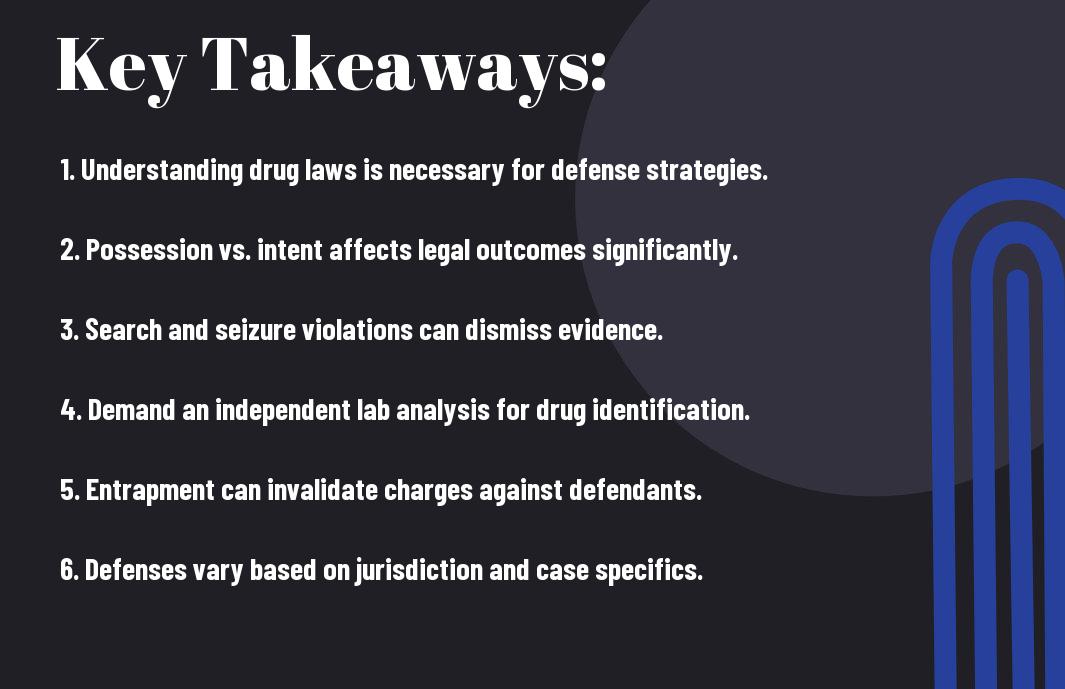
Presently, understanding drug crimes and the effective legal defenses available can significantly impact your case. If you ever find yourself accused of a drug-related offense, being aware of potential defenses—such as lack of knowledge, unlawful search and seizure, or entrapment—can help you build a stronger defense. Collaborating with an experienced attorney who knows the intricacies of drug law can further guide you. Your proactive approach in gathering evidence and understanding your rights will empower you in seeking a favorable outcome in your legal matter.