
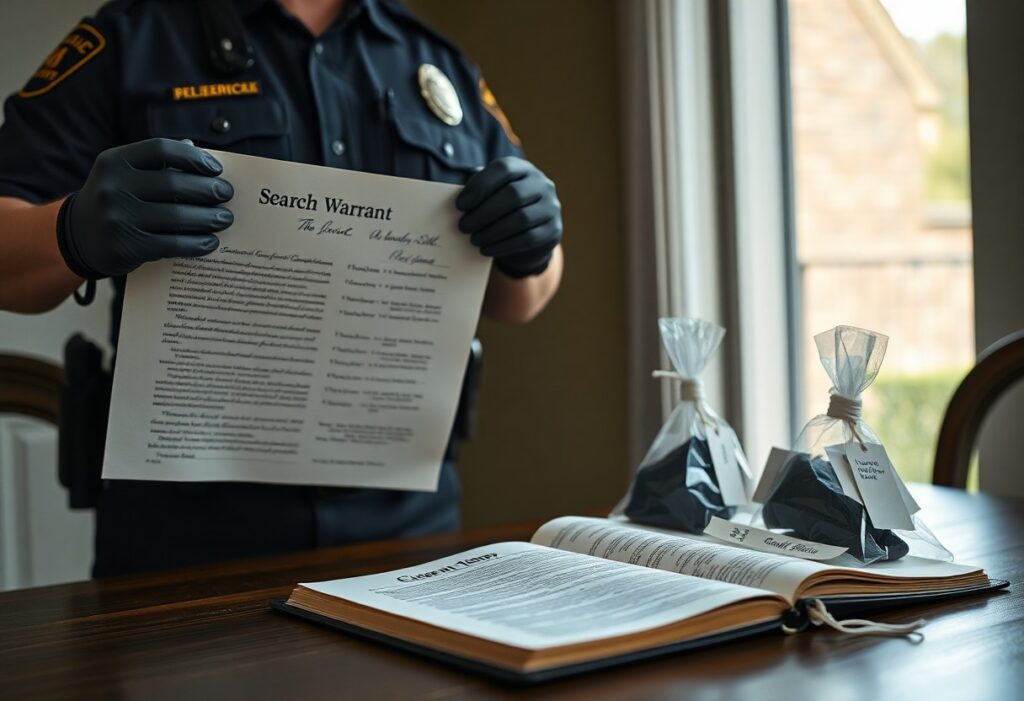
It’s your constitutional right to be secure against unreasonable searches and seizures. These laws ensure law enforcement must follow strict procedures, often requiring warrants based on probable cause. You are protected from arbitrary intrusions, and evidence obtained illegally can be excluded in court, reinforcing your privacy and due process under the Fourth Amendment.
The Fourth Amendment Wall
Your protection against unreasonable searches begins with the Fourth Amendment. This constitutional barrier shields you from arbitrary invasions by law enforcement. It demands justification before the state peers into your private life. Without it, personal freedom would stand exposed to unchecked government reach.
The Perimeter of Privacy
Privacy defines the boundary where your personal life begins and state oversight ends. Courts assess whether you have a reasonable expectation of privacy in a given space or item. This standard shapes where law enforcement must pause and seek permission before acting.
Restraints on State Power
Warrants act as a legal checkpoint, requiring authorities to show probable cause before searching your home or seizing property. Judges must review and approve these requests, ensuring decisions aren’t made lightly or without evidence. This process keeps power in balance.
Every warrant must be specific-detailing exactly where officers can search and what they’re looking for. Blanket raids or fishing expeditions are forbidden. If law enforcement bypasses this rule, evidence collected may be excluded in court, reinforcing accountability and protecting your rights under the law.
The Requirement of Proof
Every search conducted by law enforcement must be grounded in objective evidence, not hunches or assumptions. You’re protected from arbitrary intrusions because officers must demonstrate valid reasons before accessing your property or personal effects. This standard ensures that privacy isn’t sacrificed for convenience or suspicion alone.
The Probable Cause Standard
Probable cause demands more than a guess-it requires facts that would lead a reasonable person to believe evidence of a crime exists in the place to be searched. You benefit from this threshold because it prevents authorities from acting on mere suspicion. Courts examine whether the information presented justifies the intrusion.
The Judicial Gatekeeper
A judge stands between you and unchecked police power by reviewing warrant requests impartially. You rely on this role to ensure searches meet legal standards before they happen. The judge doesn’t take the officer’s word alone but evaluates the evidence supporting probable cause.
When law enforcement seeks a warrant, they must present sworn statements and supporting details to a judge, who acts independently. This review process protects you by requiring a neutral assessment of whether the search is justified under the law. Without judicial approval, most searches would violate your Fourth Amendment rights, making this oversight a cornerstone of constitutional protection.
Lawful Intrusions
Some searches are permitted without a warrant under specific legal exceptions. You can expect law enforcement to act within defined boundaries even during these intrusions. Courts evaluate whether officers followed established procedures and respected constitutional limits. Your rights remain protected as long as the intrusion aligns with judicial standards.
Emergency Actions
When immediate danger threatens public safety or evidence is at risk of destruction, officers may enter without prior approval. You should know these actions must be justified by clear, urgent circumstances. Authorities cannot use emergencies as a loophole for unjustified searches.
Visible Violations
If illegal items are in plain view during a lawful presence, officers can seize them without a warrant. You lose privacy expectations for objects clearly visible in restricted areas. This rule only applies when law enforcement is legally allowed to be in that location.
Imagine a police officer lawfully approaching your front door to speak with you. If they see a bag of illegal drugs sitting on the entryway table, clearly visible from outside, that constitutes a visible violation. You cannot claim privacy in what is openly displayed to someone standing where they have a right to be. This principle prevents individuals from challenging seizures of evidence that are in plain sight during legal encounters. It reinforces the balance between personal privacy and effective law enforcement.
The Rejection of Tainted Proof
When law enforcement gathers evidence through unconstitutional means, courts refuse to accept it. This principle ensures your rights are not casually dismissed in pursuit of convictions. You benefit from this safeguard every time a judge rules against using improperly obtained items or statements.
Suppression of Illegal Acts
Police overreach can taint an entire case. If officers skip required procedures like securing a valid warrant, any evidence they collect may be thrown out. You’re protected because the system won’t reward shortcuts that violate your Fourth Amendment rights.
Integrity of the Court
Judges act as gatekeepers of fairness. When they exclude illegally obtained evidence, they send a clear message: the court will not become a tool for unjust outcomes. Your trust in the system depends on this standard being upheld without exception.
The court’s credibility hinges on its willingness to reject compromised evidence, even when it might secure a conviction. By refusing to allow unlawful tactics to influence outcomes, the judiciary reinforces its role as a protector of constitutional rights. You rely on this integrity every time a case turns on how evidence was collected, not just what was found.
The Citizen’s Defense
You hold legal safeguards when law enforcement seeks access to your person, home, or property. These protections exist to prevent unchecked authority and ensure accountability. Knowing your rights empowers you to respond confidently and lawfully when confronted with searches or seizures.
Limits of Suspicion
Suspicion alone doesn’t justify a search. Officers need more than a hunch-they must have reasonable articulable suspicion backed by observable facts. Without it, any search violates your Fourth Amendment rights and evidence may be excluded in court.
The Right of Refusal
You can refuse consent to a search if police lack a warrant. Saying “no” clearly protects your privacy. Officers might ask politely, but they must stop if you decline-unless they obtain a warrant or have another legal basis.
Exercising your right to refuse consent is a powerful legal tool. Police may still proceed if they have a warrant or fall under an exception like exigent circumstances, but without one, your refusal forces them to seek judicial approval. Staying calm and clearly stating your position strengthens your protection under the law.
The Digital Panopticon
You live in a world where data trails follow nearly every move you make online. Cameras, location tracking, and digital footprints create a constant surveillance presence. Search and seizure laws now extend beyond physical spaces, ensuring that your digital life isn’t subject to unchecked government access. These protections help maintain boundaries in an age of invisible observation.
Privacy of Data
Your personal information stored on phones, computers, and cloud services is not beyond legal reach-but it’s not unprotected either. Courts have recognized that digital files demand heightened privacy expectations. Warrants are generally required to access your emails, browsing history, or private messages, reinforcing your right to keep sensitive data shielded from arbitrary searches.
Electronic Freedom
Your ability to communicate, explore, and express yourself online hinges on legal safeguards against unwarranted digital intrusions. Without protections limiting how and when authorities can seize electronic devices, free expression would face silent erosion. These rules ensure your digital actions remain yours unless lawful cause is clearly established.
Electronic freedom means more than just access to technology-it means using it without fear of silent monitoring or unjustified data seizures. When law enforcement wants your laptop or social media records, they typically need judicial approval based on probable cause. This standard protects your autonomy in digital spaces, treating your online identity with the same respect as your physical one. Courts continue to refine these boundaries as technology evolves, but the core principle remains: your digital life deserves constitutional protection.
To wrap up
Taking this into account, search and seizure laws serve as a direct shield for your personal freedoms. You have the right to be free from arbitrary government intrusion, and courts enforce this through strict rules on warrants and evidence. When law enforcement oversteps, you can challenge unlawful actions, ensuring your constitutional protections remain intact.