

Just as you may navigate your everyday life, the legal system can significantly shape the experiences of individuals from different racial backgrounds. This blog post will investigate into the systemic inequalities that exist within the justice system, exploring the historical context, present-day impacts, and the barriers that perpetuate these disparities. By unpacking these complexities, you will gain a deeper understanding of the issues at play and discover potential solutions aimed at fostering a more equitable legal landscape for everyone.

Historical Context of Racial Disparities
Before delving into the present-day implications of racial disparities in the legal system, it is crucial to understand their historical roots. Over centuries, systemic racism has shaped the legal landscape, influencing laws and practices that unjustly target and disadvantage minority populations. This backdrop allows you to appreciate the complexities that have evolved and continue to affect the perceived fairness of legal proceedings.
Evolution of Legal Structures and Racial Bias
Behind the evolution of legal structures lies a persistent thread of racial bias that has been entrenched in practices and policies. From colonial laws that disenfranchised Indigenous peoples to Jim Crow laws that enforced segregation, these legal frameworks have consistently marginalized minority groups. Understanding this legacy can provide deeper insights into your current legal experiences and the societal implications of these biases.
Key Legal Precedents and Their Impact on Minority Communities
On examining key legal precedents, you will find that landmark decisions have had profound impacts on minority communities. Cases like Brown v. Board of Education and Shelby County v. Holder highlight the ongoing struggle for equality and justice. These rulings, while often seen as victories, also reveal the inconsistencies in how laws have been applied to different racial groups and the continued need for reform.
Also, these legal precedents serve as touchstones in the fight against discrimination, but their implications often extend beyond the courts. They shape societal perceptions and influence policy-making, impacting areas such as education, housing, and employment. Understanding these precedents can empower you to advocate for change while recognizing the nuances of how the legal system interacts with issues of race and equity. The ongoing dialogue surrounding these rulings reflects both progress and the challenges that still exist in achieving true justice for all communities.
Manifestations of Racial Disparities
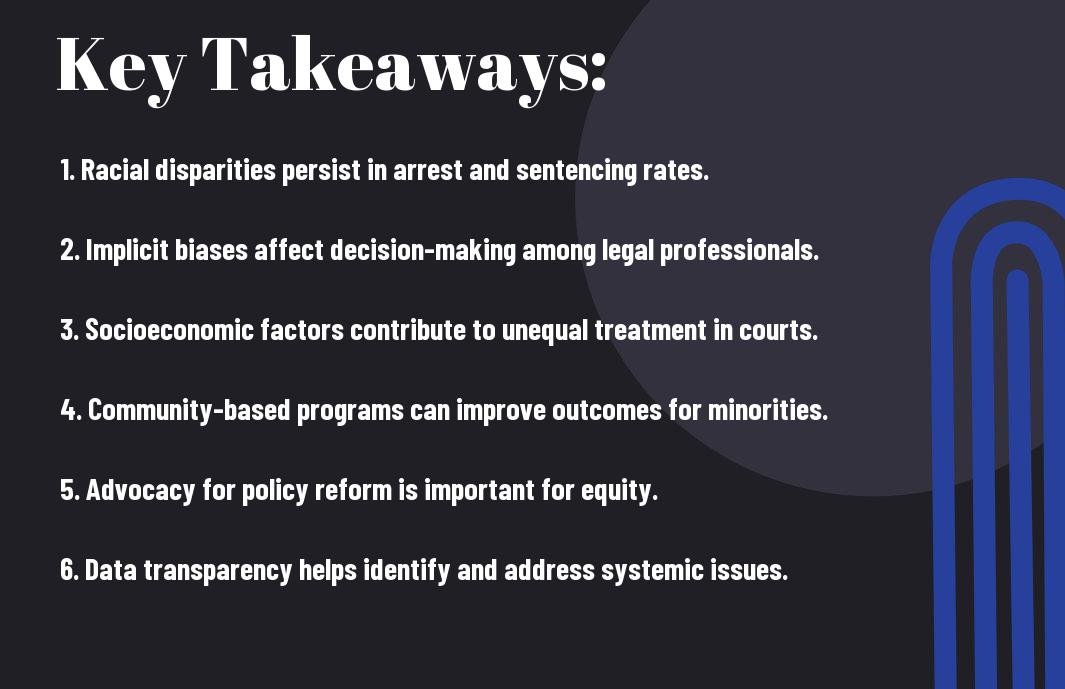
Some manifestations of racial disparities in the legal system are evident in various stages, from policing to sentencing. These inequities highlight systemic issues that disproportionately impact communities of color, affecting everything from arrest rates to incarceration outcomes. Recognizing these disparities requires understanding the underlying social dynamics and biases that perpetuate them.
Policing and Arrest Patterns
With a significant focus on law enforcement practices, racial minorities often face harsher scrutiny and aggressive policing tactics. Studies indicate that police are more likely to stop, search, and arrest individuals from these communities, contributing to an imbalance in the number of arrests made compared to their white counterparts.
Bail, Pretrial Detention, and Prosecutorial Discretion
Between arrest and trial, the processes of bail and pretrial detention further reveal racial disparities. Individuals from marginalized communities often struggle to secure bail, resulting in extended periods of detention. Moreover, prosecutorial discretion can lead to racially biased decision-making, shaping the trajectory of cases in ways that disproportionately disadvantage people of color.
Hence, when understanding the issues surrounding bail and pretrial detention, it becomes clear that wealth inequality intertwines with systemic racism. Many individuals of color cannot afford bail, even for minor offenses, leading to time spent in jail that can have lasting effects on employment and family stability. Additionally, the way prosecutors exercise discretion can vary widely, as research has shown that people of color may face harsher charges or plea deals compared to white defendants, perpetuating a cycle of disadvantage.
Sentencing Disparities and Incarceration Rates
Policing plays a foundational role in the legal system, influencing sentencing disparities and the overall incarceration rates of racial minorities. Often, these communities encounter harsher penalties relative to their white counterparts, compounding the existing inequalities within the system. This significant disparity can lead to a higher prevalence of incarceration among racial minorities, perpetuating cycles of disadvantage.
Pretrial experiences and sentencing contributions are compounded by systemic biases, as those from marginalized backgrounds not only receive harsher sentences but are also more likely to face lengthy incarceration periods. As statistics illustrate, Black and Hispanic individuals frequently receive disproportionately longer sentences than white individuals for similar offenses. This inequity emphasizes the need for systemic reform to ensure fair and just treatment in the legal system for all, regardless of race. Addressing these disparities is necessary to fostering a more equitable legal landscape.

Systemic Factors Contributing to Disparities
For many, understanding the systemic factors contributing to racial disparities in the legal system can be challenging. Key elements include:
- Socioeconomic disadvantages
- Implicit bias in legal decision-making
- Inequitable resource allocation
Perceiving these factors is imperative for addressing and ultimately dismantling the barriers within the legal system.
Socioeconomic Determinants
With socioeconomic factors playing a significant role, disparities in income, education, and access to resources often dictate legal outcomes. Individuals from lower socioeconomic backgrounds face unique challenges that can lead to diminished opportunities and increased interaction with the legal system.
Implicit Bias in Legal Decision-Making
An important aspect of racial disparities is the presence of implicit bias in legal decision-making. This unconscious bias can affect judgments made by law enforcement, attorneys, and judges, contributing to unequal treatment based on race.
This bias can manifest in various ways, such as preconceptions about criminality or stereotypes influencing legal interpretations. Such ingrained attitudes ultimately lead to disproportionate penalties and unjust outcomes, as decision-makers may not even be aware of these influences shaping their choices.
Resource Allocation in Legal Representation
Factors influencing resource allocation in legal representation epitomize another crucial disparity. Public defenders often face overwhelming caseloads, resulting in limited time and resources for each client, significantly impacting the quality of defense provided.
Due to the lack of adequate funding and support for public defense systems, outcomes can vary widely based on wealth and race. Wealthier defendants can afford private representation, leading to better access to legal expertise and resources, while marginalized communities frequently bear the brunt of a system ill-equipped to serve their needs fairly. Addressing these disparities requires a commitment to equitably redistribute resources across legal representations.
Impact on Communities of Color
Unlike many other societal issues, the impact of racial disparities in the legal system extends deeply into communities of color, affecting everything from economic stability to social cohesion. Your community may experience heightened mistrust in law enforcement, reduced access to important resources, and diminished opportunities for growth. These factors combine to create an environment where systemic inequities are perpetuated, making it important to recognize and seek remedial actions that support healing and restoration.
Collateral Consequences of Criminal Justice Involvement
By engaging with the criminal justice system, individuals often face numerous collateral consequences that extend beyond the legal penalties they initially encounter. You may find that access to employment, housing, and education is severely restricted, limiting your opportunities to reintegrate into society successfully. These obstacles not only hinder your personal progress but also contribute to the broader cycle of disadvantage in your community.
Intergenerational Effects and Community Destabilization
The long-lasting impact of racial disparities in the legal system permeates generations, leaving a legacy of instability that profoundly affects communities of color. You may observe how the trauma of legal involvement, incarceration, and systemic inequalities travels through families, influencing the life chances of children and grandchildren. Such destabilization can create a cycle of poverty and disenfranchisement that is difficult to break, highlighting the urgent need for comprehensive solutions.
With each generation that faces the repercussions of a biased legal system, your community becomes increasingly vulnerable to social fragmentation and economic distress. The emotional and psychological burdens resulting from encounters with law enforcement and criminal justice involvement can trap families in a cycle where aspirations are stifled, and hope is overshadowed by fear. Addressing these intergenerational effects is not just about individual remedies; it requires a collective effort to rebuild trust, provide resources, and foster environments that promote healing and empowerment.
Reform Initiatives and Policy Approaches
Not all reform initiatives address the root causes of racial disparities within the legal system. However, targeted strategies focused on equitable policies are crucial in creating lasting change and fostering a fair justice environment for all individuals.
Legislative Reforms and Sentencing Guidelines
Initiatives aimed at overhauling outdated sentencing guidelines are vital in reducing bias in the legal system. By revising these laws, you can pave the way for more equitable treatment across different racial and socioeconomic groups, ultimately ensuring that justice is administered fairly.
Prosecutorial and Policing Reforms
Policy changes that enhance transparency and accountability in prosecutorial practices and policing are necessary for addressing systemic inequities. You can advocate for reforms that promote equal treatment, such as implicit bias training and stricter oversight, to foster trust between communities and law enforcement.
Hence, implementing policies that focus on transparency in prosecutions and rigorous checks on police conduct can significantly diminish racial disparities. You should consider supporting initiatives that require data collection on arrests and prosecution rates, enabling communities to hold law enforcement accountable and ensuring that all individuals are treated fairly, irrespective of their background.
Community-Based Alternatives to Incarceration
Legislative efforts focused on establishing community-based alternatives to incarceration can reduce the overrepresentation of minorities in prisons. By embracing programs that prioritize rehabilitation over punitive measures, you contribute to a more just and equitable legal system.
Reforms aimed at expanding community-based programs can help divert individuals away from incarceration and towards supportive services. You can advocate for investments in mental health treatment, substance abuse therapy, and vocational training, which not only address underlying issues but also promote public safety and strengthen community ties.

Data-Driven Solutions and Evidence-Based Practices
After examining the racial disparities prevalent in the legal system, a shift towards data-driven solutions can facilitate more effective interventions. By harnessing quantitative data and implementing evidence-based practices, you can better understand underlying issues and develop strategies that promote equality and fairness. This approach not only aids policymakers but also empowers communities to advocate for systemic change that is informed and impactful.
Metrics for Measuring Progress
One way to ensure meaningful advancements is to establish clear metrics for measuring progress. You should focus on key indicators such as arrest rates, sentencing patterns, and recidivism rates among different racial groups. By consistently tracking these metrics, you can assess the effectiveness of policies and interventions aimed at reducing disparities and promoting justice in the legal system.
Promising Interventions and Their Outcomes
Solutions that target systemic issues have shown promising outcomes in various regions. Programs that provide targeted training for law enforcement, community engagement initiatives, and restorative justice frameworks can foster a more equitable legal environment. By calibrating these interventions based on data, you can enhance their effectiveness and better allocate resources to areas that need it most.
To build on existing successes, it’s vital to analyze interventions such as community policing and bias training for law enforcement officers. These initiatives have demonstrated positive outcomes in fostering trust, reducing violent encounters, and enhancing community relations. By continuously evaluating these programs through a data-driven lens, you can identify best practices to scale, ensuring that responses to racial disparities in the legal system are both effective and sustainable.
Summing up
Ultimately, understanding racial disparities in the legal system requires you to unpack the complexities that underpin this issue. By recognizing the historical context and systemic factors at play, you can better appreciate the need for comprehensive reforms. Engaging with these challenges allows you to seek tangible solutions that promote fairness and equality. Through informed dialogue and active participation, you have the power to contribute to a legal system that serves everyone justly, regardless of race.