
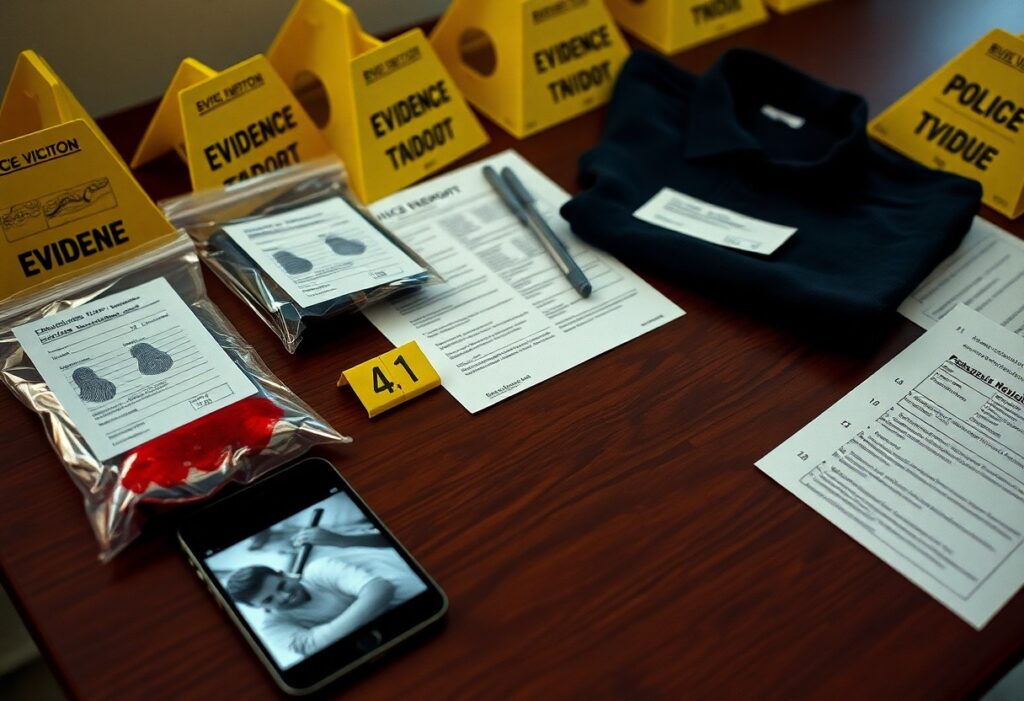
It’s important to know what evidence can be used against you in court, as it directly impacts your case. Physical items, witness statements, digital communications, surveillance footage, and expert testimony may all be presented. Courts assess relevance, authenticity, and legality before admitting evidence, so understanding these factors helps you better prepare your defense.
The Cold Weight of Physical Remains
Physical evidence often carries undeniable weight in court because it existed before the investigation began. These objects don’t change their story under pressure. You’re presumed responsible when your fingerprints, DNA, or personal belongings are found at a crime scene. The permanence of physical remains makes them powerful tools against you, regardless of intent or explanation.
Biological traces and genetic codes
Your body leaves behind silent markers-blood, saliva, hair, skin cells. These biological traces link you directly to a location or person. Even microscopic samples can generate a full DNA profile matching you to the scene. Once collected and preserved, this genetic code becomes difficult to dispute in court.
Weapons recovered from the scene
A firearm, knife, or other weapon found near you or at the crime site creates a direct narrative. If your fingerprints are on it or ballistics tie it to the offense, the connection strengthens. Prosecutors use recovered weapons to establish intent, opportunity, and action-all pivotal in shaping your outcome.
When law enforcement recovers a weapon from the scene, they don’t just log it-they test it. Forensic experts examine fingerprints, residue, and firing mechanisms. They match bullets to guns and trace ownership records. Even if you weren’t holding it, proximity and forensic links can place you at the center of the act. Courts treat recovered weapons as concrete proof of involvement.
Whispers in the Digital Ether
You leave traces every time you interact online, even in places you assume are private. Encrypted apps, deleted posts, and anonymous logins still generate data that investigators can recover. Courts regularly admit digital footprints as evidence, especially when they reveal intent, timing, or connection to a crime. What you say-and how, when, and where you say it-can come back with surprising clarity.
Messages sent in the dark
You might believe your private messages vanish into the void, but most platforms store metadata or keep logs even after deletion. Apps promising secrecy often still record timestamps, sender IDs, or server routes. Prosecutors can subpoena this data to reconstruct conversations, proving communication patterns or incriminating exchanges you thought were hidden.
Geographic breadcrumbs from devices
Your phone tags photos, logs Wi-Fi connections, and pings cell towers, creating a map of your movements. Even when location services are off, carriers and apps retain approximate data. This trail can place you at a crime scene or contradict your alibi, turning silent signals into powerful courtroom evidence.
Cell tower triangulation, GPS logs, and Bluetooth proximity records build a detailed picture of where you’ve been. Apps routinely collect location data in the background, often without explicit notice. Law enforcement can obtain warrants for this information, pulling records from service providers or device backups. When matched with other evidence, these geographic markers carry substantial weight in establishing timelines and presence.
The Fragile Truth of Human Memory
Your memory shapes how you recall events, but it’s far from infallible. Each time you retrieve a memory, your brain reconstructs it, opening the door to distortions. Stress, time, and suggestion can alter details without you realizing. What feels certain may not hold up under scrutiny, and courts recognize this limitation when weighing eyewitness accounts.
Accounts from the bystander
Someone nearby might claim to have seen what happened, and their words carry weight. Their description of events often influences how a case unfolds. You should know, though, that perspective, distance, and lighting affect accuracy. Even honest observers can misremember actions or timelines, especially in chaotic moments.
Professional analysis of the facts
An expert can interpret evidence in ways you might overlook. Their training allows them to identify patterns, inconsistencies, or technical details that strengthen or weaken a narrative. When professionals review timelines, behavior, or physical clues, their conclusions often become pivotal in court decisions.
Forensic psychologists, accident reconstruction specialists, and document examiners bring structured methods to assess what really occurred. They rely on data, not recollection, minimizing the risk of bias. Their reports withstand rigorous questioning because they’re grounded in repeatable processes. You benefit from understanding that these analyses often reveal truths memory alone cannot provide.
Ink and Paper Confessions
Written words carry weight when they end up in court. Anything you’ve signed, authored, or even scribbled can become evidence. Judges and juries often view written statements as deliberate and truthful, making them powerful tools against you if they imply guilt, intent, or admission.
Financial records of greed
Bank statements, tax returns, and transaction histories expose patterns authorities use to challenge your story. Unexplained deposits, luxury purchases, or sudden wealth can suggest illegal activity. These documents don’t lie-and prosecutors will use them to paint a picture of motive or misconduct.
Private letters and notes
Even personal writings meant for no one else’s eyes may be admitted as evidence. Journals, love letters, or casual notes can reveal state of mind, plans, or admissions. Once discovered, privacy offers no legal shield if the content relates to the case.
What you write in solitude still holds legal consequence. A hastily jotted thought in a notebook, a heartfelt letter tucked in a drawer-these can all be seized and interpreted in court. Courts assess authenticity and relevance, not your intention to keep them hidden. If they reflect knowledge, intent, or emotion tied to the matter, they become fair game.
The Unblinking Eye of the Lens
Cameras capture what memory cannot-every action preserved in unblinking clarity. You leave traces in pixels and timestamps, whether on street corners, storefronts, or smartphones. These recordings become silent witnesses, often holding the power to confirm or dismantle a narrative in court.
Still frames of the moment
Images freeze split seconds that may define your case. A photograph from a security camera, a bystander’s snapshot, or a social media post can place you at a scene or contradict your statement. You might not recall where you stood, but the lens does.
Visual charts of the crime
Diagrams map out events with precision, turning chaos into structured timelines. You see how prosecutors connect locations, movements, and actions to build their version of what happened. These visuals simplify complexity, making them persuasive tools in court.
These reconstructions are built from real data-GPS pings, timestamps, surveillance logs-and are not mere illustrations. You’re not just seeing a drawing; you’re facing a calculated interpretation of evidence meant to align with witness accounts or digital trails. Judges allow them because they clarify, but their clarity can work against you.
Shadows of Intent and Circumstance
Actions often speak louder than words in court, and judges or juries may examine what you did before, during, and after an incident to assess your mindset. Your behavior in context can shape how your intentions are interpreted, even without direct confessions or eyewitnesses tying you to a crime.
Patterns of previous behavior
History can resurface against you when similar past actions are presented to suggest a recurring motive or tendency. Courts may allow evidence of prior incidents if they demonstrate a consistent pattern relevant to the current charges you face.
Logical inferences of guilt
Circumstances surrounding an event can lead to conclusions about your role, even without direct proof. If facts align in a way that reasonably points to your involvement, the court may accept these logical connections as persuasive evidence.
When physical evidence or eyewitness testimony is absent, prosecutors often build a case through logic. You were near the scene, had opportunity, took evasive actions, or benefited from the outcome-each factor feeds into a narrative the jury may find convincing. These inferences don’t require certainty, only that the conclusion of guilt is a reasonable interpretation of the facts presented.
Final Words
Upon reflecting, you understand that courts consider a wide range of evidence against you, including documents, witness statements, digital data, and physical items. Your words, actions, and even behavior patterns can be used if legally obtained. The strength of evidence depends on relevance, authenticity, and adherence to legal procedures. You must recognize how each piece can shape the outcome of your case.