

Just when you think your situation can’t get any worse, facing a drug possession charge can feel overwhelming. However, understanding your rights and the legal process can significantly improve your chances of beating the charge. In this guide, you’ll learn effective strategies to navigate the courtroom, build a strong defense, and protect your future. With the right approach and knowledge, you can effectively challenge the prosecution’s case and work towards a favorable outcome.
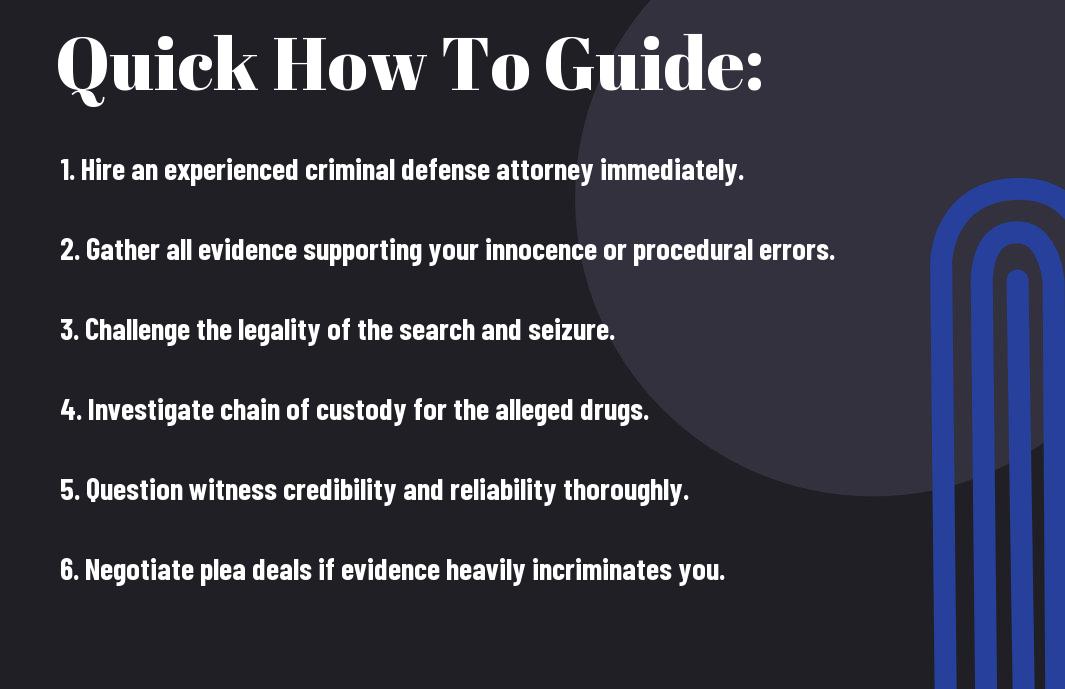

Understanding Drug Possession Charges
Your comprehension of drug possession charges is crucial for navigating legal challenges. These charges can vary widely based on several factors, including the type and amount of drugs involved, your prior criminal history, and the jurisdiction where the arrest occurred. Understanding how these components interplay can significantly affect your case outcome and available defenses.
Legal Definitions
Understanding the legal definitions surrounding drug possession is vital. Drug possession typically refers to the illegal control or ownership of illicit substances. These charges can stem from personal use, distribution, or other criminal activities. Familiarity with the precise legal language can enhance your ability to defend against such charges.
Common Types of Drug Possession Charges
Understanding the common types of drug possession charges can provide insight into potential defenses. These charges often fall into categories based on the substances and circumstances involved, including:
- Simple possession
- Possession with intent to distribute
- Possession of drug paraphernalia
- Possession of multiple substances
- Possession in a vehicle
Thou should explore these classifications to identify the specifics of your case.
| Type of Charge | Description |
| Simple Possession | Possession for personal use without intent to distribute |
| Possession with Intent | Indicates the drugs are meant for sale or distribution |
| Paraphernalia Possession | Possessing equipment used for drug consumption |
| Multiple Substances | Possessing more than one type of illicit drug |
| Vehicle Possession | Possession found in a car, impacting liability |
Common scenarios in drug possession charges include diverse substances and contexts. You could be charged for merely holding a small amount of marijuana, or it could involve a significant quantity of a more serious controlled substance. Each situation carries different legal implications, affecting potential penalties and available defenses.
- Charges can often reflect severity and context.
- Your strategy will depend on the unique aspects of your case.
- Insights into the law can shape your defense approach.
- Understanding the repercussions is vital.
- Thou should evaluate the circumstances surrounding your charge.
| Scenario | Legal Implications |
| Possessing a small quantity | Often considered a misdemeanor |
| Higher quantities found | Leads to felony charges and increased penalties |
| Possession in a school zone | Gravity of the charges may elevate significantly |
| Prior convictions | Can affect sentencing severity |
| Involvement of minors | May result in enhanced legal consequences |
Factors Influencing Your Case
While navigating a drug possession charge, several factors can significantly influence the outcome of your case. Understanding these elements can help you build a stronger defense. Key considerations include:
- The nature of the substance involved
- The amount of the substance
- Your prior criminal history
- The circumstances of your arrest
- Whether you were in possession or just at the scene
This knowledge can aid your legal strategy and improve your chances in court.
Type and Amount of Substance
Amount is a pivotal factor in drug possession cases. Different substances carry varying legal consequences, with some classified as more severe offenses than others. Additionally, the amount in your possession can determine whether you face misdemeanor or felony charges. Greater quantities often imply intent to distribute, prompting harsher penalties and scrutiny. Thus, understanding the implications of the type and amount of the substance is crucial in shaping your defense.
Circumstances of the Arrest
Type refers to the specifics surrounding your arrest, which can greatly affect your case. Factors such as whether law enforcement had probable cause, if proper procedures were followed, or if your rights were violated can impact the legitimacy of the evidence against you. These details can provide substantial grounds for a defense, potentially leading to dismissal or reduced charges if the arrest was unlawful.
Circumstances play a vital role in assessing your case’s validity. For instance, if the police conducted an illegal search or seizure without reasonable suspicion, any evidence obtained might be excluded in court. Additionally, elements like whether a search warrant was issued or if it was a traffic stop can greatly influence your defense strategy. Establishing the context of your arrest can lead to favorable outcomes, so it’s crucial to present all relevant details to your attorney.
How to Prepare for Court
All preparation for court begins with understanding the legal process and what to expect during your hearing. Assemble all relevant documents related to your case, like police reports and previous legal correspondence, to build a robust defense strategy. Additionally, familiarize yourself with courtroom etiquette to present your case confidently and professionally.
Gathering Evidence
One of the first steps in preparing for court is gathering evidence that supports your defense. This can include witness statements, photographs, and any documentation that can refute the possession charge. The more comprehensive your evidence, the stronger your case becomes, giving you a solid foundation to argue your side effectively.
Finding the Right Legal Representation
Representation is a vital part of your court strategy. A knowledgeable attorney with experience in drug possession cases can help navigate the complexities of your charges and formulate a strong defense strategy tailored to your situation.
Understanding the nuances of drug possession laws and courtroom procedures is important when selecting your legal counsel. Look for an attorney who specializes in criminal defense and has a proven track record in drug-related cases. Schedule consultations to assess their expertise and see if they resonate with the specifics of your situation. A strong attorney-client relationship can be instrumental in providing you with the guidance and support needed for your court appearance.
Tips for Legal Defense Strategies
Once again, it is vital to employ effective legal defense strategies when facing drug possession charges. Consider the following:
- Consult with an experienced attorney.
- Gather evidence that supports your case.
- Understand local laws and procedures.
- Maintain open communication with your lawyer.
Knowing these strategies can significantly impact your defense’s strength.
Challenging Probable Cause
Challenging the probable cause established by law enforcement can be a key aspect of your defense. Your attorney may argue that the initial stop or search lacked reasonable suspicion, which is required for any subsequent evidence to be admissible in court.
Exploring Diversion Programs
You may have the option to explore diversion programs that can offer an alternative to traditional prosecution. These programs typically focus on rehabilitation and education rather than punitive measures.
This approach can result in the dismissal of your charges upon successful completion of the program. Diversion programs often involve substance abuse counseling, community service, or educational courses. Participating in such a program can demonstrate to the court your commitment to change and help mitigate the potential consequences of a drug possession charge.
Utilizing Expert Witnesses
To strengthen your defense in a drug possession case, utilizing expert witnesses can be an effective strategy. These professionals can provide objective opinions that can illuminate aspects of the case, such as the nature of the substance, testing methods, and the circumstances surrounding your arrest. Their insights can significantly sway a jury’s perception and bolster your position in court.
Role of Expert Testimony
Role of expert testimony is to provide specialized knowledge that assists the court in understanding complex issues. An expert witness can clarify facts related to drug testing, the effects of substances, or procedures that may affect the validity of evidence. This type of testimony helps build a comprehensive narrative that can highlight weaknesses in the prosecution’s case.
Selecting the Right Expert
You need to ensure you select an expert whose credentials and experience align with the specific details of your case. An expert with a strong reputation in their field and relevant courtroom experience can significantly enhance your defense. Research their background and ask for references to confirm their qualifications and effectiveness in similar cases.
It is imperative to assess the expert’s familiarity with drug-related laws and previous court experiences. Look for someone who not only understands the scientific aspects but can also communicate their findings clearly and persuasively in a courtroom setting. This combination of knowledge and communication can make your defense more compelling to the judge and jury.

Navigating Court Procedures
Not understanding court procedures can be detrimental to your case. It’s crucial to familiarize yourself with the layout of the court, the roles of various personnel, and the steps the proceedings will follow. Being prepared can alleviate anxiety, allowing you to focus on your defense strategy and effectively present your side. Make it a point to attend pre-trial hearings and consult with your attorney about what to expect during your trial.
Understanding Courtroom Protocol
Clearly, courtroom protocol is vital for maintaining order and respect. You must be punctual, dress appropriately, and address the judge and jury correctly. Knowing when to stand, speak, or remain silent will help create a positive impression. Adhering to these norms not only enhances your credibility but also demonstrates your seriousness about the proceedings.
Preparing for Testimonies and Cross-Examinations
Even though it can seem intimidating, preparation for testimonies and cross-examinations is crucial for your defense. Your attorney will help you understand the types of questions you may face and how to respond effectively. Practicing your testimony can boost your confidence and ensure that your statements are clear and coherent.
Plus, being well-prepared for cross-examination involves anticipating questions and formulating your responses. Consider potential weak points in your defense, and be ready to address them. Engage in mock trials with your lawyer to simulate the courtroom environment, allowing you to practice staying calm and focused under pressure. This approach will enhance your ability to communicate your side clearly and convincingly, significantly boosting your chances in court.
Summing up
Conclusively, to beat a drug possession charge in court, you need to thoroughly understand your rights and the legal process. Engage a skilled attorney who can analyze the specifics of your case to identify any weaknesses in the prosecution’s argument, such as unlawful search and seizure or lack of possession. You should gather any evidence that supports your defense and be prepared to present a strong case. By being proactive and informed, you can greatly increase your chances of a favorable outcome in your situation.