

Bail can often feel overwhelming, especially when you’re navigating the legal system for the first time. Understanding how bail bonds and pretrial release work is necessary for you to make informed decisions about your situation. In this post, you will learn the fundamental concepts behind bail, the different types of bail bonds, and the steps you need to take to secure your release. This knowledge can empower you to act quickly and effectively when faced with an arrest or legal challenge.
Understanding the Pretrial Process
Before you can navigate the legal system, it’s vital to understand the pretrial process. This phase begins after an arrest and involves several steps that ultimately determine your release from custody, the conditions you might face, and how your case will proceed. Being informed about these steps can empower you to make better decisions during this challenging time.
Arrest and Booking Procedures
Understanding the arrest and booking procedures is vital for anyone facing criminal charges. When you are arrested, law enforcement officials will take you into custody, which typically involves being searched, photographed, and fingerprinted. This process helps establish your identity and is a standard procedure before you are transported to a local jail for booking.
Initial Court Appearances and Bail Hearings
To move forward in the pretrial process, your initial court appearance and bail hearing are significant events. During this hearing, a judge will inform you of the charges against you, and you will have an opportunity to plead. It is also the time when the judge will decide on bail or other conditions for your release while your case is pending.
Another important aspect of initial court appearances is that they set the tone for your upcoming legal journey. The judge will consider factors such as the nature of the charges, your criminal history, and flight risk when determining bail. Having legal representation is highly advised during this stage, as an attorney can advocate for your best interests and help negotiate favorable terms for your release.

Types of Pretrial Release Options
It is imperative to understand the various pretrial release options available to you. These options may vary depending on the jurisdiction and the seriousness of the charges. Here are some common types of pretrial release:
- Release on Own Recognizance (ROR)
- Cash Bail
- Surety Bonds
- Property Bonds
- Conditional Release
Recognizing the right option can significantly affect your situation and the overall judicial process.
| Pretrial Release Option | Description |
| Release on Own Recognizance (ROR) | Release without posting bail, based on a promise to appear in court. |
| Cash Bail | Posting a set amount of money to secure your release. |
| Surety Bonds | Utilizing a bail bondsman to secure release for a fee. |
| Property Bonds | Using real estate as collateral for bail. |
| Conditional Release | Release under certain conditions, such as check-ins or restrictions. |
Release on Own Recognizance (ROR)
Between the options available to you, Release on Own Recognizance (ROR) often stands out as a favorable choice. ROR allows you to be released without posting bail, relying solely on your promise to return for your court dates. This option is generally granted to those with strong ties to the community and minimal flight risk.
Cash Bail
Against the various forms of pretrial release, cash bail remains one of the most common options. By posting a predetermined amount of money, you can secure your release from custody until your court date. If you appear as required, your bail amount will be refunded after the case concludes.
Bail serves not only as a financial guarantee for your appearance in court but also gives you the freedom to prepare your defense while staying out of jail. It is important to note that failing to appear can result in the forfeiture of the cash bail you have provided, and additional legal consequences may follow.
Surety Bonds
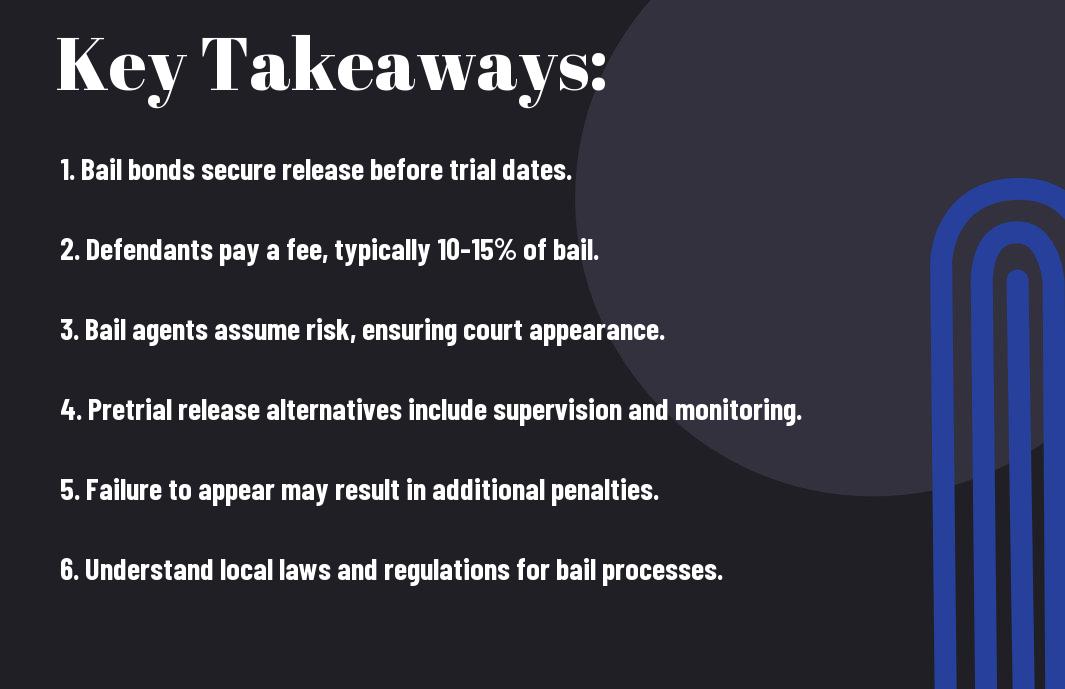
Options for securing release often include surety bonds, which involve the assistance of a bail bondsman. This option typically requires you to pay a fee, often around 10% of the total bail amount, to the bondsman. In this scenario, the bondsman assumes the responsibility of paying the full bail amount if you fail to appear in court.
Release through surety bonds can be beneficial when you do not have enough cash on hand to post bail. However, it is important to thoroughly understand the terms of the agreement, as this option commits you to obligations with a third party that can affect your finances and reputation.
Property Bonds
Recognizance plays a significant role under certain circumstances, especially when property bonds are involved. When you cannot afford cash bail, you might use real estate as collateral to secure your release. A property bond gives the court assurance of your intent to appear by using your asset as leverage.
In fact, property bonds involve a legal process where your property is evaluated, and if you fail to appear in court, the court has the right to seize the property. This option can potentially tie up your assets, so it is important to weigh the potential risks and benefits before proceeding.
How Bail Bonds Work
After an arrest, you may be given the option to post bail, which allows you to be released from custody while awaiting your trial. Bail bonds act as a financial guarantee to the court that you will return for your scheduled hearings. If you cannot afford the full bail amount, you can seek a bail bond, which involves paying a percentage of the total bail to a bail bondsman, who then pledges the full amount to the court on your behalf.
The Role of Bail Bondsmen
About bail bondsmen, they serve as intermediaries between you and the court, facilitating your release by providing the necessary funds. They usually charge a fee, typically a percentage of the bail amount, in exchange for their services. Bail bondsmen often require collateral, which could be anything of value, to mitigate their risk in case you do not appear in court.
Bail Bond Fees and Costs
Bail bonds usually involve fees that are paid upfront, generally ranging from 10% to 15% of the total bail amount set by the court. This is a non-refundable fee that compensates the bondsman for their service and risk.
Due to the unique circumstances of each case, the overall cost of bail bonds can vary. In addition to the standard fee, you might encounter additional charges, such as documentation fees or costs for collateral appraisal. Always clarify these potential charges before committing to a bail bond agreement, ensuring you understand the total amount you will owe. Planning for these expenses can help you avoid surprises during what can be a stressful time.
Factors Affecting Bail Determinations
Once again, understanding the factors affecting bail determinations can help you navigate the judicial system more effectively. Some key components influencing bail decisions include:
- Your criminal history
- Your perceived flight risk
- The severity of the alleged offense
- Your ties to the community
The final bail amount is often a reflection of these factors.
Criminal History and Flight Risk Assessment
Between establishing your bail conditions, the court will assess your criminal history and evaluate your flight risk. Those with prior offenses or a history of failing to appear in court may face higher bail amounts, as judges often see them as more likely to skip court dates.
Nature of the Alleged Offense
At times, the nature of the alleged offense can significantly impact your bail determination. Certain crimes, especially violent or serious felonies, typically result in higher bail amounts due to the perceived threat posed to public safety.
History shows that the seriousness of your charges influences not only the bail amount but also the conditions tied to your release. For example, if you’re charged with a non-violent misdemeanor, your bail may be set lower than if you face a violent felony. Additionally, the specific circumstances surrounding the alleged offense, such as any weapons involved or if injuries were sustained, can lead to stricter bail conditions or higher amounts to ensure public safety. You should be aware that these factors can vary by jurisdiction and case details.

Rights and Responsibilities During Pretrial Release
Unlike individuals who remain in custody, those granted pretrial release have specific rights and responsibilities. You are entailed to attend all court hearings, maintain communication with your bail bondsman, and adhere to any imposed conditions. It is important to understand that your behavior during this period can greatly affect your case and potential outcomes.
Court-Imposed Conditions
Before you can enjoy the benefits of pretrial release, you may face court-imposed conditions that you must follow diligently. These can include regular check-ins with a supervising officer, restrictions on travel, or mandatory participation in treatment programs. Compliance with these conditions is not just advisable; it’s required.
Consequences of Violating Release Terms
An important aspect to understand is that violating any terms of your pretrial release can lead to serious consequences. You may face re-arrest, revoke your bail, and potentially lead to additional charges that could complicate your situation.
And should you find yourself in violation of the terms set by the court, the ramifications can escalate quickly. This may result in a warrant for your arrest, which can further undermine your chances in the legal system. Additionally, a judge may consider this violation when determining future bail amounts or when addressing your case overall, potentially leading to a harsher sentence or legal repercussions.

Pretrial Reform Movements
Many communities across the nation are advocating for pretrial reform movements aimed at minimizing the negative impacts of the cash bail system. These movements seek to create fairer and more equitable processes that do not disproportionately affect low-income individuals and communities of color. By pushing for reforms such as risk assessment tools and increased access to alternatives to detention, advocates strive to ensure that the presumption of innocence is upheld and that your rights are protected during the pretrial phase.
Criticisms of Cash Bail Systems
Above all, the cash bail system has faced significant criticisms for perpetuating inequality in the justice system. Many argue that it unfairly penalizes those who cannot afford to pay bail, leading to extended pretrial detention and a greater likelihood of pleading guilty, even if innocent. This creates a cycle of disadvantage, affecting your ability to secure employment, housing, and maintain family connections while awaiting trial.
Alternative Approaches and Recent Changes
Along with criticisms of cash bail systems, several alternative approaches have emerged in recent years, focusing on pretrial release methods that do not rely on monetary bail. Many jurisdictions are implementing risk assessment tools that evaluate the likelihood of a defendant appearing in court and engaging in criminal behavior. These strategies aim to preserve the presumption of innocence while ensuring public safety and court appearance rates.
Another notable shift is the increasing adoption of community-based alternatives to detention, such as supervised release programs and electronic monitoring. These approaches provide a way for you to remain in your community while awaiting trial, reducing the emotional and financial toll of incarceration. Additionally, initiatives to increase public awareness and legislative advocacy are working together to transform the pretrial landscape, emphasizing justice and fairness for all individuals, regardless of their financial situation.
Summing up
The process of bail bonds and pretrial release can significantly impact your legal journey. Understanding how bail works, the role of bail bondsmen, and your options for pretrial release will empower you to make informed decisions when facing legal challenges. You should consider the financial implications, the responsibilities involved, and how these decisions can affect your case. By equipping yourself with this knowledge, you can navigate the complexities of the legal system more effectively and ensure your rights are protected during the pretrial phase.