

Over the course of your life, you may find yourself facing the unexpected situation of an arrest. Understanding how to navigate the legal system is important for protecting your rights and ensuring the best possible outcome. In this guide, you will learn the steps to take immediately after an arrest, what to expect during the legal process, and how to best prepare for your defense. Stay informed and empowered as you step through this challenging experience.
Types of Arrests and Your Rights
While navigating an arrest can be daunting, understanding the different types of arrests and your rights is crucial. Here’s a breakdown:
| Type of Arrest | Description |
| Civil Arrest | Involves non-criminal matters, like unpaid debts. |
| Criminal Arrest | Arrests made on suspicion of a crime. |
| Citation Arrest | Issued for minor offenses instead of being taken into custody. |
| Warrant Arrest | Made when law enforcement has a court-issued warrant. |
| Probable Cause Arrest | Made when officers have enough evidence to confirm a crime occurred. |
- Know your rights during each type of arrest.
- Stay calm and compliant with law enforcement.
Knowing your options can help you assert your rights effectively.
Common Types of Arrests
Rights are fundamental when you face an arrest. Understanding the most common types can help you navigate the situation more effectively.
| Type of Arrest | Details |
| Traffic Violation | Pullovers for speeding or license issues. |
| DUI Arrest | Driving under the influence charges. |
| Assault Charge | Arrests for physical altercations. |
| Theft | Shoplifting or grand theft charges. |
| Drug Offenses | Possession or distribution of illegal substances. |
- Familiarize yourself with the specific laws in your area.
- Recognize the severity of the charge you face.
Knowing the types of charges can influence your next steps.
Understanding Your Miranda Rights
There’s a fundamental principle in criminal law known as Miranda Rights, which safeguards your right to remain silent and request an attorney.
A clear understanding of these rights can provide you with significant protection during the arrest process. When taken into custody, law enforcement must inform you of your rights, including your right to remain silent and that anything you say can be used against you in court. Ignoring these rights can lead to self-incrimination, so it’s crucial to understand them fully. If you are not informed of these rights before an interrogation, any statements you provide may be inadmissible in court, giving you greater leverage in your defense.

Immediate Steps After Being Arrested
If you find yourself arrested, it’s important to remain calm and composed. The first step is to comply with the police officers’ instructions without resistance. Understand that your rights are still protected, and refrain from making any sudden movements. Once you are processed, prioritize reaching out for legal representation and ensure you take mental notes about your arrest and surrounding circumstances.
What to Say (and Not Say) to Police
Any communication with the police can impact your case. It’s wise to provide your name and basic identification but avoid giving detailed statements or admitting guilt. Politely inform the officers that you wish to speak with your attorney before answering any questions, as this helps protect your rights.
Making Your Phone Call
An important right you have after being arrested is the ability to make a phone call. This call is usually your opportunity to reach out to a lawyer or a trusted friend or family member who can assist you.
After your arrest, use your phone call wisely. If you choose to contact a lawyer, make sure to discuss your situation without hesitation and provide them with all necessary details. If you call someone for personal support, keep the conversation brief and avoid discussing the specifics of your case until legal counsel is present. This step is vital in ensuring you receive proper legal advice and support during a stressful time.
Navigating the Booking Process
After your arrest, you will go through the booking process, which is a standard procedure that takes place at the police station. This step includes registering your personal information, documenting your arrest details, and preparing you for your court appearance. Understanding what to expect during this process can help ease any anxiety you may have as you navigate the legal system.
What Happens During Booking
Some key steps occur during the booking process. First, you will provide your personal information, including your name, address, and date of birth. Then, the police will log details about your arrest, which may include the charges against you and the circumstances of your detention. You may also be asked a series of questions to verify your identity and background.
Dealing with Fingerprinting and Photographs
Booking begins with the collection of your fingerprints and a photograph, often referred to as a mugshot. This process is standard at most police stations and serves to create a record of your identity. While it may feel uncomfortable to have your picture taken and your fingerprints collected, it’s an important part of the booking procedure that helps ensure an accurate identification.
With this aspect of the process, you should know that your fingerprints will be scanned and stored in a database for future reference. This not only contributes to your record but also allows law enforcement to check for any prior offenses or warrants. It’s important to comply with these requests, as they are part of the legal procedure in your situation.
Understanding Bail and Release
Many individuals find themselves in a confusing situation after an arrest, especially when it comes to understanding bail and release. Bail serves as a financial guarantee to ensure that you will appear in court for your scheduled hearings. This process can greatly influence your time spent in jail and your ability to return home while awaiting trial.
Types of Bail Options
There are several types of bail options available to you:
- Cash Bail: Paying the full amount in cash.
- Surety Bond: Engaging a bail bondsman who secures your release for a fee.
- Property Bond: Using real estate as collateral for bail.
- Release on Recognizance: A promise to appear in court without paying bail.
- Conditional Release: Bail with specific requirements, like attending counseling.
Recognizing the different types of bail can help you determine the best option for your situation.
| Bail Type | Description |
| Cash Bail | Full amount paid upfront. |
| Surety Bond | Involves a bail bondsman. |
| Property Bond | Real estate used as collateral. |
| Release on Recognizance | No bail, just a promise. |
Factors That Influence Bail Amounts
Release from custody often depends on various factors that influence bail amounts. These can include the severity of the charges, your criminal history, and flight risk assessment. The judge considers these elements to determine what amount is appropriate for your situation.
- Nature of the crime: More serious charges generally lead to higher bail.
- Past criminal record: A lengthier rap sheet may increase your bail.
- Community ties: Strong ties can reduce perceived flight risk.
- Financial condition: Your financial stability may play a role.
- Risk of re-offending: A likelihood of committing further crimes can raise bail.
Perceiving how these factors can influence your bail may assist you in approaching your case more strategically.
Understanding the factors that influence bail amounts can provide clarity in your situation. Your potential bail may significantly vary based on individual circumstances. Various elements are taken into account, and knowing these may empower you as you navigate the process.
- Severity of offense: More severe crimes yield higher bail amounts.
- Past behavior: Criminal history can impact bail decisions.
- Community connections: Judges may favor stronger local ties.
- Job stability: Being employed can positively affect your standing.
- Potential danger: Concerns about your risk to the community may raise bail.
Perceiving these factors may help you engage more effectively with your legal representation and prepare for possible outcomes.

Working with Legal Representation
Once again, it’s vital to recognize the significance of having competent legal representation when facing arrest. Your attorney will be your advocate, guiding you through the complexities of the legal system. They will help you understand your rights, decipher legal language, and formulate a strategy that best suits your case, ensuring you are as prepared as possible for the proceedings ahead.
Finding the Right Attorney
For many, choosing the right attorney can be a daunting task. Consider factors such as their experience, specialization in certain legal areas, and previous case outcomes. It’s also important to ensure you feel comfortable communicating with them. Take the time to consult with multiple attorneys, asking questions about their approach to your case and the strategies they would employ to help you.
Pros and Cons of Public Defenders vs. Private Attorneys
Pros.
Pros and Cons of Public Defenders vs. Private Attorneys
| Public Defenders | Private Attorneys |
|---|---|
| Cost-free representation | Higher costs for services |
| Often well-versed in local laws | Ability to choose a specialist |
| Available for those who can’t afford an attorney | Personalized attention and time |
| Access to resources of the public defense system | Potential for a more robust defense |
| Experience with cases in your jurisdiction | More flexible meeting hours |
| Language access for various demographics | More extensive networks for expert witnesses |
| Ability to handle multiple cases simultaneously | Customized legal strategies |
| No clients needing to pay upfront | Increased availability for your case |
| Public defenders can have heavy caseloads | More expensive |
| Lack of resources | Limited access to state-funded resources |
Understanding the differences between public defenders and private attorneys is vital for making an informed choice about your legal representation. Public defenders can provide effective legal defense at no cost but may have limited time and resources due to their caseloads. On the other hand, private attorneys often provide personalized attention and specialized knowledge, but their services come with a financial cost. Take your circumstances into account when choosing whom to hire, as both options have distinctive advantages and disadvantages that could impact your case.

Preparing for Court Appearances
For your upcoming court appearance, preparation is key to navigating the legal system effectively. Make sure you gather all relevant documents, understand your charges, and know the specific court procedures you will encounter. Arrive early to get a feel for the setting and maintain a calm demeanor throughout the process.
What to Expect at Arraignment
While attending your arraignment, you’ll be formally informed of the charges against you and asked to enter a plea. This could include options such as guilty, not guilty, or no contest. It is an opportunity to establish initial court proceedings, including bail considerations and setting future court dates.
Tips for Appropriate Court Behavior
Some key behaviors to maintain during your court appearances include:
- Dress professionally to show respect for the court.
- Address the judge and other court personnel properly.
- Remain calm and avoid any outbursts.
- Be punctual for all court dates.
Any displays of disrespect can negatively influence your case.
A respectful demeanor in court can significantly impact your proceedings. Adhering to the following guidelines will demonstrate your commitment to the legal process:
- Maintain eye contact when speaking to the judge.
- Avoid chewing gum or using your phone in the courtroom.
- Do not interrupt others when they are speaking.
- Speak clearly and respectfully when it is your turn to talk.
Any deviation from these behaviors may lead to unwanted consequences in the eyes of the court.
Final Words
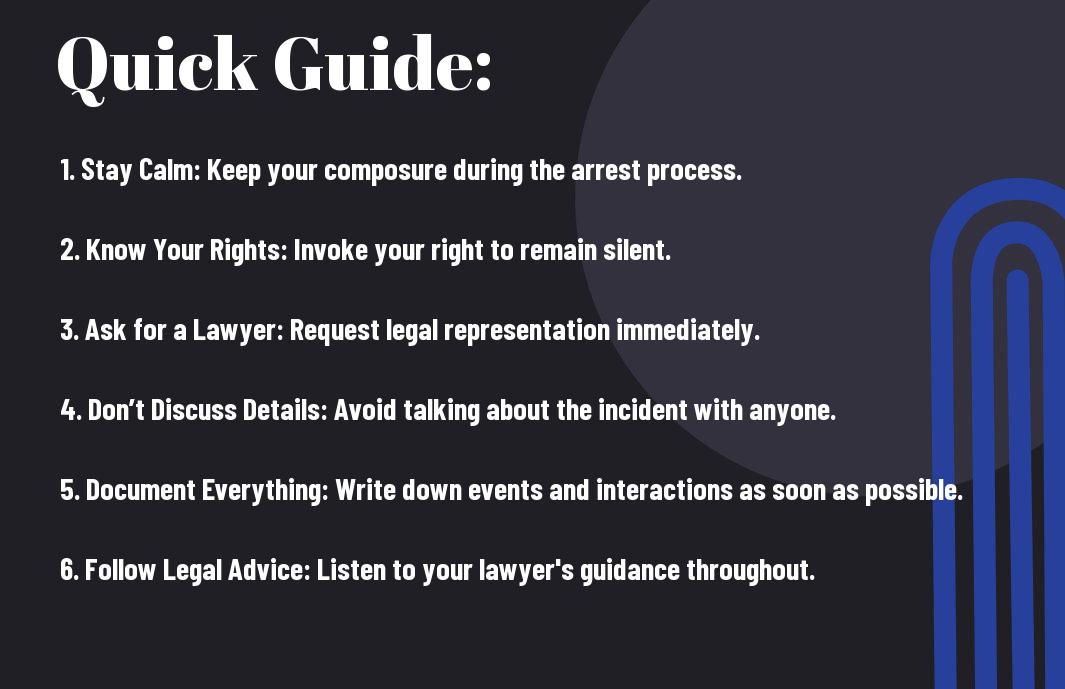
Conclusively, if you find yourself arrested, it’s important to stay calm and informed throughout the process. Follow the step-by-step guide outlined to understand your rights and navigate the legal system effectively. From invoking your right to remain silent to securing legal representation, each action you take can significantly impact the outcome of your case. Stay proactive, gather necessary documentation, and communicate clearly with your attorney to ensure that your interests are protected as you move forward.