

It’s crucial to grasp the concept of attorney-client privilege, as it plays a significant role in safeguarding the confidentiality of your communications with your legal counsel. This legal principle ensures that anything you share with your attorney remains private, allowing you to speak freely and candidly without fear of disclosure. In this blog post, we will explore the parameters of this privilege, how it applies in various legal contexts, and why understanding these rights is vital for anyone involved in legal proceedings.

Fundamentals of Attorney-Client Privilege
For anyone navigating the complexities of legal proceedings, understanding the fundamentals of attorney-client privilege is crucial. This privilege serves as a cornerstone of your legal rights, ensuring that communications between you and your attorney remain confidential. By grasping its core principles, you can better protect your interests and make informed decisions during legal disputes.
Definition and Legal Basis
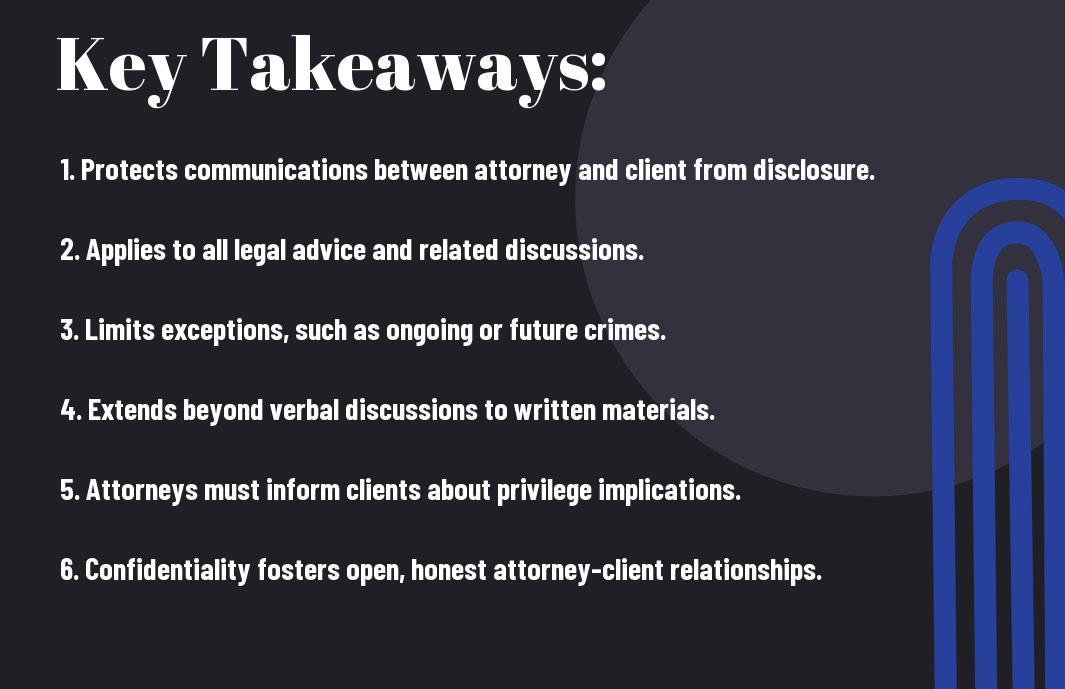
By definition, attorney-client privilege is a legal doctrine that protects communications between you and your attorney from disclosure. This privilege exists to encourage open and honest dialogue, allowing you to share sensitive information without fear of compromise. Its legal basis stems from the necessity of confidentiality in fostering effective legal representation.
Historical Development and Significance
Legal professionals and scholars acknowledge that attorney-client privilege has evolved over centuries, rooted in the English common law system. It emerged as a vital mechanism to ensure clients can seek legal counsel without the risk of disclosing their private matters. Understanding its historical significance helps you appreciate the depth of this privilege and its role in maintaining the integrity of the legal system.
A brief look into this development reveals that attorney-client privilege was formally recognized in the 16th century and has since become a standard component of legal practice worldwide. Its significance cannot be overstated, as it protects individuals from self-incrimination and promotes transparency in legal advice. By retaining this privilege, you can have confidence that your communications with your attorney foster a more effective attorney-client relationship and ensure your rights are safeguarded during legal matters.
Scope and Limitations
If you seek legal counsel, it’s necessary to understand that attorney-client privilege protects the confidentiality of your communications with your attorney but comes with specific limitations. This privilege does not extend to all communications; it primarily applies to discussions aimed at seeking or providing legal advice. Understanding these boundaries ensures that you utilize this protection effectively while remaining aware of situations where your communications may not be safeguarded.
Protected Communications
Above all, communications that are intended to be confidential and are made for the purpose of obtaining legal advice are protected by attorney-client privilege. This includes emails, written correspondences, and verbal discussions between you and your attorney. The necessary element is the intention to keep these communications private, establishing a shield against disclosure in legal proceedings.
Exceptions to Privilege
For certain situations, attorney-client privilege is not absolute and can be overridden by exceptions. This means your communications may not be protected if they pertain to ongoing or future criminal activity, if both you and your attorney are involved in the wrongdoing, or if you disclose the information to third parties.
Consequently, it is important to be cautious about the information you share and with whom you share it. For example, if you discuss your legal matters in the presence of others or share information that aids in a crime, these actions may waive your privilege. Always consult your attorney about the scope of your communications to ensure they remain protected under privilege.
Establishing and Maintaining Privilege
Now, establishing and maintaining attorney-client privilege is vital for safeguarding your confidential communications. To ensure that your conversations remain protected, you should enter into a formal agreement with your attorney that explicitly outlines the nature of the relationship and the confidentiality of your discussions. By clearly defining your interactions as privileged, you can better protect sensitive information during legal proceedings.
Requirements for Valid Privilege
About attorney-client privilege to be valid, certain requirements must be met. First, the communication must be made in confidence between you and your attorney. Second, it should be for the purpose of seeking legal advice or assistance. Finally, it is important that both parties maintain the confidentiality of the communication to sustain the privilege and prevent its waiver.
Best Practices for Preserving Confidentiality
Above all, to preserve confidentiality, you should adopt best practices in your communications with your attorney. Avoid discussing your legal matters in public places, and steer clear of sharing sensitive information through unsecured channels like email or unencrypted messaging apps. Always ask your attorney if you’re unsure whether a specific communication is privileged or how to handle sensitive information.
The preservation of confidential communications requires a proactive approach. Regularly remind yourself and your attorney about the importance of confidentiality in your discussions. Creating secure environments for conversations—whether in-person or digital—can further enhance the protection of your information. Engage in ongoing dialogue about confidentiality measures to ensure that both you and your attorney remain aligned in upholding your privilege.

Attorney-Client Privilege in Different Legal Contexts
To grasp the nuances of attorney-client privilege, it is important to consider how it functions within various legal contexts. This privilege serves as a foundation for maintaining confidentiality and applies differently based on the nature of the proceedings, whether in criminal cases, civil litigation, or corporate environments. Understanding these distinctions can empower you to navigate legal challenges while safeguarding your sensitive information.
Criminal Proceedings
Below are key aspects of attorney-client privilege in criminal cases. This privilege allows you to disclose sensitive information to your attorney without the fear of it being used against you in court. It is a protective mechanism, ensuring candid communication, which is vital for your defense. Breaches of this privilege can have serious implications, affecting the outcome of your case.
Civil Litigation
Proceedings in civil litigation also invoke attorney-client privilege, which protects your information during disputes such as contracts, property claims, and personal injury cases. The privilege fosters honest discussions between you and your attorney, enhancing the legal strategy formulated to address your issues.
Litigation can often become complex, with various parties involved and potential for sensitive topics to arise. In civil cases, understanding attorney-client privilege empowers you to share pertinent details with your attorney, confident that these discussions are shielded from opposing parties. This transparency is vital for developing a robust legal strategy tailored to your situation.
Corporate Settings
Contexts involving corporate matters bring their own considerations for attorney-client privilege. As a business owner or employee, any communications with legal counsel regarding company operations, compliance issues, or potential litigation should be protected under this privilege, creating a secure environment for addressing legal challenges.
Settings for attorney-client privilege in corporate environments are particularly nuanced due to the involvement of multiple stakeholders. It’s important for you to clearly identify who is covered under the privilege when discussing confidential matters with your legal team. Ensuring that these communications remain protected is vital for the integrity of any legal strategy and the overall well-being of your organization.

Waiver of Privilege
Despite the protections that attorney-client privilege provides, it is important to understand that this privilege can be waived. Waiver of privilege occurs when a client voluntarily gives up the right to confidentiality, which may happen through various means, consciously or unconsciously. Understanding how waiver works is imperative to maintaining the integrity of your confidential communications with your attorney.
Intentional Waiver
Above all, an intentional waiver occurs when you explicitly disclose privileged information, thereby permitting others to access it. This can happen through statements made in court, discussions in public forums, or by sharing details with individuals outside the attorney-client relationship. Once you intentionally disclose otherwise privileged information, the protection is lost for that specific communication.
Inadvertent Disclosure
Waiver can also happen through inadvertent disclosure, where you unintentionally reveal privileged information. This might occur due to careless handling of documents or discussing sensitive matters inappropriately. Even if the disclosure is unintentional, it can still jeopardize the privilege associated with that information.
Further, inadvertent disclosures can arise in many scenarios, including sending an email that includes confidential information to the wrong recipient, or when privileged documents are made public by accident. While the circumstances surrounding these disclosures may differ, the result can lead to a loss of privilege, stressing the need for vigilance in safeguarding your communications and documents.
Remedies for Breach
Around situations where attorney-client privilege is breached, there are several remedies available to you. If you believe that your privilege has been violated, you may pursue options such as filing for a protective order to recover documents or seeking to suppress improper evidence. These remedies aim to restore your confidential communications and protect your interests in legal proceedings.
In addition, if there’s a breach, you should consult with your attorney immediately to discuss the specifics of your situation. They can advise you on the best course of action, including potential claims for damages if the breach has adversely affected your legal standing. Understanding your options helps you navigate the complexities of privilege and confidentiality while protecting your rights.
Related Doctrines
Not only does attorney-client privilege protect your communications with an attorney, but various related doctrines also enhance your confidentiality rights. Understanding these doctrines can help you navigate the legal landscape more effectively and safeguard your interests during legal proceedings.
Work Product Doctrine
At its core, the work product doctrine safeguards materials prepared by your attorney in anticipation of litigation. This includes notes, legal theories, and strategies, ensuring that your attorney’s intellectual efforts remain confidential and are not disclosed to opposing parties without your consent.
Joint Defense Privilege
The joint defense privilege allows parties with common legal interests to share information without the fear of losing confidentiality. When you collaborate with others involved in a similar legal matter, this privilege can protect shared communications from being disclosed in court.
With the joint defense privilege, you can freely exchange information with co-defendants or other parties involved in the same case. This collaboration helps ensure that all parties remain on the same page and can develop cohesive defense strategies while maintaining the confidentiality of exchanged communications.
Common Interest Privilege
Privilege extends to the common interest doctrine, which allows you and other parties who share similar legal interests to communicate openly without waiving confidentiality. This privilege facilitates the sharing of information and strategies among parties facing similar legal challenges.
Interest in the common interest privilege lies in its ability to protect your communications while collaborating with other parties, such as co-defendants or business associates. By sharing information under this privilege, you can strengthen your legal position without exposing sensitive details to adversarial parties, fostering a cooperative approach to your defense.
Final Words
With this in mind, understanding your attorney-client privilege is vital to ensuring your confidentiality during legal proceedings. This privilege safeguards the communications you have with your attorney, providing you the space to discuss matters openly without fear of disclosure. You have the right to make informed decisions about your legal strategy, so always ensure that you engage in honest and complete conversations with your attorney to fully benefit from this protection. Your confidentiality is foundational to the trust and effectiveness of your legal representation.