

Just like any complex system, understanding sentencing guidelines can seem daunting at first. In this blog post, you will learn how sentences are determined in criminal cases, breaking down the legal jargon and processes involved. By understanding the factors that influence sentencing, you can gain valuable insight into the judicial system and its approach to punishment. Whether you’re a student, a concerned citizen, or someone facing legal challenges, this guide will equip you with the knowledge to navigate the intricacies of criminal sentencing.

Legal Framework of Sentencing
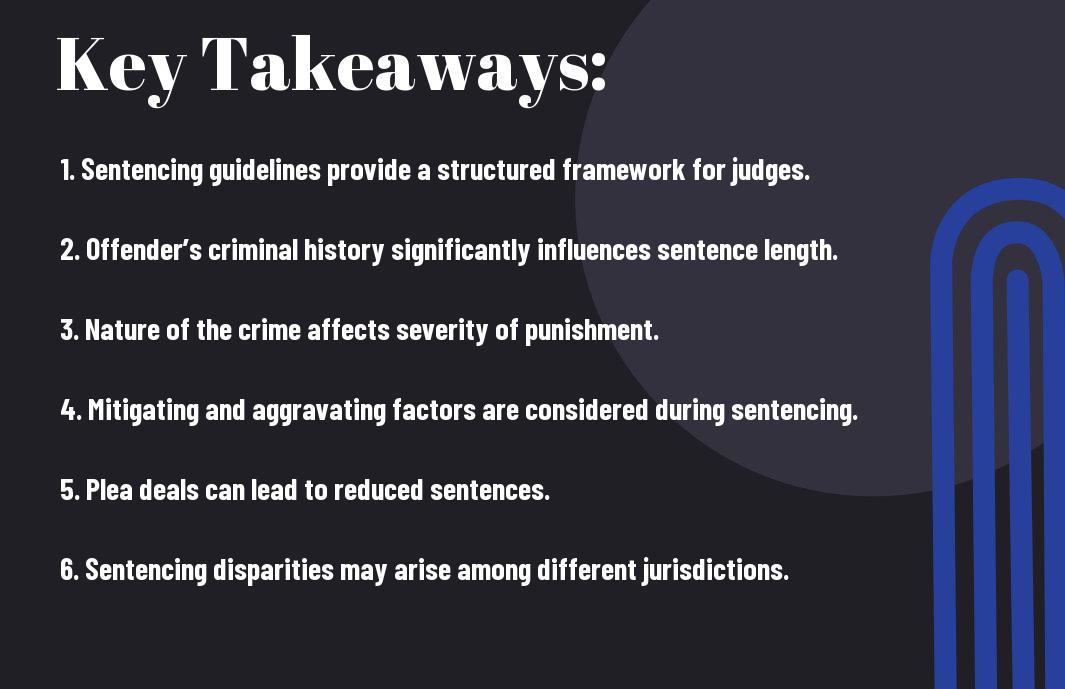
A comprehensive understanding of sentencing guidelines requires familiarity with the legal framework that governs them. This framework encompasses statutes, case law, and various sentencing policies established at both federal and state levels. These legal standards provide a structure within which judges operate, ensuring that sentences are consistent, transparent, and justified based on the circumstances of each case.
Statutory Sentencing Ranges
For every crime, there typically exists a statutory sentencing range, which serves as a guideline for judges in determining appropriate punishments. This range outlines minimum and maximum penalties that can be imposed, allowing for some discretion based on the specifics of the case, including mitigating factors or the defendant’s criminal history.
Mandatory Minimum Sentences
For certain serious offenses, lawmakers have established mandatory minimum sentences that must be imposed upon conviction. These sentences dictate the shortest amount of time a judge can assign, removing the discretion they traditionally hold in favor of harsher penalties for specific crimes.
Sentencing under mandatory minimum laws significantly limits your options as a defendant and the judge’s discretion. If convicted of an offense that carries a mandatory minimum, you may face a fixed sentence that cannot be reduced, even in light of mitigating circumstances. These laws aim to deter criminal behavior by ensuring consistent and severe punishment, yet they can also lead to disproportionately harsh sentences, especially for non-violent offenders.
Federal Sentencing Guidelines
There’s a structured approach to sentencing in federal criminal cases, governed by the Federal Sentencing Guidelines. These guidelines help judges determine appropriate penalties based on various factors, including the nature of the offense and your criminal history. Understanding these guidelines is crucial for any individual facing federal charges, as they significantly influence the length and severity of sentences.
The Base Offense Level
One of the first steps in determining your sentence involves assessing the Base Offense Level, which relates to the specific crime you committed. Each federal offense is assigned a base level that reflects its seriousness. This level serves as the foundation upon which additional factors may either elevate or decrease your overall sentencing range.
Criminal History Category
Base levels are complemented by your Criminal History Category, which is pivotal in the sentencing process. This category takes into account your past convictions and evaluates your behavior over time, allowing the court to assess whether you pose a continued risk to society.
Indeed, your Criminal History Category is classified based on the number and severity of previous offenses. Each category ranges from I (minimal criminal history) to VI (extensive criminal history). The more serious your past offenses, the higher your category, which can lead to harsher sentences. This aspect underscores the importance of earlier legal troubles in shaping your current fate in the eyes of the law.
Sentencing Table Application
With both the Base Offense Level and Criminal History Category established, the next step involves applying the Sentencing Table. This table correlates your specific offense level with your criminal history to help determine the recommended sentencing range.
Table results provide a visible framework, offering guidance for judges to establish appropriate sentences. By consulting this table, you gain insight into the potential range of penalties you face. The intersection of your Base Offense Level and Criminal History Category reveals expected outcomes, equipping you with a better understanding of the consequences at play in your case.
State Sentencing Systems
All criminal cases are adjudicated under the laws and guidelines of their respective states, resulting in varied sentencing practices. Each state has established its own framework that dictates how sentences are determined, taking into account factors such as the nature of the crime, prior offenses, and the offender’s circumstances. This variation allows for tailored approaches to sentencing that reflect local values and legal standards, ensuring that justice is served in a manner consistent with community expectations.
Determinate vs. Indeterminate Sentencing
Systems of sentencing can generally be categorized into determinate and indeterminate models. Determinate sentencing involves fixed terms set by law, allowing you to know in advance how long the sentence will be. In contrast, indeterminate sentencing provides a range, enabling the judge to decide on a minimum and maximum term, often considering rehabilitation and other factors throughout your time in the correctional system.
State-Specific Guidelines
Above the general sentencing frameworks, each state enforces specific guidelines to direct judicial discretion in sentencing. These state-specific guidelines consider factors such as offense severity and prior criminal history, creating a more individualized sentencing process that reflects local laws and societal views on crime and punishment.
Understanding these state-specific guidelines is crucial for comprehending how courts may approach your case. Each state provides a set of parameters that judges utilize to ensure consistency and fairness while also allowing for flexibility based on individual circumstances. Familiarizing yourself with your state’s specific sentencing guidelines can help you better grasp the potential outcomes of legal proceedings and the factors that might influence your sentence.

Mitigating and Aggravating Factors
Despite the complexity of sentencing guidelines, mitigating and aggravating factors play a significant role in determining the severity of a sentence. Mitigating factors can lessen your sentence, while aggravating factors may increase it. Examples include:
- Your prior criminal history
- The impact of the crime on the victim
- Your level of remorse
Thou must consider how these factors interact in your case.
Offense-Related Factors
Behind every criminal case, offense-related factors come into play when evaluating the nature of the crime committed. Factors influencing your sentence may include:
- The severity of the offense
- Whether a weapon was used
- The circumstances surrounding the crime
Any of these considerations can significantly affect your potential sentence.
Offender-Related Characteristics
To fully understand your sentencing outcome, it’s important to consider offender-related characteristics, such as your age, mental health, and socioeconomic status. Each of these elements can provide context about your actions, potentially swaying a judge’s decision.
But in every case, offending history may weigh more heavily than personal circumstances. For instance, a first-time offender with a compelling backstory might receive a lighter sentence compared to a repeat offender facing similar charges. Understanding how the legal system views these characteristics can give you insights into potential outcomes in your case.
Judicial Discretion
Many factors influence a judge’s decision-making process during sentencing, and one of the most significant is judicial discretion. This power allows judges to tailor sentences based on the unique aspects of each case, taking into consideration the defendant’s background, the nature of the crime, and the impact on the victims. Your understanding of judicial discretion will help you appreciate the complexities involved in sentencing, as different judges may arrive at different conclusions for similar cases based on their personal assessments and philosophies regarding justice.
Departure from Guidelines
Judicial discretion also allows for departures from the established sentencing guidelines. In certain cases, a judge may determine that the recommended sentence does not adequately reflect the circumstances of the offense or the characteristics of the offender. This ability to deviate from the guidelines permits you to see a more personalized approach to justice, as sentences can be adjusted to fit the individual merits of a case.
Post-Booker Sentencing Considerations
Judicial discretion took on new significance following the United States Supreme Court’s decision in United States v. Booker, which made the federal sentencing guidelines advisory rather than mandatory. This landmark ruling allows judges to exercise greater creativity in crafting sentences, which means you may encounter a wider range of outcomes for similar offenses. The advisory nature of the guidelines encourages judges to consider various factors, fostering a more holistic view of each case.
In fact, post-Booker considerations enable judges to weigh subjective elements, such as a defendant’s intent, mental state, and personal circumstances, alongside the more objective factors outlined in the guidelines. This shift has led to a broader understanding of justice, as it promotes individualized sentencing that accounts for unique situations, reducing the inconsistency identified in prior mandatory guidelines. You can expect that this more discretionary approach can result in diverse sentencing outcomes, aligning consequences more closely with the realities of each case.

Alternative Sentencing Options
For many individuals facing criminal charges, alternative sentencing options can provide a path that emphasizes rehabilitation over punishment. These alternatives are designed to address underlying issues that may have contributed to criminal behavior while still holding you accountable for your actions. By exploring these options, you may find a resolution that benefits both you and the community, facilitating growth and preventing future offenses.
Probation and Supervised Release
To serve a sentence through probation or supervised release, you agree to comply with specific conditions set by the court instead of serving time in jail. This approach allows you to maintain a degree of freedom while still being monitored, ensuring that you adhere to rehabilitation programs and avoid further criminal activity. It also enables the justice system to keep a close eye on your progress, providing support and accountability.
Diversion Programs and Specialty Courts
Probation offers individuals the opportunity to engage with diversion programs and specialty courts that focus on specific issues such as drug addiction or mental health. These programs are designed to divert you from the traditional criminal justice process, providing targeted intervention that helps address the root causes of your behavior. By participating in these programs, you can benefit from tailored resources and support aimed at reducing recidivism and promoting positive change.
Sentencing alternatives like diversion programs and specialty courts give you a chance to tackle personal challenges that may have led to criminal behavior. These programs often involve counseling, education, or treatment for substance abuse, allowing you to develop necessary life skills and coping mechanisms. By participating in such programs, you can work towards rehabilitation while demonstrating to the court and society that you are committed to making positive changes in your life.
To wrap up
Upon reflecting on the complexities of sentencing guidelines, you can appreciate how various factors influence the outcomes of criminal cases. Understanding the role of offense severity, your past behavior, and legal nuances empowers you to better grasp the judicial process. As you navigate through this information, you gain insight into how sentences are tailored, offering clarity on what you or someone you know might expect in the legal system. This knowledge equips you with a more informed perspective on criminal justice and your rights within it.