

Employment opportunities can be significantly influenced by your criminal record, shaping both your job search strategies and outcomes. Understanding how employers view background checks and knowing your rights can empower you to navigate these challenges more effectively. Whether you are entering the workforce for the first time or looking to change careers, being informed about the intersection of criminal records and job markets will help you make educated decisions that enhance your chances of success. In this post, we will explore the various ways your record might affect your employment prospects and strategies for overcoming potential barriers.
Understanding Criminal Records
The impact of a criminal record on your employment chances can be significant and varies by each individual’s situation. It is vital to grasp the type of record you possess and how it affects your job prospects.
Types of Criminal Records
- Arrest Records
- Conviction Records
- Sex Offender Registration
- Federal Offenses
- Misdemeanors vs. Felonies
Thou may find that different types of criminal records impact employment opportunities in varied ways.
| Type of Record | Description |
| Arrest Record | Documents arrests that may or may not lead to convictions. |
| Conviction Record | Details offenses you have been convicted of, which may affect job eligibility. |
| Sex Offender Registration | A registry of individuals convicted of sex-related crimes. |
| Federal Offenses | Crimes prosecuted at the federal level that can impact your job options. |
| Misdemeanors vs. Felonies | Misdemeanors are less severe and may have a shorter impact than felonies. |
Legal Classifications and Implications
Any criminal record can influence your capacity to attain employment. Understanding the legal classifications of offenses is important as these classifications can impose limitations or disqualifications for certain positions.
Classifications of offenses, such as felonies and misdemeanors, determine the severity of the crime and, subsequently, the implications on your job search. Felonies can have a more profound impact, often leading to longer-lasting repercussions. In contrast, misdemeanors might lead to temporary hurdles. Employers may conduct background checks and consider the nature of the crime, how much time has passed since the offense, and whether you have taken steps toward rehabilitation. Understanding these classifications equips you with the knowledge necessary to navigate your job prospects with a criminal record effectively.
Legal Framework for Employment Screening
One of the key components influencing how employers evaluate candidates is the legal framework governing employment screening. Laws vary by state and municipality, impacting how much employers can consider criminal records during the hiring process. Understanding these regulations helps you navigate job applications more effectively and ensures that you are treated fairly in the workforce. Being aware of your rights can empower you to make informed decisions when seeking employment opportunities.
Ban-the-Box Legislation
The goal of Ban-the-Box legislation is to eliminate the criminal history question from initial job applications. This allows you to showcase your skills and qualifications without the immediate bias that a criminal record might invoke. By delaying criminal background inquiries until later in the hiring process, this law aims to provide more equitable opportunities for individuals with a criminal past.
Fair Credit Reporting Act and Background Checks
For many employers, background checks are conducted under the Fair Credit Reporting Act (FCRA) guidelines, which mandate that you be informed if a background check is performed. This law ensures that you have certain rights, including the right to dispute inaccurate information in your background report, giving you a sense of control over how your criminal history may affect your employment prospects.
A fundamental aspect of the Fair Credit Reporting Act is that it protects your rights concerning the information employers can use during the hiring process. If a background check leads to adverse action, such as not receiving a job offer, you must be provided with a notice detailing the report that influenced that decision. This transparency enables you to address any discrepancies, ensuring that your ability to secure employment is not unjustly impacted by incorrect information.

Barriers to Employment
Despite the growing awareness of rehabilitation, many individuals with criminal records face significant barriers when seeking employment. These challenges can stem from legal restrictions, societal stigma, and unfair biases that can deter potential employers from considering your skills and qualifications. Understanding these obstacles is vital for you as you navigate your job search and advocate for your abilities.
Industry-Specific Restrictions
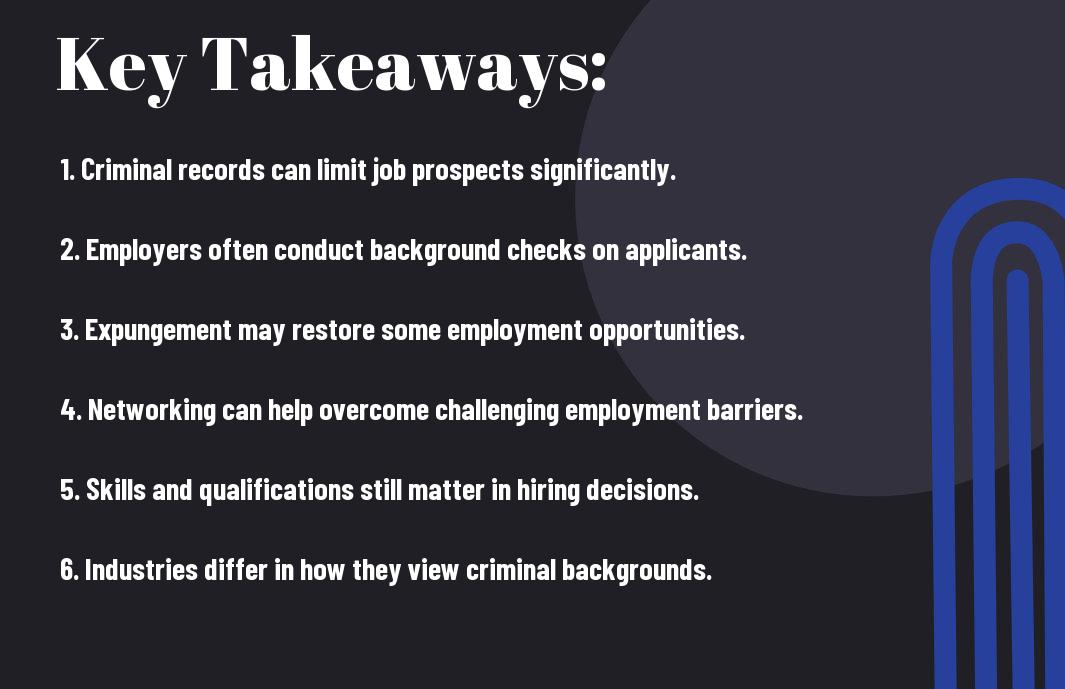
To achieve employment in certain sectors, you may encounter industry-specific restrictions that limit your opportunities. Fields such as healthcare, education, and finance often have stringent regulations regarding criminal backgrounds, which can exclude you from various positions. Familiarizing yourself with the specific requirements in your desired industry can help you strategize effectively and explore alternative pathways for employment.
Employer Bias and Discrimination
Besides the legal hurdles, many employers may carry biases against individuals with criminal records, which can result in discrimination during the hiring process. This bias often stems from misconceptions about the reliability and trustworthiness of those with a criminal history, putting you at a disadvantage despite your qualifications and potential.
Bias is a significant factor in the employment process that you must confront. Many employers may hold preconceived notions regarding individuals with criminal records, impacting their hiring decisions unjustly. These biases can manifest in the form of assumptions about your character, work ethic, and potential for success. It’s crucial to address these prejudices by emphasizing your skills and experiences during the application process and by demonstrating your commitment to personal growth and rehabilitation. Highlighting success stories and positive references can also help counteract any negative perceptions that may arise from your history.

Impact on Job Seekers
After facing a criminal conviction, you may find your job prospects significantly limited. Employers often conduct background checks and may overlook your application based solely on your record, despite your qualifications or skills. This can lead to feelings of frustration and helplessness, making the job search process even more challenging for you.
Economic Consequences
Any history of criminal activity can lead to reduced earning potential and increased difficulty in securing stable employment. When you face barriers in the job market, such as limited access to higher-paying jobs, it often results in ongoing financial strain, perpetuating a cycle of economic instability.
Psychological and Social Effects
With the stigma associated with having a criminal record, you may experience feelings of shame and isolation, which can affect your self-esteem and mental health. The frustration of being passed over for jobs can lead to increased anxiety and depression, making it vital to seek support and resources to navigate these challenges.
In fact, the psychological burden of a criminal record can extend beyond the job search itself, influencing your social interactions and relationships. You might find yourself withdrawing from social situations for fear of judgment, which can exacerbate feelings of loneliness. Building a support network and engaging in positive activities can help counteract these effects, empowering you to rebuild your confidence and pursue employment opportunities more effectively.

Strategies for Job Seekers with Criminal Records
Now that you’ve identified your unique situation, it is important to explore specific strategies that can enhance your prospects in the job market. By equipping yourself with the right tools and knowledge, you can present yourself more favorably to potential employers, regardless of your background. Emphasizing your skills, resilience, and readiness to contribute can open doors to new opportunities.
Record Expungement and Sealing
Below, you’ll find that one of the first steps you can take is to explore the options available for expunging or sealing your criminal record. Depending on your jurisdiction, certain offenses can be cleared from public view, making it easier for you to secure employment. Research the specific laws in your area and consult with a legal professional to determine your eligibility for this process.
Effective Disclosure Techniques
Above all, it’s important to master effective disclosure techniques that can help you communicate about your criminal record with potential employers in a constructive manner. Preparing a concise explanation, expressing accountability, and focusing on what you’ve learned can create a more positive narrative around your past.
In addition to having a well-prepared explanation, practice discussing your record confidently in interviews while ensuring you highlight your qualifications and achievements. Rehearse your disclosure with friends or mentors to build comfort and confidence around the conversation. Framing your past as a learning opportunity can demonstrate growth and resilience, helping employers see you as a valuable candidate rather than just your mistakes.
Employer Perspectives and Best Practices
Many employers are recognizing the complexities surrounding criminal records and their impact on hiring decisions. As you navigate this sensitive area, it’s important to understand various employer perspectives that inform best practices. By adopting fair policies and promoting transparency in the hiring process, you can create a more equitable and effective recruitment strategy, benefiting both your organization and potential employees.
Risk Assessment Approaches
Beside implementing standard background checks, you can also explore risk assessment approaches that focus on the nature of the offense and its relevance to the job. Tailoring your assessment methods helps you to evaluate applicants holistically, considering their skills and experiences rather than solely judging them by their past.
Creating Inclusive Hiring Policies
Between understanding the implications of criminal records and fostering a diverse workforce, you should focus on creating inclusive hiring policies. These policies enable you to assess candidates fairly, ensuring that individuals with criminal histories are given equal consideration based on their qualifications and current abilities.
Hence, establishing inclusive hiring policies is not just about compliance but also about improving your company’s culture and productivity. Engaging in community support and offering second-chance programs can further enhance your reputation as a socially responsible employer. By fostering an inclusive environment, you not only attract a wider talent pool but also benefit from diverse perspectives that enrich your organization.
Final Words
Now that you understand how criminal records can influence employment opportunities, it’s crucial to be proactive in your job search. You may need to consider industries more open to second chances or seek out employers who value rehabilitation. Building a strong resume, networking, and being transparent during interviews can enhance your chances. Additionally, explore resources like legal aid or employment programs geared toward helping individuals with criminal histories. Your path to employment may have unique challenges, but with determination and the right strategies, you can navigate the job market successfully.