

Many legal professionals and individuals navigating the criminal justice system are discovering how technology is fundamentally changing the landscape of criminal law. From innovative digital evidence collection methods to advanced analytics in case management, technology is reshaping how you approach legal issues. This post will explore the various technological advancements that are enhancing the efficiency and effectiveness of criminal law practices, allowing you to better understand the evolving nature of the legal field in today’s digital age.

The Evolution of Legal Technology in Criminal Practice
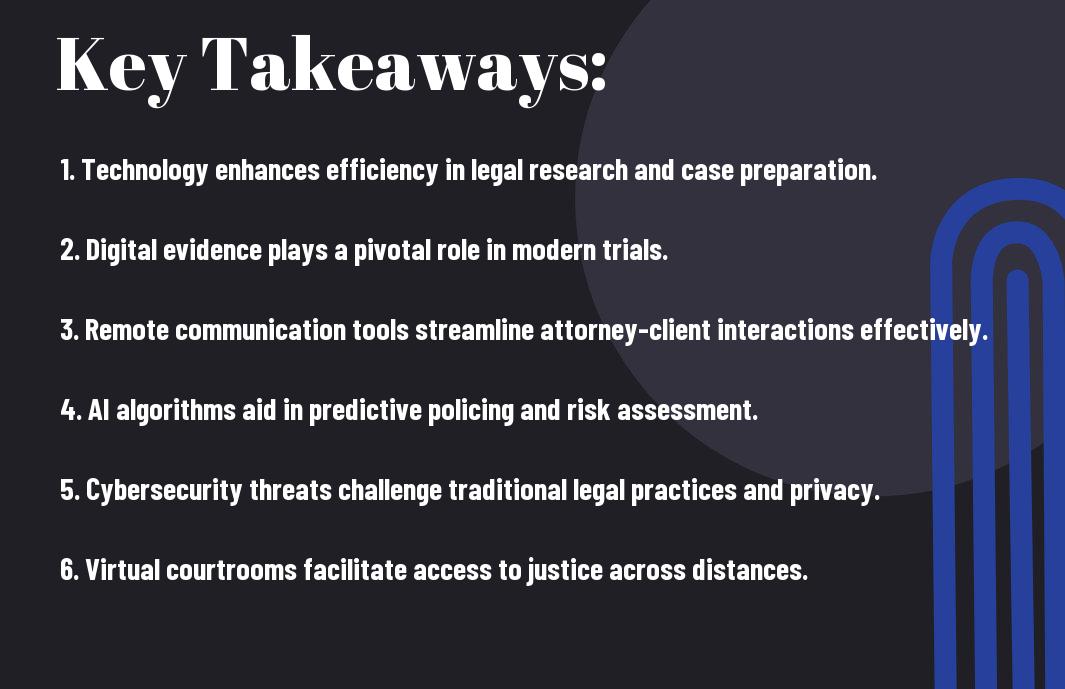
Advancements in legal technology have significantly altered the landscape of criminal law practices. You are witnessing a shift from traditional methods to innovative solutions that streamline processes, improve case management, and enhance legal research. As these technologies evolve, your practice can benefit from improved efficiency and effectiveness, ultimately leading to better outcomes for clients.
Historical Context: From Paper to Digital Files
With the advent of digital documentation, the criminal justice system transitioned from cumbersome paper files to organized digital records. This change not only simplified the storage and retrieval of case materials but also paved the way for enhanced collaboration among legal teams. You can now easily access and share vital information, reducing delays and improving overall case handling.
Current Technological Landscape in Criminal Law
Technological innovations have entered criminal law, offering advanced tools that assist you in various aspects of practice. From e-discovery platforms to cloud-based case management systems, these resources streamline your workflow and ensure each case is handled efficiently. Artificial intelligence, data analytics, and online legal research tools further empower you to make informed decisions quickly and accurately.
Evolution in the technological landscape continues to shape your practice in criminal law. The integration of artificial intelligence allows for speedy analysis of case law, identifying precedents that could benefit your arguments. Cloud storage ensures that you and your team can collaborate effectively regardless of location, while e-filing systems simplify submission processes to courts. Adapting to these advancements enhances your ability to provide top-tier legal representation, making your practice more responsive and agile in today’s fast-paced environment.
Digital Evidence Collection and Analysis
Some of the most significant advancements in criminal law have emerged in how you collect and analyze digital evidence. Modern technology enables law enforcement and legal practitioners to gather vast amounts of data and extract critical insights from it. The efficiency of this process not only enhances the investigation but also strengthens the foundation of cases as digital evidence becomes increasingly relevant in courtrooms.
Advanced Forensic Tools and Techniques
Along with traditional methods, you can now use advanced forensic tools and techniques to enhance the collection and analysis of digital evidence, including:
|
Social Media and Digital Footprints in Criminal Cases
Analysis of social media platforms and digital footprints can provide compelling evidence in criminal cases. Your online activities, posts, and interactions can often leave traces that reveal intent, alibis, or connections to other parties involved in a crime. These digital traces play an increasingly important role in investigations, serving as key pieces of evidence.
Forensic practitioners utilize specialized tools to comb through social media profiles, public records, and metadata from various digital interactions. By tracing your online presence, they can compile a timeline of events and establish critical links that might not be apparent through traditional investigative methods. This expanding scope in digital evidence helps you understand the growing importance of your online activities in the context of criminal law.

Artificial Intelligence in Criminal Law
Despite growing concerns about privacy and ethics, artificial intelligence (AI) is revolutionizing criminal law practices. By streamlining legal processes, AI empowers legal professionals to enhance their efficiency and improve outcomes for clients. These technologies can analyze vast amounts of data, assisting you in making informed decisions and formulating strategies that were once time-consuming and labor-intensive.
Predictive Analytics and Risk Assessment
Above all, predictive analytics offers you the ability to assess potential risks and trends in criminal behavior. By analyzing historical data, these systems can provide insights that help in evaluating recidivism rates, thereby facilitating more effective sentencing and resource allocation. Ultimately, this enables you to make data-driven choices to enhance public safety and tailor interventions.
AI-Assisted Legal Research and Case Preparation
Predictive technologies are significantly improving the way you conduct legal research and prepare cases. By quickly sifting through extensive legal databases, AI tools can identify relevant case law and statutes that may impact your case, allowing you to focus on strategy rather than merely searching for information.
For instance, AI-assisted legal research can dramatically reduce the time you spend analyzing past court decisions, ensuring you’re equipped with the most relevant precedents. By using natural language processing, these tools understand context, allowing you to refine your search with unprecedented accuracy. This not only enhances your efficiency but also strengthens your arguments with well-researched, factual backing. As you adopt these technologies, your ability to prepare thoroughly and effectively for trial will improve, enabling you to better advocate for your clients.
Virtual Court Proceedings and Remote Advocacy
All aspects of the legal landscape are evolving due to technology, and virtual court proceedings are at the forefront of this transformation. As courts adapt to modern demands, remote advocacy methods are emerging, allowing legal professionals to represent clients effectively from anywhere. This shift not only saves time but also increases accessibility for individuals who may face barriers in traditional court settings.
Video Conferencing and Virtual Hearings
Among the significant advancements, video conferencing technologies have become integral to virtual hearings. They enable participants—including lawyers, judges, and witnesses—to connect in real-time, ensuring that matters proceed without unnecessary delays. This innovative approach allows for efficient case management and broadens participation opportunities, ensuring a smoother judicial process.
Challenges and Benefits of Remote Criminal Proceedings
Criminal proceedings conducted remotely present both challenges and advantages. While these proceedings can increase efficiency and accessibility, they can also lead to concerns regarding the integrity of the legal process, especially in terms of personal interaction and evidence presentation.
Virtual court systems facilitate quicker resolutions and can alleviate the court’s backlog. However, challenges arise, such as technology access disparities and potential issues maintaining confidentiality during proceedings. You may find it difficult to communicate certain nuances of your case when not in a physical courtroom, and you’ll need to adapt to a different environment. As you engage in these new systems, staying informed about both the capabilities and limitations can empower you to navigate the evolving landscape effectively.

Cybersecurity Considerations for Criminal Law Practitioners
Not prioritizing cybersecurity can expose you and your clients to significant risks. As a criminal law practitioner, understanding the intricacies of cybersecurity is vital. Implementing strong security measures, such as encryption and secure communication channels, helps safeguard sensitive information against potential breaches. Additionally, staying informed about evolving threats enables you to adapt and protect your practice effectively.
Client Confidentiality in the Digital Age
For criminal law practitioners, maintaining client confidentiality has become increasingly complex in the digital landscape. You must ensure that all communication channels, including email and file sharing, are secure. Utilizing encrypted platforms can enhance confidentiality and build trust with your clients, allowing them to feel safe in sharing their sensitive information without fear of exposure.
Protecting Sensitive Case Information
Any information regarding your cases is sensitive and must be carefully protected. You should implement best practices for data security, including regular software updates, secure passwords, and firewalls. By adopting these measures, you can minimize the risks of data breaches, helping to secure your clients’ information and maintain your professional integrity.
Considering the various digital threats, you must take proactive steps to protect sensitive case information. Regularly audit your cybersecurity practices and train your staff on data protection protocols. Utilizing tools such as virtual private networks (VPNs) for secure internet connections can also significantly enhance your data protection. Establish incident response plans to address potential security breaches swiftly, ensuring your client’s information remains confidential and secure in an ever-changing digital landscape.
Ethical Implications of Technology in Criminal Defense
Unlike traditional practices, the integration of technology in criminal defense raises complex ethical considerations. You must navigate the potential risks of automated decision-making tools and algorithms that may perpetuate bias or compromise privacy. As you explore these innovations, it’s necessary to stay vigilant about the implications they could have on defendants’ rights and ensure that the use of technology enhances, rather than undermines, your capacity to advocate effectively in the pursuit of justice.
Digital Divide and Access to Justice
To ensure equitable access to justice, you need to be aware of the digital divide that impacts both defendants and attorneys. As technology becomes integral to legal processes, disparities in access to resources can disproportionately affect less privileged individuals. By acknowledging this divide, you can work towards developing inclusive practices that provide fair treatment for all affected by the criminal justice system.
Balancing Efficiency with Due Process
With the rise of digital tools in your defense strategies, striving for efficiency must not compromise due process. You should remain aware that while automated systems and quick data analysis can expedite your work, they must not overshadow the fundamental rights of the accused. Protecting individuals’ rights requires a careful approach to adopting technologies, ensuring that innovations enhance your capacity to serve justice without sacrificing necessary legal principles.
Indeed, striking the right balance between efficiency and due process is necessary in your practice. As technology advances, you must critically assess how it can streamline your workflow while safeguarding defendants’ rights. Ensuring that automated tools do not substitute nuanced legal analysis or personal representation is crucial. Always keep in mind the paramount importance of thoroughness in legal proceedings; the pursuit for speed should never negate the quality of justice that you provide. By prioritizing both efficiency and due process, you can uphold the integrity of the legal system while embracing the benefits of technology.
Final Words
Now that you’ve explored how technology is reshaping criminal law practices, you can better appreciate the significant impact these advancements have on your legal environment. From data analytics to artificial intelligence, these tools are enhancing investigative techniques and streamlining legal processes. As you navigate this evolving landscape, staying informed about these technologies will empower you to adapt and leverage new opportunities in your legal practice, ensuring you remain effective and competitive in a digital age.