

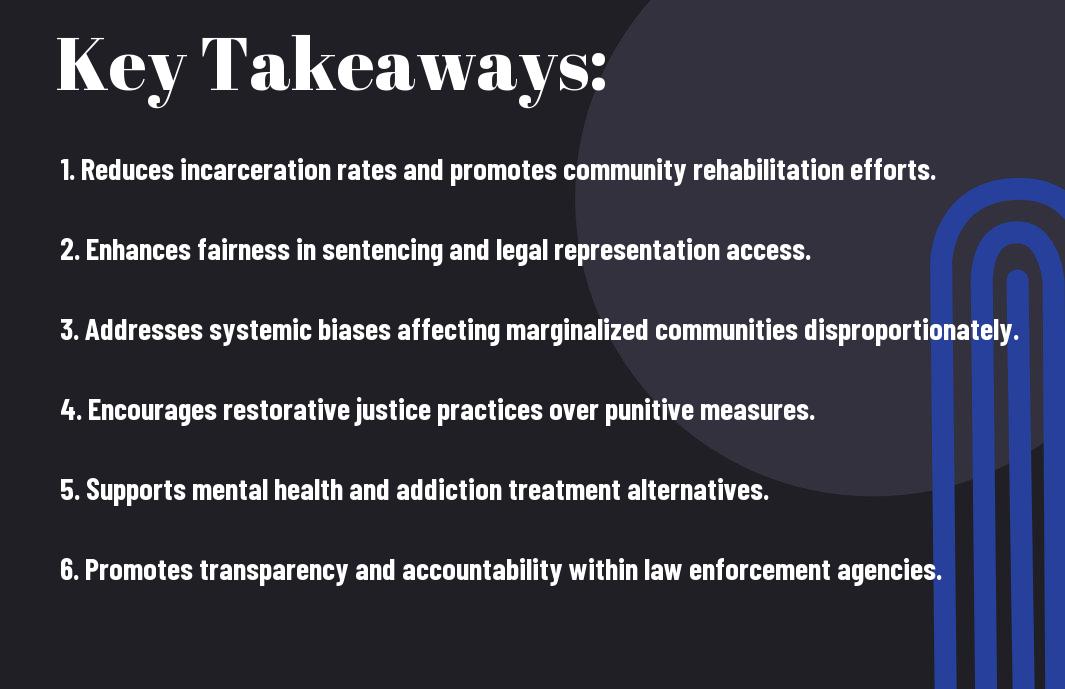
You may be aware that criminal justice reform has become a significant topic of discussion in recent years, reflecting widespread calls for change within the legal system. This blog post aims to dissect how various reform initiatives influence both societal norms and the framework of law enforcement. By examining key aspects of these reforms, you will gain a better understanding of their ramifications on your community, the legal system, and the broader implications for justice in society.

Historical Context of Criminal Justice Reform
Before exploring into the modern implications of criminal justice reform, it’s vital to understand the historical context that has shaped current policies and practices. Throughout history, legal systems have evolved in response to societal attitudes towards crime, punishment, and rehabilitation. Significant events and shifts in public perception have grounded the reform movements that emerged in various periods, driving legislative changes aimed at improving fairness and efficacy within the justice system.
Evolution of Criminal Justice Policies in the 20th Century
Behind the scenes, the 20th century saw pivotal transformations in criminal justice policies as societies grappled with issues like crime rates, civil rights, and rehabilitation. Each decade brought unique challenges that prompted lawmakers and advocates to reconsider how justice was administered. The response to these challenges laid the groundwork for the reforms that you are witnessing today.
Key Reform Movements and Their Catalysts
Any discussion of criminal justice reform requires acknowledging the key movements and catalysts that spurred significant changes. Over the decades, movements aimed at addressing racial disparities, sentencing practices, and the treatment of the mentally ill have emerged, often fueled by grassroots activism and public outcry. These efforts sought not only to alter policies but also to reshape the societal understanding of justice.
Indeed, various reform movements have arisen in response to societal injustices, driving legislative and cultural changes in the legal system. For instance, the Civil Rights Movement of the 1960s spotlighted racial discrimination within law enforcement and the court systems, sparking reforms to ensure equitable treatment under the law. Similarly, the War on Drugs led to a reevaluation of harsh sentencing laws and their disproportionate impact on communities of color. Activism surrounding the rights of the wrongfully convicted and the mentally ill has also played a critical role in shaping current reforms. Understanding these catalysts helps you appreciate the complexities involved in criminal justice reform efforts today.

Current Reform Initiatives
If you are following the landscape of criminal justice reform, you will find various initiatives that are currently shaping the legal system. These efforts focus on improving fairness, reducing recidivism, and ensuring accountability within law enforcement. As you explore these transformative measures, you will gain insight into the broad implications they have on society and the individuals involved in the justice process.
Sentencing Reform and Alternatives to Incarceration
Current trends in sentencing reform aim to reduce prison populations by promoting alternatives to incarceration. These alternatives can include probation, community service, or treatment programs that allow individuals to remain connected to their families and communities while receiving necessary support. By shifting the focus from punishment to rehabilitation, you can see how these initiatives seek to address the root causes of criminal behavior.
Police Reform and Accountability Measures
Among the critical aspects of reform initiatives is the focus on police reform and accountability measures. This includes implementing policies that increase transparency, such as the use of body cameras and independent review boards. By empowering communities and ensuring that law enforcement is held accountable for their actions, these reforms work towards building public trust and enhancing safety.
Reform measures are being introduced to address systemic issues within policing. These may involve changes to training protocols, tactical strategies, and community engagement efforts. By fostering better relations between law enforcement and the communities they serve, you can envision a more equitable and just system. This approach is designed to prevent abuse of power and ensure that officers act in accordance with the law and community standards.
Bail and Pretrial Detention Reforms
Reforms focusing on bail and pretrial detention aim to address disparities in how defendants are treated before trial. By advocating for alternatives to cash bail, these initiatives seek to prevent individuals from being incarcerated simply due to their inability to pay. Instead, options such as electronic monitoring or agreeing to stay in contact with the court can help you see a more equitable framework for pretrial processes.
Reform efforts in bail and pretrial detention are crucial for addressing the inequalities faced by low-income individuals. When you consider that many people remain incarcerated for extended periods simply because they cannot afford bail, these reforms emphasize justice for all. By promoting fairness in the pretrial system, these initiatives help reduce overcrowding in jails and allow defendants the opportunity to prepare their cases while maintaining their freedom and dignity.
Socioeconomic Impacts of Criminal Justice Reform
All across the nation, criminal justice reform is shaping the socioeconomic landscape by addressing systemic injustices and aiming to create equal opportunities for all. As society adapts to these changes, you may observe shifts in community dynamics, resource allocation, and workforce engagement, highlighting the interconnectedness between justice policies and socioeconomic health.
Effects on Marginalized Communities
By analyzing the reform’s effects on marginalized communities, you can see a significant impact, such as reduced incarceration rates and improved access to social services. These changes foster community development, enhance public safety, and create pathways for formerly incarcerated individuals to reintegrate into society, ultimately benefiting everyone.
Economic Implications of Reform Measures
Criminal justice reform also carries notable economic implications, influencing both individual and community wealth. Reduced incarceration rates can lead to increased productivity, as people once imprisoned can contribute to the labor market and generate income, benefiting local economies.
Economic studies have shown that investing in rehabilitation and diversion programs can decrease long-term costs associated with incarceration. When you consider the expenses linked to housing inmates and the lost potential of individuals removed from the workforce, reform measures can translate into significant savings. By redirecting funds toward education, job training, and community services, you can enhance economic stability while promoting a more equitable society.
Legal System Transformations
Despite the complexities involved in legal reforms, the criminal justice system has undergone significant transformations. These changes have reshaped the roles of various stakeholders within the legal framework, necessitating a reevaluation of how justice is administered. As you probe deeper, you may notice that these transformations are not just procedural; they also seek to address longstanding societal concerns about equity, efficiency, and the overall effectiveness of law enforcement and judicial practices.
Changes in Prosecutorial Discretion and Practice
Besides impacting the overall fairness of trials, changes in prosecutorial discretion and practice have redefined how prosecutors engage with cases. You will find that modern reforms encourage a more measured approach, emphasizing rehabilitation over punishment, and fostering an environment where the rights of the accused are respected. This shift comes with a growing emphasis on transparency, accountability, and the importance of ethical considerations in prosecutorial decisions.
Judicial Responses to Reform Legislation
Among the various stakeholders, judges play a vital role in interpreting and implementing reform legislation. You might see that their responses reflect an understanding of the importance of justice system reforms and a commitment to improving the legal landscape. Judges can either support or challenge reforms based on their interpretation of the law and its implications for individuals and communities.
It is crucial to recognize that judicial responses to reform legislation vary significantly. Some judges embrace new mandates aimed at reducing mandatory minimum sentences or enhancing diversion programs, recognizing the potential for positive outcomes for defendants and society. Conversely, other judges may express concerns regarding the implications for public safety or the legal system’s integrity. By evaluating these responses, you can gain insight into the complex nature of judicial decision-making and its potential impact on future reforms.
Measuring Effectiveness of Reforms
Keep in mind that measuring the effectiveness of criminal justice reforms involves analyzing various outcomes. Various metrics, including recidivism rates, public safety, and overall system efficiency, provide a framework for understanding how these changes impact both individuals and communities. Evaluating these factors helps to determine whether reforms yield positive changes in behavior and safety, ultimately guiding future policies and initiatives.
Recidivism and Public Safety Outcomes
Around the nation, recidivism rates serve as a significant indicator of the effectiveness of criminal justice reforms. High recidivism can imply that individuals are not receiving the support needed to reintegrate into society, while lower rates may suggest that reforms such as rehabilitation programs successfully deter repeat offenses. Public safety outcomes must also be evaluated simultaneously to ensure that these changes positively impact overall community well-being.
Cost-Benefit Analysis of Implementation
Safety and financial implications of criminal justice reforms are interlinked, prompting a need for effective cost-benefit analyses during implementation. By assessing the fiscal impact of reforms against their social outcomes, you can evaluate whether the resources allocated yield a substantial return in terms of reduced crime and improved social conditions.
For instance, examining the costs associated with transitional housing programs for ex-offenders can reveal significant savings in public funds, such as reduced incarceration costs, enhanced employment opportunities, and diminished recidivism rates. These analyses also highlight the long-term benefits of investing in community resources, showcasing that spending on preventive measures may ultimately lead to a safer society and less strain on your legal system. By analyzing these factors together, you can understand the overall value of justice reform initiatives more comprehensively.

International Perspectives on Criminal Justice Reform
Once again, looking at criminal justice reform on a global scale reveals a diversity of approaches and outcomes. Different countries face unique challenges, and as you analyze these international perspectives, you’ll find that reforms often reflect cultural, social, and economic contexts. By understanding these variations, you can gain insights into potential solutions applicable to your own society’s legal landscape.
Comparative Analysis of Reform Models
Before exploring different reform models globally, you should consider how each one addresses core issues within criminal justice systems. The following table outlines key characteristics:
| Model | Description |
|---|---|
| Restorative Justice | Focuses on healing and reintegration rather than punishment. |
| Decarceration | Aims to reduce prison populations through alternatives to incarceration. |
| Community Policing | Encourages collaboration between law enforcement and communities. |
| Universal Access to Justice | Ensures legal resources are available to all individuals, regardless of socioeconomic status. |
Lessons from Global Implementation Strategies
From examining various international reform efforts, you can glean valuable lessons about effective implementation strategies. Tailoring approaches to local contexts and engaging community stakeholders is important for success.
The experiences of countries that have successfully navigated criminal justice reform can serve as a guide for your own context. Strategies such as inclusive dialogue, comparative research, and pilot programs have proven effective. Additionally, you can observe how accountability mechanisms and monitoring systems ensure reforms remain aligned with their intended goals. By adopting these insights, you can contribute to shaping an equitable and just legal system in your society.
Final Words
To wrap up, understanding criminal justice reform’s impact on society and the legal system is crucial for you as an informed citizen. These reforms aim to create a fairer, more effective system that addresses systemic issues while promoting public safety. By recognizing the implications of these changes, you can engage in meaningful dialogue and support initiatives that truly benefit your community. Being informed empowers you to advocate for necessary changes that ultimately shape a more equitable society for everyone.