

Understanding the process of appealing a criminal conviction is necessary if you believe that a mistake was made during your trial. You may have grounds for appeal based on legal errors, prosecutorial misconduct, or new evidence that could significantly affect your case. This post will guide you through when to consider an appeal and outline the steps involved in the process, helping you make informed decisions about your legal rights and options.
Understanding Criminal Appeals
The criminal appeals process allows individuals found guilty in a trial to challenge their conviction and seek a reconsideration of their case. This legal option is a fundamental part of the justice system, ensuring that those accused have the opportunity to correct potential errors made during the initial proceedings.
Grounds for Appeal
With various reasons available, you can base your appeal on specific grounds. Common grounds include procedural errors, insufficient evidence, jury misconduct, and violations of constitutional rights, among others. It’s important to identify the most relevant grounds for your situation to strengthen your appeal.
Types of Appeals
For you, understanding the types of appeals is significant as they determine the approach your case will take. The primary types include:
- Direct Appeals
- Post-Conviction Relief
- Interlocutory Appeals
- Appeals to Higher Courts
- Federal Habeas Corpus Petitions
Assume that you decide to pursue any type of appeal; knowing the distinctions will guide your legal strategy.
| Type of Appeal | Description |
| Direct Appeals | Appeals to challenge the conviction based on trial errors. |
| Post-Conviction Relief | File requests after direct appeals when further claims arise. |
| Interlocutory Appeals | Appeals made before the trial ends, often regarding pretrial motions. |
| Appeals to Higher Courts | Seeking a review from a higher court for appellate decisions. |
| Federal Habeas Corpus | Challenging the legality of your detention in federal court. |
Indeed, focusing on the types of appeals can significantly impact your legal journey. You should consider various appeal strategies:
- Understanding your specific legal rights and grounds for appeal.
- Consulting with a knowledgeable attorney specialized in appeals.
- Gathering necessary documentation to support your case.
- Preparing for possible hearings and what they entail.
- Being aware of deadlines for filing your appeal.
Assume that you follow these steps; they will enhance your likelihood of a successful appeal.
| Strategy | Importance |
| Consulting an Attorney | Expert help can guide your appeal process effectively. |
| Gathering Evidence | Evidence strengthens your case and supports your claims. |
| Understanding Court Procedures | Knowledge of rules and timelines is important to meet requirements. |
| Preparing for Hearings | Preparation increases your confidence and argument effectiveness. |
| Staying Informed | Being updated on case laws can benefit your appeal strategy. |

The Appeal Process
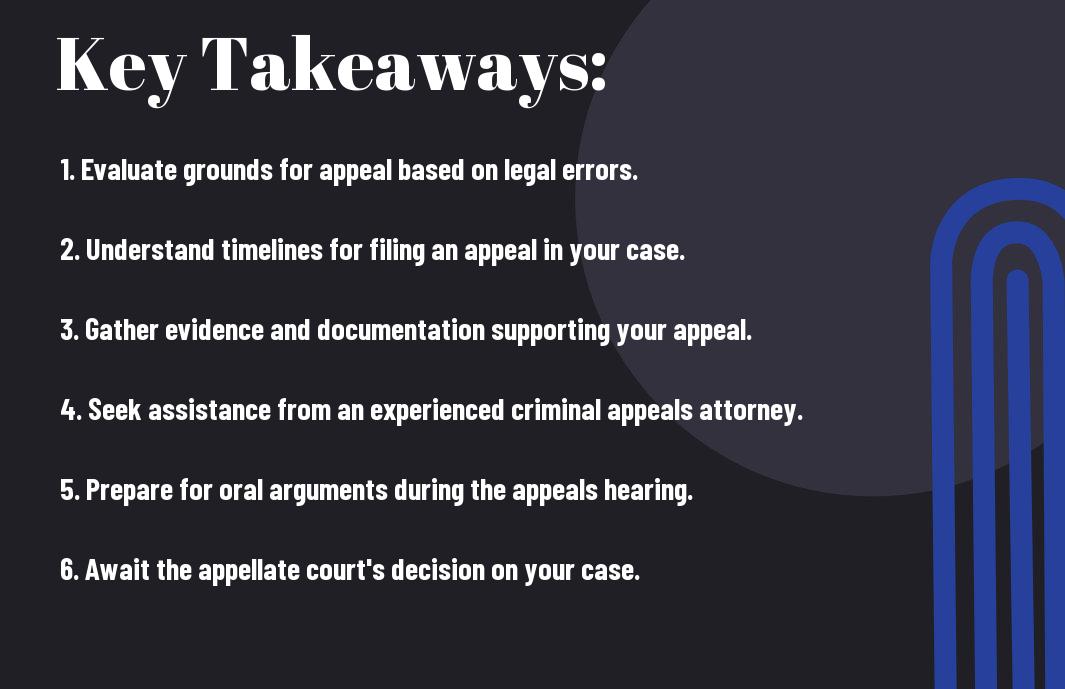
Now that you’ve decided to appeal your criminal conviction, it’s imperative to understand the steps involved in the appeal process. This complex system requires meticulous attention to detail, as well as adherence to specific legal protocols and deadlines. Your success largely depends on how well you navigate these procedures, ensuring that every requirement is met in a timely manner.
Filing the Notice of Appeal
Across the legal landscape, the first step in the appeal process is filing a Notice of Appeal. This document formally indicates your intention to contest the conviction and must be submitted within a specific timeframe after the verdict. It’s important to check your jurisdiction’s deadlines, as failing to file on time can forfeit your right to appeal.
Preparing the Appeal Brief
On the heels of filing the Notice of Appeal, you’ll need to prepare your appeal brief. This written document outlines the legal arguments supporting your case and serves as a vital component of your appeal. You’ll need to clearly articulate the errors made during your trial and explain how these errors affected the outcome.
Appeal briefs are your opportunity to persuade the appellate court that your conviction should be overturned. In crafting the brief, you should include relevant laws, case precedents, and articulate facts from the trial that support your arguments. Working closely with an experienced attorney can enhance the effectiveness of your brief, as they can guide you in presenting compelling arguments and ensuring that your brief follows the required format and legal standards.
The Role of the Appellate Court
Unlike trial courts, which focus on determining guilt or innocence, the appellate court primarily evaluates whether legal errors significantly impacted your case. This court reviews the record from the trial court, including transcripts and evidence, to assess the validity of your conviction and the legal standards applied. You won’t present new evidence or witnesses; instead, your legal team will argue about the application of law and procedural conduct during the trial.
Review Procedure
At the start of the review process, your appellate attorney will file a written brief outlining the reasons for the appeal, often alongside records from the original trial. The prosecution will then respond with their own brief, followed by an opportunity for your attorney to refute those arguments. The appellate court will review these documents and may hold oral arguments to clarify points before rendering a decision.
Possible Outcomes
Above all, the appellate court can take one of several actions regarding your case. They may affirm your conviction, meaning they find no significant legal errors; reverse the conviction, leading to a potential acquittal; or remand the case back to the trial court for further proceedings. Each of these outcomes can substantially affect your future.
Also, it’s important to understand that a reversal may not automatically lead to your release; instead, the appellate court might require a new trial or resentencing. If your conviction is affirmed, your options may become limited, but a successful appeal can lead to a fresh start or the opportunity to address previous legal missteps. Knowing these potential outcomes can help you and your attorney plan the next steps effectively.
Common Challenges in Appeals
Once again, navigating the appeal process can present various challenges. You may encounter strict deadlines, specific grounds for appeal, and a higher burden of proof compared to the initial trial. Understanding these obstacles is vital to successfully presenting your case and ensuring that you have the best chance for a favorable outcome.
Legal Errors
For an appeal to be successful, you must demonstrate that legal errors occurred during your trial. This could include improper jury instructions, incorrect admissibility of evidence, or inadequate legal representation. Identifying and articulating these errors is vital in strengthening your case for appeal.
New Evidence
Evidence that was not available during your original trial may also form the basis for an appeal. This new evidence should be compelling enough to potentially change the outcome of your case, thus warranting a review. Without this critical payment, your appeal may not progress as desired.
Errors in your original case could stem from overlooked witnesses, newly obtained documents, or even advances in forensic technology. When you present new evidence, ensure it is relevant, credible, and clearly linked to your argument. This evidence should have the potential to substantially impact your conviction and needs to be presented effectively to achieve a successful appeal.
Timeframes and Deadlines
Not understanding the timeframes and deadlines associated with appealing a criminal conviction can jeopardize your chances for a successful outcome. Each jurisdiction has specific rules that dictate when and how you can file an appeal, so it is necessary to familiarize yourself with these timelines to protect your rights effectively.
Statute of Limitations
Against common belief, the timeframe for appealing a criminal conviction is not indefinite. Most jurisdictions impose a statute of limitations, which means you must initiate your appeal within a designated period following your conviction or sentencing. This timeframe can vary significantly depending on the nature of the crime and the specific court, so consulting a legal expert is advisable.
Important Filing Dates
Against the backdrop of your legal strategy, be aware that certain filing dates are necessary for successfully pursuing your appeal. These dates typically include the notice of appeal and other subpoenas or motions related to your case. Missing any of these dates could result in the dismissal of your appeal, severely limiting your options moving forward.
For instance, once you receive your sentencing judgment, you often have a limited window—usually 30 to 90 days—to file a notice of appeal. After filing, specific deadlines for submitting additional documents, such as briefs or transcripts, may follow. These timelines can be complex, and keeping an organized record of these dates is crucial to ensuring your appeal progresses smoothly.
Seeking Legal Representation
For anyone considering an appeal of a criminal conviction, seeking experienced legal representation is vital. An attorney who specializes in appeals will guide you through the complexities of the legal system and advocate for your rights. They will analyze your case, identify potential grounds for appeal, and help you navigate the procedural requirements, ensuring that you have the best possible chance of a favorable outcome.
Importance of an Experienced Attorney
Legal representation from an experienced attorney can significantly impact the outcome of your appeal. They possess the necessary expertise to understand the nuances of appellate law and can effectively argue your case before the court. An attorney who is well-versed in handling appeals knows how to present your case compellingly, increasing your chances of success.
Cost Considerations
Importance of evaluating cost considerations when hiring a lawyer for your appeal cannot be understated. While legal fees can vary widely, it’s vital to understand not just the upfront costs but also the potential long-term benefits of effective representation.
Further, many attorneys offer flexible payment options, including retainer fees or payment plans, which can be helpful in managing costs. Additionally, investing in an experienced attorney can lead to better chances of overturning your conviction, potentially saving you from future financial burdens or repercussions related to a criminal record. Weighing these factors will help you make an informed decision about your legal representation during the appeal process.
Final Words
Now that you understand when to appeal a criminal conviction and how the process works, it’s vital to assess your situation carefully. Should you believe that errors impacted your case, consulting with an experienced attorney can be beneficial. They will guide you through filing necessary paperwork and meeting deadlines. Being proactive in your approach can help protect your rights and potentially overturn an unjust conviction. Your decision to appeal can make a significant difference in your future, so consider all options available to you.