
Over the course of legal proceedings, you may find yourself unsure of what to expect if you miss a court date. Failing to appear can lead to serious consequences, including fines, warrants, or even complicating your case further. Understanding the implications of missing a court date and the steps to take afterward is crucial in navigating the legal system effectively. This post will provide you with clear insights into what happens next and how to address the situation appropriately.

Understanding Court Dates
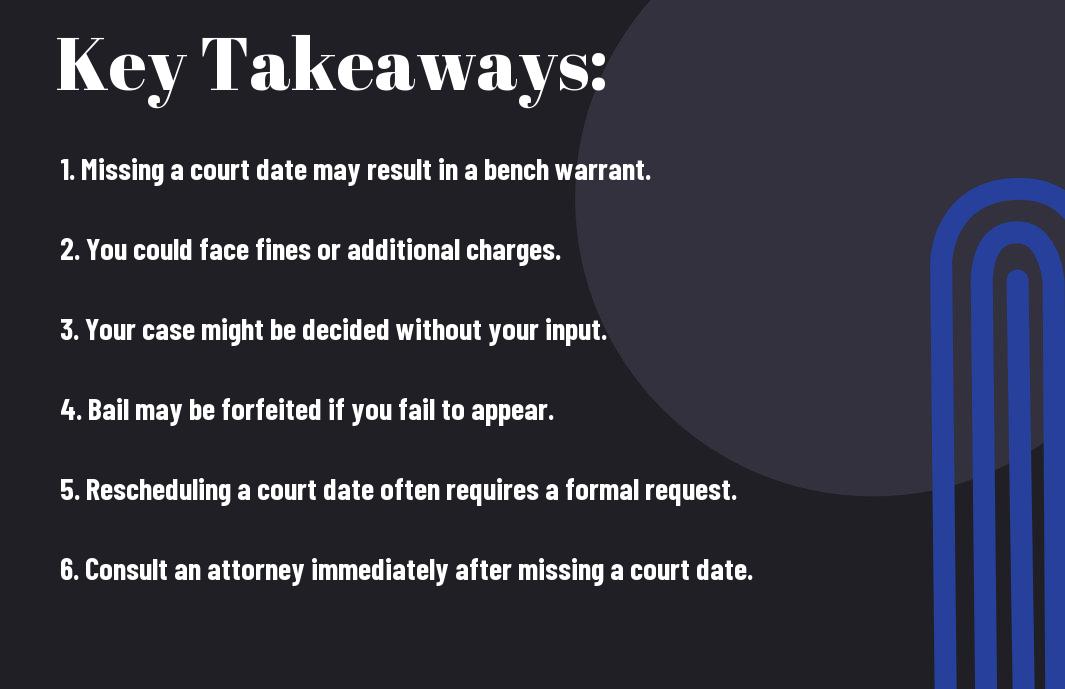
The court date is a scheduled appointment to appear before a judge regarding your legal matter. It serves to ensure all parties involved have the opportunity to present their case, provide evidence, and receive due process under the law. Missing a court date can lead to significant consequences, including penalties and possible default judgments, impacting your legal standing.
Importance of Attending Court
Any time you receive a court summons, attending is crucial. Failing to appear can lead to negative outcomes, including warrants for arrest or financial penalties. Your participation helps safeguard your rights and ensures that your side of the story is heard.
Types of Court Dates
Assuming various court dates exist, it’s important to understand their distinctions. They can include preliminary hearings, arraignments, trial dates, motion hearings, and sentencing hearings, each with its specific purpose and requirements.
| Type of Court Date | Purpose |
| Preliminary Hearing | Initial assessment of charges |
| Arraignment | Formal reading of charges |
| Trial | Presentation of evidence |
| Motion Hearing | Requests for legal rulings |
| Sentencing | Imposition of penalties |
Considering the importance of each type of court date, understanding them can significantly affect your legal proceedings. Being aware of what is expected at each stage helps you prepare adequately and positions you better in your case.
- Preliminary hearings assess evidence before trial.
- Arraignments formally introduce charges against you.
- Trials involve the examination of evidence and witness testimony.
- Motion hearings allow you to request specific legal outcomes.
- Sentencing determines the consequences of a guilty verdict.
Assume that knowing these details will lead to more effective navigation of your legal situation.
Consequences of Missing a Court Date
Some of the repercussions you may face if you miss a court date include fines, a warrant for your arrest, or a default judgment against you. These consequences can complicate your legal situation further, making it imperative to attend all scheduled hearings. It’s important to understand the implications of your absence so you can take appropriate steps to avoid negative outcomes.
Civil Cases
Between a default judgment being entered against you and potential fines, missing a court date can have serious ramifications in civil cases. If you fail to appear, the court may rule in favor of the other party automatically, which can result in the loss of your case and any claims you might have had.
Criminal Cases
To overlook a court appearance in a criminal case can be especially serious, often leading to a bench warrant for your arrest. This action indicates that law enforcement may actively seek to apprehend you, complicating your legal standing and potentially leading to additional charges.
Date and time are critical in criminal proceedings; missing your court date not only escalates the legal ramifications but can also damage your relationship with the judge. You may have limited options to address your absence, and the longer you wait to rectify the situation, the more severe the consequences may become. It’s advisable to contact an attorney promptly to discuss potential next steps and mitigate any fallout from your missed appearance.
Legal Options After Missing a Court Date
Not responding to a missed court date can lead to serious consequences, but you still have legal options available. You may be able to rectify your absence by filing specific motions or seeking the assistance of a legal professional. Understanding your options can help you take the right steps to address the situation and potentially mitigate any negative outcomes that result from your missed appearance.
Filing for a Motion to Vacate
Behind every missed court date, there could be valid reasons for your absence, such as illness or unforeseen circumstances. You can file a motion to vacate the default order or judgment if you demonstrate that your failure to attend was not of your own making. This motion crucially asks the court to set aside the prior ruling, allowing you the opportunity to be heard.
Seeking Legal Counsel
Date is crucial to navigating the complexities of your legal situation after a missed court date. Consulting with a legal professional can provide valuable insights into your specific case and potential remedies. An attorney can guide you through the process, helping you understand your rights and options, while also assisting you in filing any necessary motions to address the court’s prior actions.
Missing a court date can feel daunting, but addressing it promptly with the assistance of a lawyer can alleviate much of the stress involved. They can help you determine the best course of action, inform you about upcoming deadlines, and negotiate on your behalf if necessary. Their expertise in the legal system can greatly improve your chances of a favorable outcome following your absence.
How to Prevent Missing a Court Date
Now that you understand the implications of missing a court date, it’s vital to take proactive steps to ensure you do not miss it. Staying organized and informed about your court schedule can greatly reduce the risk of an oversight. Utilize tools and strategies that work best for you, and keep communication lines open with any involved parties to ensure you stay on track.
Scheduling Reminders
Court dates can easily slip your mind amid daily life. Setting up reminders on your phone, calendar, or planner is an effective way to keep your court appearance at the forefront of your schedule. Consider programming alerts that notify you a week in advance, as well as a day prior, to give you adequate time to prepare and ensure your attendance.
Communicating with Legal Representation
Legal representation plays a significant role in keeping you informed about your court obligations. You should maintain open lines of communication with your attorney regarding court dates, changes to your schedule, and any additional updates that may arise. Regular check-ins with your lawyer can help ensure that you are aware of your obligations, reducing the likelihood of missing important proceedings.
Another effective way to manage communication with your legal representation is to establish a routine for updates on your case. Whether it’s a weekly phone call or emails before significant dates, this proactive approach ensures you are aligned with your attorney’s expectations and any necessary preparations. Staying engaged with your lawyer will help you feel more confident and prepared for your court appearances.
The Role of the Court
To understand the consequences of missing a court date, it’s necessary to recognize the role of the court in the judicial system. Courts are responsible for upholding the law, ensuring justice is served, and maintaining order. When you are summoned to appear, it is your duty to attend, as this enables the court to make informed decisions regarding your case. Your absence can disrupt proceedings and impact the outcomes that affect your legal rights.
Court’s Response to Absentees
About the court’s response, when you fail to appear, judges typically have specific protocols to follow. Initially, they may issue a notice or reschedule the hearing. However, repeated absences can lead to more severe consequences, including the issuance of a default judgment against you, which can negatively impact your case and legal standing.
Issuance of Warrants
Role of the court includes the potential issuance of warrants for your arrest if you do not show up for a scheduled appearance. This is particularly common in criminal cases and can happen if the court determines that your absence is intentional or disruptive to the legal process.
It is important to realize that if a warrant is issued, law enforcement will be notified to locate and arrest you if necessary. This can lead to serious repercussions, such as jail time or fines, along with additional legal complications. It is always advisable to communicate with the court if you cannot attend a scheduled hearing to avoid these severe outcomes.
Common Misconceptions
Despite what many think, missing a court date often leads to serious consequences, and it doesn’t merely mean rescheduling. Many people believe that simply forgetting about a court appearance is a minor issue. However, courts generally do not take such absences lightly, and you could face penalties like fines or even warrants for your arrest. Understanding the implications of missing a court date is vital to navigating your legal situation effectively.
Beliefs About Automatic Re-scheduling
For those who assume that a missed court date leads to automatic re-scheduling, this misconception can have significant repercussions. Courts typically do not reschedule your hearing without formal action on your part. If you do not attend, you may end up facing negative outcomes that could have easily been avoided with proper communication and planning.
Understanding Defaults and Judgments
Around the topic of missing court dates, many people are unaware of the direct outcomes, such as defaults and judgments. If you fail to appear, the court may issue a default judgment against you, particularly in civil cases. This means the other party can win the case by default, often resulting in financial consequences or other legal obligations that you must fulfill, complicating your situation further.
About defaults and judgments, these are legal decisions made when you neglect to respond to a court summons or fail to show up for your scheduled hearing. This action can severely affect your rights, financial stability, and other legal matters. If you find yourself in such a position, it’s strongly advisable to consult with an attorney who can help you understand your options and possibly mitigate the consequences of your missed court date.
Conclusion
With these considerations, understanding the implications of missing a court date is necessary for navigating the legal system effectively. You may face immediate consequences such as fines or warrants for your arrest, which can complicate your situation further. It’s important to assess your circumstances, communicate with the court if possible, and seek legal advice to mitigate the fallout. Staying proactive can help ensure that your rights are protected and that you can address any challenges arising from your absence.