

You may be unaware of the significant differences between civil and criminal law, two fundamental branches of the legal system that impact your rights and responsibilities. Understanding these distinctions is important for navigating potential legal issues and knowing when to seek assistance. While criminal law deals with offenses against the state, civil law focuses on disputes between individuals or organizations. In this post, you will gain insight into your legal rights, the processes involved in each type of law, and how to protect yourself in various situations.

Fundamentals of Legal Systems
The legal system is the framework within which laws are made, enforced, and interpreted. It serves as a means for societies to maintain order, resolve disputes, and protect individual rights. Understanding these fundamentals equips you to navigate legal situations more effectively, ensuring you are informed about your rights and responsibilities under the law.
Definition and Purpose of Law
Behind every law lies a purpose: to regulate behavior, protect the innocent, and provide a mechanism for resolving conflicts. Laws serve as guidelines for society, establishing acceptable standards that promote fairness and justice. Understanding the essence of law helps you appreciate its role in your life, ensuring your rights are upheld and protected.
Sources of Law in the United States
Between the Constitution, statutes, regulations, and case law, the sources of law in the United States create a complex legal landscape. Each source contributes to the overall framework of laws that govern your rights and duties, and recognizing their hierarchy is vital for understanding legal principles.
Plus, the U.S. legal system is built on a hierarchy of laws. The Constitution stands at the top as the supreme law of the land, followed by federal statutes, state constitutions, and local ordinances. Judicial decisions, or case law, further interpret these laws, shaping legal precedents. Familiarizing yourself with these sources empowers you to better understand your legal protections and obligations, making it easier to advocate for your rights in various situations.
Civil Law Overview
Some people may find civil law confusing, but it plays a vital role in protecting individual rights. Civil law governs disputes between individuals, organizations, and government entities, dealing with issues that require resolution through compensation or specific performance rather than criminal penalties.
Definition and Scope of Civil Law
For you to understand civil law, it encompasses a broad range of legal issues that primarily deal with private rights and obligations. This area of law addresses situations where one party’s actions may cause harm or loss to another, enabling the affected party to seek remedies through the legal system.
Common Types of Civil Cases
After recognizing the vast scope of civil law, it’s helpful to know the types of cases commonly involved. These include:
- Contract disputes
- Property disputes
- Family law issues
- Tort claims
- Employment matters
Recognizing these categories can help you identify the legal recourse available in your situation.
| Type of Case | Description |
| Contract Disputes | Issues arising from breached agreements. |
| Property Disputes | Conflicts over ownership and boundaries. |
| Family Law | Matters like divorce and custody. |
| Tort Claims | Injuries caused by negligence or intentional acts. |
| Employment Matters | Disputes related to workplace rights. |
Understanding these civil cases will better equip you to navigate your own legal challenges. Whether it’s a simple contract disagreement or a complex family issue, knowing the basics is vital. Common types lead to various outcomes, including monetary compensation or legal injunctions.
- Negligence claims
- Breach of contract
- Family disputes
- Property damage
- Class action lawsuits
Recognizing these examples allows you to be more informed as you consider your options in civil legal matters.
Burden of Proof in Civil Proceedings
Commonly, in civil cases, the burden of proof lies with the plaintiff, who must establish their case by a preponderance of the evidence. This means you only need to demonstrate that it is more likely than not that the claims made are true, rather than proving them beyond a reasonable doubt, as is the standard in criminal cases.
And it’s crucial for you to understand that this lower standard of proof reflects the nature of civil law, emphasizing compensation rather than punishment. This difference allows you as the plaintiff to present your case effectively without the same level of certainty required in criminal prosecutions, making it generally easier to prevail in civil cases.

Criminal Law Overview
After understanding the basics of law, it’s necessary to recognize the unique characteristics of criminal law. This area of law is focused on actions that are offenses against society, government, or public order. Criminal law defines what constitutes a crime, outlining the legal consequences that follow violations of these laws. You have the right to comprehend the implications of criminal acts and how they affect you and your community.
Definition and Scope of Criminal Law
The criminal law system encompasses a body of laws that defines conduct prohibited by the state as it threatens and harms public safety. It includes a range of offenses, from minor infractions to serious felonies. You should be aware that this system aims to deter, punish, and rehabilitate offenders to enhance societal protection.
Categories of Criminal Offenses
Besides understanding the general framework, it’s important to know the various categories of criminal offenses. These typically fall into two main groups: misdemeanors and felonies. Misdemeanors are less severe offenses, while felonies involve more serious crimes that carry heftier penalties.
Even within these categories, offenses can be further classified based on their nature, such as violent crimes, property crimes, white-collar crimes, and drug-related offenses. Each type has specific legal definitions and consequences. By familiarizing yourself with these classifications, you enhance your awareness of how laws impact your life and the community at large.
Burden of Proof in Criminal Cases
Burden of proof is a vital concept in criminal law, as it establishes who has the responsibility to prove the case. In criminal proceedings, this burden lies with the prosecution, which must demonstrate the defendant’s guilt beyond a reasonable doubt. You should understand this standard is set high to protect the rights of individuals accused of crimes.
For instance, this high burden of proof ensures that a defendant cannot be convicted based solely on suspicion or inadequate evidence. It promotes the principle that you are innocent until proven guilty, reflecting the justice system’s commitment to fair trials. Being informed about these standards can empower you if you ever find yourself involved in legal proceedings.

Key Differences Between Civil and Criminal Law
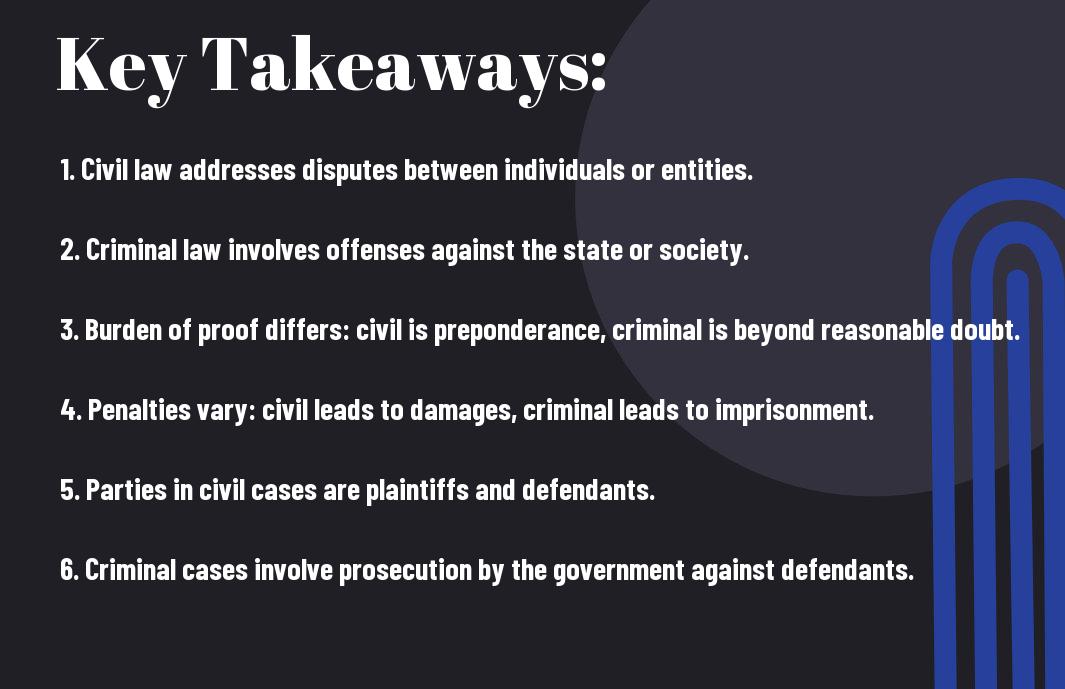
Many people often confuse civil and criminal law, as both are legal systems that govern human behavior. However, the primary difference lies in the nature of the disputes and the parties involved. In civil law, individuals or organizations seek compensation for damages or enforcement of rights, whereas criminal law involves the state prosecuting individuals for offenses against society, which may result in punitive measures. Understanding these distinctions is necessary for recognizing your legal rights and responsibilities.
Legal Procedures and Processes
On the civil law side, cases typically involve a plaintiff filing a lawsuit against a defendant, with matters resolved in a court or through negotiation. In contrast, criminal law cases usually begin with an investigation followed by charges brought by a prosecutor. The procedures and processes differ considerably, so it’s important for you to familiarize yourself with the specific steps that apply to each legal realm.
Potential Outcomes and Penalties
About outcomes, civil cases often result in monetary compensation or injunctive relief for the plaintiff, while criminal cases can lead to fines, imprisonment, or community service for the accused. The severity and nature of the penalties significantly differ, which underscores the importance of understanding the implications of each legal system.
But in civil cases, penalties are generally financial and focus on rectifying a wrong, whereas criminal penalties are designed to punish and deter illegal behavior. The outcomes can vary widely based on the nature of the charge and the evidence presented. It is critical for you to understand how these outcomes can affect your life in terms of personal and financial consequences.
Rights of the Parties Involved
Outcomes in legal disputes hinge on the rights afforded to both parties. In civil law, you have the right to seek damages and present your case to a judge or jury. In criminal law, you also have rights such as the presumption of innocence, the right to a fair trial, and legal representation. Knowing your rights can empower you to navigate the legal landscape more effectively.
Also, your rights can play an integral role in the legal process, ensuring that you are treated fairly and justly. Whether you find yourself in a civil suit or facing criminal charges, understanding your entitlements can make a significant difference in the outcome of your case. Recognizing these rights is necessary for you to advocate for yourself and protect your interests effectively.
Constitutional Protections
To ensure that you are treated fairly under the law, constitutional protections serve as vital safeguards for your rights. These protections, embedded in the Constitution, guarantee you fundamental rights during legal proceedings, whether civil or criminal. Understanding these rights can empower you and help you navigate the complexities of the legal system effectively.
Civil Rights in Legal Proceedings
On engaging in civil proceedings, you have the right to a fair hearing, impartiality, and access to relevant evidence. This framework supports your ability to represent yourself and defend your claims adequately. Upholding these rights is imperative to maintain justice in civil matters.
Criminal Defendant’s Rights
Protections for you as a criminal defendant are paramount to ensuring that you receive a fair trial. These include rights such as the presumption of innocence, the right to counsel, and the right against self-incrimination, among others.
It is imperative to be aware that these rights protect you throughout the criminal justice process, from arrest to trial. They provide you with the opportunity to have legal representation, challenge evidence, and confront witnesses. Understanding these rights allows you to defend yourself effectively and ensures that the prosecution meets its burden of proof beyond a reasonable doubt. Familiarizing yourself with these protections can significantly influence the outcome of your case.
Navigating the Legal System
Despite the complexities of the legal system, understanding your rights and options can empower you to make informed decisions. Familiarize yourself with both civil and criminal processes, as they operate under different rules and implications. Whether facing a lawsuit or a criminal charge, knowing the basic structure of the legal system—including courts, procedures, and potential outcomes—will help you navigate your situation with confidence.
When to Seek Legal Counsel
With the intricacies involved in legal matters, knowing when to consult a lawyer is necessary. If you face a lawsuit, criminal charges, or even legal disputes impacting your rights, seeking counsel promptly can provide you with vital guidance. A qualified attorney can help you assess your case, outline your options, and represent your interests effectively to achieve a favorable outcome.
Understanding Court Jurisdictions
Across various legal matters, court jurisdiction plays a vital role in how cases are handled. Jurisdictions determine which court has the authority to hear a case based on the type of dispute, location, and the parties involved. Understanding whether your case falls under federal, state, or local jurisdiction is necessary for ensuring your matter is addressed in the appropriate court.
Understanding court jurisdictions involves recognizing the distinctions between different types of jurisdictions, such as subject matter and personal jurisdiction. Subject matter jurisdiction pertains to the nature of the case, classifying it as either civil or criminal, while personal jurisdiction relates to the court’s authority over the parties involved. Familiarizing yourself with these concepts can guide you in determining the right forum for your case and help you avoid unnecessary delays or complications.
Alternative Dispute Resolution Options
Jurisdictions often provide alternative dispute resolution (ADR) options to resolve conflicts outside of traditional court settings. Mediation and arbitration are common ADR methods that can help you reach a resolution more efficiently and at a lower cost. Exploring these options can be beneficial if you seek a more amicable solution or wish to avoid the time-consuming nature of court proceedings.
Resolution through alternative dispute resolution can offer numerous advantages, including greater control over the outcome, confidentiality, and a more collaborative atmosphere for settling disputes. Mediation enables open communication between parties to find mutually agreeable solutions, while arbitration presents a binding decision made by a neutral party. These methods can save you time and resources, equipping you with the tools to resolve conflicts effectively without resorting to litigation.
Summing up
Taking this into account, understanding the differences between civil and criminal law is important for you as a citizen. Each area has unique legal rights and processes that affect your life significantly. Being aware of these distinctions will empower you to navigate legal challenges more effectively and safeguard your interests. Equip yourself with knowledge about your rights and seek professional guidance when necessary to ensure that you are adequately protected within the legal system.