
Just as you navigate a complex puzzle, understanding the journey of a criminal investigation is vital for grasping how justice is served. From the moment a crime is reported, a meticulous process unfolds, encompassing evidence collection, suspect interrogation, and courtroom proceedings. By examining each necessary step, you can gain insight into how law enforcement and the legal system work together to bring about resolution and closure. This post will guide you through the intricate stages of a criminal investigation, highlighting the importance of each phase along the way.

Crime Scene Management
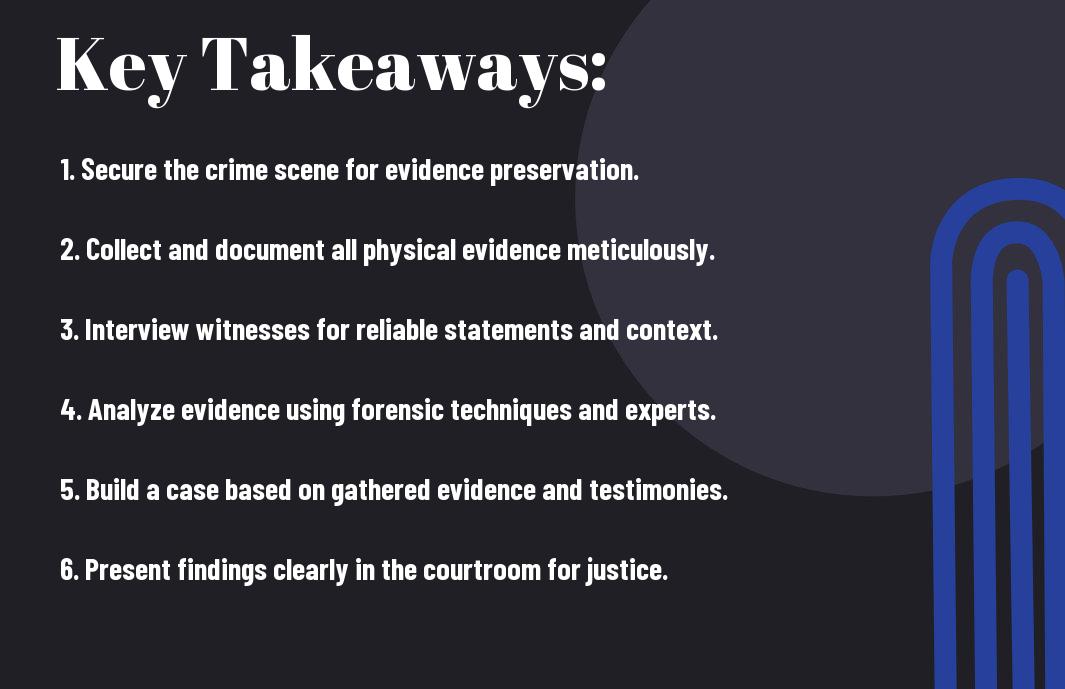
Your ability to effectively manage a crime scene is paramount to the success of the investigation. Proper crime scene management not only preserves evidence but also helps to maintain the integrity of the investigation process. Understanding the necessary steps involved can guide you in ensuring that all relevant information is collected accurately and efficiently.
Initial Response and Securing the Scene
Beside ensuring the safety of yourself and others, the first responders must quickly secure the crime scene to prevent contamination or loss of evidence. This involves establishing a perimeter and controlling access to the area, allowing only authorized personnel to enter. By taking swift action, you create a secure environment that is critical for gathering evidence.
Documentation and Preliminary Assessment
Documentation is a vital part of investigating a crime scene. Conducting a preliminary assessment allows you to identify and record initial observations, which will aid in later analysis. Detailed notes, sketches, and photographs will serve as primary references when piecing together the narrative of the incident.
Initial documentation should include a thorough description of the scene, including the location, time, and any visible evidence. Important aspects such as the weather, condition of the area, and potential witnesses should also be noted. By gathering this information early on, you lay a solid foundation for the entire investigation, enabling you to build a comprehensive case later in court.

Evidence Collection and Handling
There’s a systematic approach to evidence collection that significantly influences the investigation’s outcome. Properly handling and preserving evidence ensures its integrity and admissibility in court. Evidence must be collected with care to avoid contamination and maintain its reliable state for legal proceedings.
Types of Evidence and Collection Methods
Evidence can vary widely, requiring different methods for collection. Below are some common types and methods:
| Type of Evidence | Collection Method |
|---|---|
| Physical Evidence | Seizing items directly from the scene |
| Biological Evidence | Using sterile containers for samples |
| Digital Evidence | Creating forensic copies of devices |
| Witness Testimonies | Conducting interviews with individuals |
| Photographic Evidence | Taking photographs of the crime scene |
Perceiving how evidence relates to the case is vital for effective investigation.
Chain of Custody Procedures
Evidence plays a vital role in proving or disproving aspects of a case, making chain of custody procedures indispensable. This process documents the handling of evidence from the moment it is collected until it is presented in court, ensuring transparency and integrity. Without a clear chain of custody, the evidence may be challenged or deemed inadmissible, hindering the legal process.
Custody of evidence must involve meticulous documentation, including who collected it, how it was stored, and who accessed it. Each time evidence is handled, it should be logged into a record to maintain a complete history. This accountability is vital, as any gaps in the chain can lead to questions about the evidence’s reliability. Proper management allows you to uphold the standards needed in the courtroom.

Forensic Analysis
Now that physical evidence has been collected, it undergoes forensic analysis, which plays a pivotal role in linking suspects to crimes. This process involves various scientific techniques to examine and interpret evidence, such as fingerprints, DNA, and trace materials. The results of these analyses can significantly impact the direction of a case and help establish the facts necessary for prosecution or defense in a courtroom setting.
Laboratory Examination Techniques
Analysis in laboratory examination techniques involves applying scientific methods to scrutinize collected evidence. This includes techniques such as chromatography for identifying substances, microscopy for examining small features, and DNA profiling for establishing genetic links. Each method is meticulously executed to provide accurate results that are admissible in court and can effectively assist in proving or disproving elements of a case.
Digital and Technological Evidence Processing
For successful investigations today, digital and technological evidence processing has become increasingly important. This involves recovering and analyzing data from electronic devices such as smartphones, computers, and cloud storage for information pertinent to a case.
At the heart of digital and technological evidence processing lies the ability to obtain, preserve, and analyze data without compromising the original files. Investigators use forensic software to extract deleted files, analyze digital communications, and identify patterns of behavior. This method can reveal significant insights and connections that are not immediately visible, offering law enforcement vital information to aid in solving crimes and ensuring justice is served.
Suspect Identification and Apprehension
Keep in mind that suspect identification and apprehension are pivotal stages in a criminal investigation. This process involves gathering evidence and leads to narrow down potential suspects before making an arrest. Successful identification relies on a combination of forensic analysis, witness accounts, and investigative techniques that allow law enforcement to ascertain the most viable suspects for further action.
Witness Interviews and Suspect Development
Behind every successful identification is a series of thorough witness interviews that play a significant role in suspect development. Engaging with witnesses allows you to gather valuable insights into the crime, providing details that can lead to identifying the perpetrator. These interviews often unearth patterns or descriptions that are instrumental in building a profile of the suspect, guiding you toward effective strategies for apprehension.
Arrest Procedures and Legal Considerations
After identifying a suspect, the next step in the process is adhering to proper arrest procedures and legal considerations. Ensuring that the arrest is conducted lawfully protects not only your rights but also the integrity of the investigation. Following protocols is crucial for maintaining evidence admissibility and safeguarding against potential legal challenges.
A detailed understanding of arrest procedures and legal considerations is vital for you as an investigator. This includes having a valid warrant, informing the suspect of their rights, and using appropriate force during the apprehension. Each step must align with statutory regulations to mitigate risks of liability or claims of misconduct. Awareness of local laws and departmental policies is crucial to ensure a successful arrest that stands up in court.
Case Building
Once again, you must gather and analyze all relevant evidence to construct a comprehensive case. This involves piecing together witness statements, forensic evidence, and any other information that may support your argument. Thorough preparation at this stage can significantly enhance your chances of securing a conviction. You should also anticipate potential defenses and tailor your strategy accordingly.
Investigation Documentation
For a successful prosecution, meticulous documentation of the investigation is necessary. Every action taken, every statement made, and all evidence collected should be accurately recorded. This documentation not only serves as a reference during the trial but also aids in establishing the integrity of your investigation.
Consultation with Prosecutors
Beside gathering evidence, engaging in discussions with prosecutors can provide valuable insights into building your case. They can guide you on legal strategies, potential charges, and how to frame the evidence effectively to support your arguments.
This collaboration with prosecutors can also help you understand the potential strengths and weaknesses of your case. By sharing the details of your investigation, you create an opportunity for prosecutors to offer advice that may strengthen your position. Their perspective on the possible outcomes and the likelihood of success can be invaluable as you prepare for court, ensuring you are aligned in your approach to achieving the best possible resolution.
Pre-Trial Procedures
For individuals involved in a criminal case, pre-trial procedures lay the groundwork for the courtroom proceedings. These steps ensure that both the prosecution and defense prepare adequately, facilitating a fair trial. This phase includes crucial activities such as the grand jury process, discovery, and evidence disclosure, all of which contribute to how the case will unfold in court.
Grand Jury and Indictment Process
One key component of the pre-trial process is the grand jury and indictment process. This involves a group of citizens who evaluate evidence presented by the prosecutor to determine if there is sufficient basis to charge you with a crime. If they find enough evidence, an indictment is issued, officially bringing charges against you and moving the case forward in the judicial system.
Discovery and Evidence Disclosure
Between the filing of charges and the trial, both sides engage in discovery and evidence disclosure to ensure transparency. This process allows you and your attorney to review the evidence the prosecution possesses and vice versa, fostering an atmosphere of fairness before trial proceedings commence.
Consequently, effective discovery can significantly impact your case’s outcome. The rules dictate what evidence can be shared, including witness statements, expert reports, and police documentation. You must take this process seriously, as your attorney will use this information to build a robust defense strategy, potentially leading to a more favorable resolution of your case.
Conclusion
Considering all points, understanding the journey from crime scene to courtroom equips you with the knowledge of each important step in a criminal investigation. With a clear grasp of processes such as evidence collection, analysis, and legal procedures, you can appreciate the complexities of the justice system. This insight not only enhances your understanding but also enables you to engage more thoughtfully with crime-related issues in your community and beyond, fostering a more informed perspective on justice and accountability.