

There’s a lot at stake when it comes to understanding search and seizure laws, and knowing your rights can make a significant difference in how you handle encounters with law enforcement. This blog post aims to equip you with necessary information about the legal protections that safeguard your personal space and belongings. By familiarizing yourself with these laws, you can better navigate situations involving searches and maintain your rights in the face of authority. Let’s explore the ins and outs of search and seizure to empower you in protecting what is rightfully yours.
The Fourth Amendment Foundation
A fundamental pillar of American law, the Fourth Amendment safeguards your rights against unreasonable searches and seizures. This constitutional amendment ensures that you have the right to privacy in your home, possessions, and personal communications, protecting you from intrusive government actions without proper legal justification.
Constitutional Protections Explained
Below, you will find that the Fourth Amendment provides specific protections that limit the power of law enforcement. It requires law enforcement to obtain a warrant, backed by probable cause, before conducting searches or seizing personal property. Understanding these protections is vital in knowing when your rights are under threat.
Reasonable Expectation of Privacy Doctrine
Reasonable expectation of privacy is a key concept within Fourth Amendment jurisprudence. It determines the thresholds that must be met for your privacy rights to apply during searches and seizures. If you exhibit a subjective expectation of privacy that society recognizes as reasonable, then you are afforded protection under the law.
Plus, this doctrine plays a significant role in assessing whether your rights have been violated. Courts evaluate your situation based on what you reasonably expect in various settings—such as your home, phone, or on public streets. Key factors include the nature of the location and the actions taken, which influence how privacy is perceived legally. Understanding this doctrine will empower you to identify potential infringements on your rights.
Warrant Requirements
Some key aspects of warrant requirements involve the necessity of law enforcement obtaining a warrant before conducting searches or seizures. This ensures that your rights are protected, as warrants must be granted based on specific legal standards to prevent arbitrary actions by authorities.
Probable Cause Standard
Between the police and obtaining a warrant lies the probable cause standard. This legal threshold requires law enforcement to present sufficient evidence that a crime has occurred, providing a reasonable belief that evidence related to that crime can be found at the location specified in the warrant.
Particularity Requirements
Probable cause is only one component; warrants must also meet particularity requirements. This means that the warrant must clearly state what specific items are to be seized and the exact location to be searched, preventing general, exploratory searches that infringe upon your rights.
Consequently, the particularity requirement is fundamental in safeguarding you from excessive government intrusion. By specifying the exact locations and items, you can ensure that law enforcement operates within defined boundaries, limiting the risk of broader seizures that could violate your privacy rights.
Exceptions to Warrant Requirements
Any search or seizure without a warrant still must adhere to certain exceptions, such as exigent circumstances, consent, or searches incident to arrest. These exceptions allow law enforcement to act swiftly in situations where obtaining a warrant is impractical or when your consent is given.
It is important to be aware that these exceptions can sometimes be misapplied. Law enforcement may act without a warrant, asserting urgency or claiming consent. Understanding these nuances can help you assert your rights and challenge unlawful searches or seizures effectively.

Vehicle Searches
Unlike searches conducted in your home, vehicle searches are governed by different rules. Law enforcement officers have more leeway when it comes to searching your vehicle due to the mobility of automobiles. However, this does not mean you have no rights, and knowing what those rights are can help protect you during an encounter with law enforcement.
Automobile Exception
To justify a search of your vehicle without a warrant, police can utilize the automobile exception. This legal principle allows officers to search a vehicle if they have probable cause to believe it contains evidence of a crime. Understanding this exception helps you recognize when law enforcement may legally search your vehicle.
Traffic Stop Limitations
Any search conducted during a traffic stop has certain limitations. Officers cannot extend the duration of the stop unnecessarily or search your vehicle without valid justifications. Knowing these limitations can help you assert your rights and ensure that any search conducted is lawful.
Due to the nature of traffic stops, officers are allowed a brief period to conduct their inquiries related to the stop. However, they must adhere to the principle of reasonableness, meaning they cannot prolong the stop for an extended time without proper cause. If you are stopped for a minor violation, be aware that you can challenge any search that is conducted without a valid reason, as it may violate your Fourth Amendment rights.

Home Searches
Your home is one of the most private spaces in your life, and understanding the laws surrounding home searches is vital for safeguarding your rights. Law enforcement officials typically need a warrant to enter your home, which requires probable cause that a crime has been committed or evidence is present. Knowing your rights during such interactions can empower you to protect your personal sanctuary against unlawful intrusions.
Protections for Private Residences
Across jurisdictions, your private residence is afforded significant legal protections under the Fourth Amendment. This amendment safeguards you from unreasonable searches and seizures. Law enforcement must demonstrate a compelling reason to enter your home, usually requiring a warrant issued by a judge based on probable cause. Ensuring that you understand these protections can help you assert your rights effectively when faced with a home search.
Curtilage and Open Fields Doctrine
Against this backdrop of protection, it’s necessary to understand the concepts of curtilage and open fields, which can influence the legality of searches on your property. Curtilage refers to the area immediately surrounding your home, such as yards and gardens, which are protected against searches without a warrant. In contrast, open fields are areas beyond the curtilage and typically do not have the same constitutional protections, meaning law enforcement may search these areas without a warrant.
Home is where you expect privacy, particularly within its surrounding curtilage, which is protected under the law. Areas closely associated with your home, such as your backyard, are usually considered part of the curtilage, offering you a higher expectation of privacy. However, once you step beyond this line, into open fields, the legal standards change. Law enforcement may observe and search open fields without a warrant since they are deemed to lack the same reasonable expectation of privacy. Understanding the distinction between these areas is key to knowing the extent of your rights during a search.
Digital and Electronic Searches
Once again, understanding your rights concerning digital and electronic searches is important in today’s tech-driven world. Law enforcement agencies have increasingly turned to digital data, requiring you to be aware of the regulations that protect your information. Knowing how these searches are conducted allows you to safeguard your rights, ensuring that any search is both legal and justified.
Cell Phone Privacy Rights
An important aspect of digital searches is your cell phone privacy rights. Generally, your cell phone contains a wealth of personal information, and law enforcement must typically obtain a warrant to access its contents. Being aware of these rights can help you maintain your privacy during any encounter with law enforcement.
Computer and Digital Data Protections
Between your computer and other digital devices, you hold a significant amount of personal data that is protected under various privacy laws. It is important to understand the extent of these protections and how they apply to searches conducted by law enforcement. Protecting your digital data can limit unauthorized access and ensure that any search performed is conducted legally.
Due to the increasing reliance on computers for personal and professional information, the laws surrounding digital data protections have become more comprehensive. Certain legal standards require law enforcement to demonstrate probable cause and obtain a warrant before accessing your devices. Additionally, data encryption and other security measures can further protect your information. By equipping yourself with knowledge of these legal requirements, you enhance your ability to defend your rights in the face of digital searches.

Interactions with Law Enforcement
Not every encounter with law enforcement needs to result in a search or seizure. Being aware of your rights and responsibilities during these interactions is vital. You have the opportunity to assert your constitutional protections, which can significantly impact the outcome of the situation. Understanding how to navigate these encounters can help you safeguard your rights and minimize potential violations.
Knowing Your Right to Refuse Consent
An important aspect of your rights during police encounters is the right to refuse consent to a search. You must understand that law enforcement cannot search your person or property without probable cause, a warrant, or your explicit consent. If an officer asks for permission to search, you can politely decline, clearly stating that you do not consent to the search.
Proper Documentation of Potential Violations
Above all, documenting any potential violations during your interactions with law enforcement can be a valuable asset. Keeping a detailed account of the incident helps establish a clear record, which can be beneficial if you decide to file a complaint or take further action regarding police misconduct.
Enforcement of your rights relies not only on your awareness but also on your ability to document breaches effectively. Always note the officers’ names, badge numbers, and patrol car information, if possible. Additionally, take note of the time, location, and specific circumstances of the interaction. If there are witnesses, get their contact information as well. Collecting this evidence can be instrumental in holding law enforcement accountable and protecting your rights in future encounters.
To wrap up
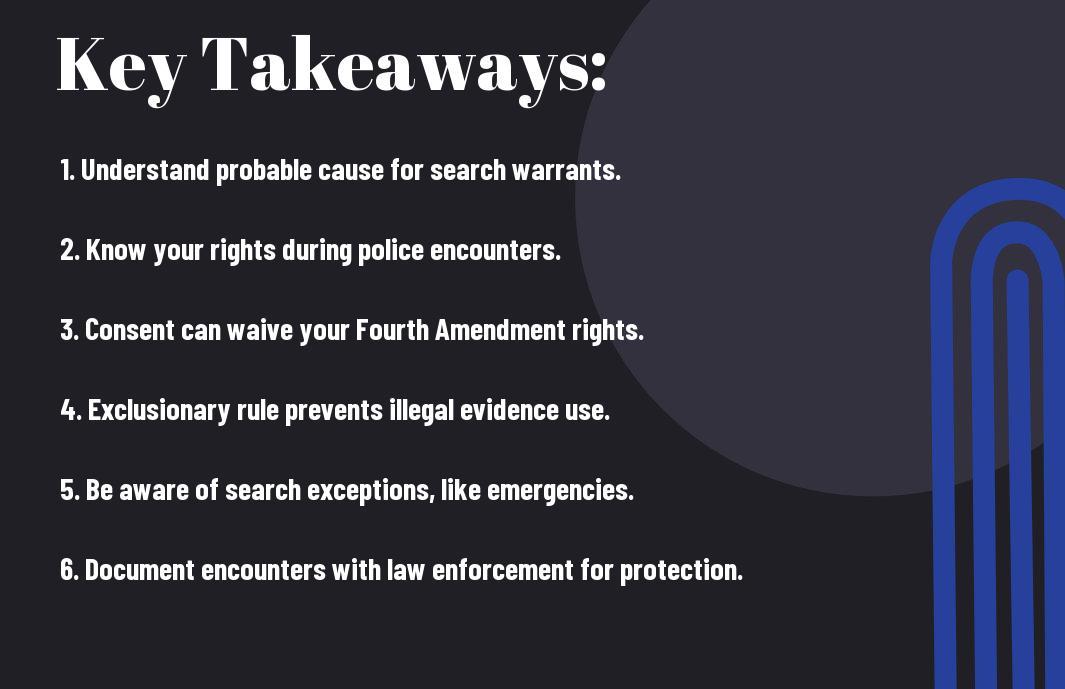
Following this guide, you should have a clearer understanding of search and seizure laws and how they impact your rights. It is important to know what constitutes a legal search, the importance of warrants, and your rights during police encounters. By being informed, you can better protect yourself and advocate for your rights if faced with law enforcement actions. Stay aware, and equip yourself with the knowledge necessary to navigate these situations effectively.