

Laws governing self-defense can be complex and vary significantly from one jurisdiction to another, making it necessary for you to understand your legal rights and responsibilities. Knowing when and how you can legally protect yourself is vital for ensuring your safety and avoiding legal repercussions. In this post, you’ll learn about the key principles of self-defense laws, including what constitutes reasonable force, the concept of duty to retreat, and the nuances of stand-your-ground laws. Equip yourself with the knowledge to navigate these laws confidently in any situation.

Understanding Self-Defense Fundamentals
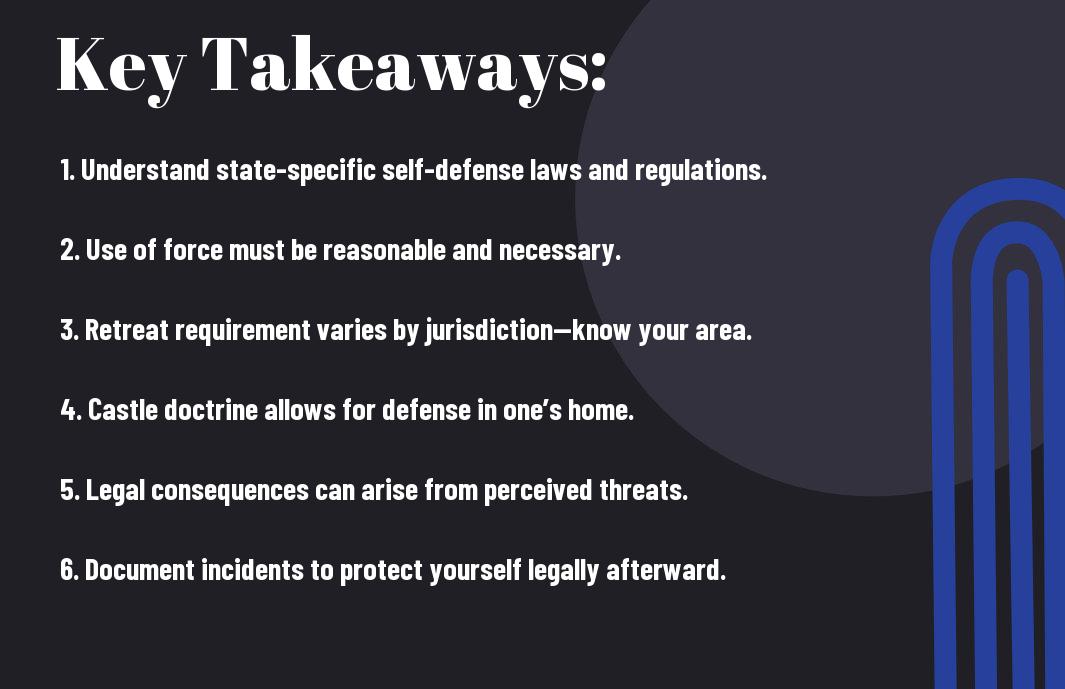
Before exploring the complexities of self-defense laws, it’s imperative to grasp the foundational principles that govern your rights. This foundational understanding equips you with the knowledge necessary to recognize when you are legally justified in defending yourself against imminent threats. With a solid grasp of these fundamentals, you can navigate the legal landscape with greater confidence and awareness.
Definition of Self-Defense
An imperative aspect of self-defense is its definition, which generally refers to the right to protect yourself from physical harm. It’s important to understand that self-defense is not just about physical retaliation but also involves the concept of responding to an immediate threat to your safety with a proportional response, allowing you to safeguard yourself in dangerous situations.
Reasonable Force Doctrine
To effectively exercise your right to self-defense, you must familiarize yourself with the reasonable force doctrine. This legal principle outlines that your response to an attack should be proportionate to the threat posed against you, meaning that excessive or unnecessary force can lead to legal repercussions.
For instance, if you are confronted with a minor physical altercation, responding with lethal force may be considered unreasonable and could result in criminal charges. Understanding the appropriate level of force required in various scenarios is vital. The reasonable force doctrine acknowledges that while you have the right to defend yourself, your actions must be measured and suited to the situation at hand, ensuring you remain within the bounds of the law during self-defense situations.
State-by-State Variations
If you are considering self-defense, it’s imperative to understand that laws vary significantly from state to state. Each jurisdiction interprets self-defense differently, which can impact your legal protections in a crisis. Knowing the specific laws in your state can help you make informed decisions about your rights and responsibilities when faced with a threatening situation.
Stand Your Ground Laws
Against a backdrop of self-defense legislation, Stand Your Ground laws permit you to use force without retreating if you believe you are facing an imminent threat. These laws eliminate the duty to retreat before using self-defense, empowering you to act in the face of danger. However, it’s imperative to note that the application of these laws can vary widely, so understanding local specifics is key.
Duty to Retreat States
One critical aspect of self-defense laws is the Duty to Retreat, which requires you to find a safe exit before resorting to force. In these states, you must show that you attempted to avoid confrontation, highlighting the importance of de-escalating situations whenever possible. Your decision-making process could significantly impact the outcome of any legal proceedings if self-defense is invoked.
With Duty to Retreat laws, it’s crucial to be aware that simply feeling threatened is not enough; you have a legal obligation to avoid using force unless absolutely necessary. This mindset encourages safer conflict resolution and the use of preventive measures. Engaging in self-defense should always be a last resort, and taking proactive steps to de-escalate a situation can safeguard your legal standing should an incident occur.

Castle Doctrine Explained
Many states uphold the Castle Doctrine, which grants you the right to use reasonable force, including deadly force, to protect yourself in your home against an intruder. This legal concept is based on the belief that your home is a place where you should feel secure, allowing you to defend yourself and your family from any unlawful invasion without the duty to retreat.
Home Protection Rights
Across the United States, laws vary regarding your rights to protect your home. Under the Castle Doctrine, you typically have the right to defend yourself against threats without the obligation to flee. This law not only applies to your house but may extend to your property, giving you the legal backing needed to ensure your safety and that of your loved ones.
Vehicle and Workplace Extensions
Home is not the only place where your rights to self-defense may apply; certain laws also extend to your vehicle and workplace. It’s important to be aware that in some jurisdictions, you can invoke self-defense rights while inside your car or at your place of employment, provided that you act within the bounds of reason and necessity. However, these protections can vary significantly by location.
Also, understanding the nuances of vehicle and workplace self-defense laws is important for your personal safety. In vehicles, you often have the same right to defend yourself from immediate threats as you would in your home. Regarding workplace situations, many states recognize your right to protect yourself from harm while at your job, provided that your response is proportionate to the threat faced. Familiarizing yourself with these laws can help ensure you are prepared to act accordingly in a crisis.
Legal Requirements for Self-Defense Claims
Keep in mind that proving self-defense requires adherence to specific legal requirements. Your actions must align with recognized standards in your jurisdiction, which can vary significantly. Generally, you must demonstrate that your response was necessary to prevent harm and that you did not exceed the limits of reasonable action in relation to the threat faced.
Imminent Threat Standard
Among the key factors in self-defense claims is the imminent threat standard. This principle requires you to show that there was an immediate and unavoidable threat to your safety, making your response necessary. If the threat is not imminent, your justification for using force may be weakened.
Proportional Response Requirements
Among the legal expectations for self-defense is the requirement of proportional response. You must demonstrate that your force was proportional to the threat you faced, meaning that you cannot use excessive force in relation to the danger presented.
With proportional response, the law seeks to maintain balance in the use of force. This means that if you are confronted with a minor threat, employing serious bodily harm in your self-defense claim could be viewed as excessive. Your response should ideally match the level of aggression you are facing; excessive force can lead to criminal charges against you, undermining the validity of your self-defense claim.
Common Legal Pitfalls
Unlike what many may believe, self-defense laws are not a blanket protection. You could face legal issues if your actions are perceived as unnecessary or retaliatory. Improper interpretations of self-defense can lead to criminal charges or civil liabilities, especially if you did not act reasonably or were involved in a heated altercation. Being aware of these common pitfalls can help you navigate the complexities surrounding your rights to self-defense.
Excessive Force Consequences
Common missteps in self-defense scenarios revolve around the use of excessive force. If you respond to a minor threat with extreme measures, you could find yourself facing serious legal repercussions. Courts evaluate self-defense claims based on the proportionality of your response, meaning that any escalation beyond what is necessary could result in criminal charges.
Aggressor Status Limitations
Around self-defense laws, your status as the aggressor can significantly influence your legal protections. If you initiated the conflict, it may hinder your ability to claim self-defense, regardless of the circumstances that follow. Courts often scrutinize the actions leading up to the confrontation, which can complicate your defense if you are perceived as the instigator.
In addition, understanding the nuances of aggressor status is vital for anyone considering self-defense claims. If you throw the first punch or engage in provocative behavior, you may forfeit your right to self-defense protections. Courts generally hold that someone who instigates violence cannot claim self-defense if they find themselves in danger as a result. Being aware of these limitations helps you maintain a clear perspective on your legal standing in any confrontation.

Defensive Tools and Legal Considerations
All self-defense tools carry specific legal implications that vary by jurisdiction. It’s vital to understand the regulations governing the use of these tools, as well as the potential consequences of utilizing them in a self-defense situation. Familiarizing yourself with local laws can help ensure that your self-defense actions align with legal standards and can protect you from potential legal repercussions.
Firearms and Deadly Force
Deadly force is generally defined as force that is capable of causing death or serious injury. When considering firearms, the use of deadly force is heavily regulated and often justifiable only when faced with an imminent threat to your life or severe bodily harm. Understanding the “stand your ground” and “duty to retreat” laws in your area is critical to knowing when you can legally use a firearm for self-defense.
Non-Lethal Options and Their Legal Status
To effectively defend yourself while minimizing risks of severe injuries or fatalities, non-lethal options like pepper spray or personal alarms are often considered. Each has a unique legal status that can vary greatly between states or cities, so confirming the legality of carrying and using these options is vital. Local ordinances and regulations can dictate whether these items are legal for personal protection.
Their legality also depends on how you intend to use these non-lethal tools. In some regions, using them in aggressive or retaliatory situations could lead to legal troubles, despite being designed for self-defense. Knowing how to navigate these laws can help you choose the right tools for your protection and ensure that your actions remain within legal boundaries, providing peace of mind in potentially dangerous situations.
Final Words
So, understanding self-defense laws is important for safeguarding your rights and ensuring your actions are legally justified. You should be aware of the legal protections available to you in various situations, as well as the limitations that govern your responses. By educating yourself, you empower yourself to make informed decisions, whether you find yourself in a threatening scenario or need to navigate complex legal waters after an incident. Equip yourself with knowledge to ensure that your self-defense actions align with the law and protect your well-being.