

Just because you have a criminal record doesn’t mean that it has to follow you forever. If you’re looking to start fresh and remove that record from your history, this guide will walk you through the process of expungement step by step. You’ll learn about eligibility criteria, necessary documents, and the legal procedures involved, empowering you to take charge of your future. With the right information and approach, you can effectively pursue expungement and open new doors for yourself.
Understanding Criminal Record Expungement
Your journey to a fresh start begins with understanding the process of criminal record expungement. This legal mechanism allows individuals to erase certain criminal records from public view, thereby improving their chances for employment, housing, and social opportunities. By familiarizing yourself with the underlying principles, you can navigate this process more effectively.
Definition and Legal Terminology
An expungement is a legal process that seals or erases your criminal record, making it inaccessible to the public. Terms such as “dismissal,” “sealing,” and “record clearing” may also be encountered, each having specific legal implications. Understanding these terms is key to pursuing expungement successfully.
Types of Records Eligible for Expungement
To determine if your record qualifies for expungement, familiarize yourself with the types of records that may be eligible. Generally, certain misdemeanor convictions, arrests without conviction, and juvenile records can qualify. Here’s a breakdown:
| Type of Record | Eligibility Criteria |
| Misdemeanor Convictions | Time elapsed since the sentence completion |
| Felony Convictions | Specific conditions may apply |
| Arrests without Conviction | Record is typically eligible |
| Juvenile Records | Generally more lenient eligibility |
The exact criteria for eligibility can vary depending on state laws, so it’s necessary to consult local regulations. This ensures you understand what specific types of offenses can be eligible for expungement in your jurisdiction.
- Consult relevant statute for details
- Consider seeking legal assistance
- Gather supporting documentation
- Understand waiting periods
- Verify completion of sentence
The road to expungement may require careful navigation of various rules and requirements. Here’s a detailed table to help clarify the process:
| Record Type | Potentially Eligible |
| Misdemeanor | Yes, after waiting period |
| Low-Level Felonies | Possible, depends on offense |
| Arrests | Yes, if no charge followed |
| Expungements Completed | See if records are erased |
- Complete relevant applications
- Submit required documents
- Pay any associated fees
- Attend necessary hearings
- Follow up on the status

Benefits of Expungement
While an expungement can significantly enhance your life, it is crucial to understand the benefits it offers. By clearing your criminal record, you can improve your chances of accessing better employment prospects, housing opportunities, and restoring your reputation in the community. This process can lead to a fresh start, allowing you to reintegrate into society with a sense of freedom and renewed hope.
Pros: Employment and Housing Opportunities
The expungement of your criminal record can substantially open doors for employment and housing. Many employers and landlords conduct background checks; a clean record allows you to apply for jobs and leases without the burden of past mistakes weighing against you. This new beginning can lead to greater financial stability and personal fulfillment.
Cons: Limitations and Exceptions
Cons involve certain limitations and exceptions that you should be aware of when considering expungement. Although your criminal record may be sealed, some specific professions, such as law enforcement or education, may still have access to it. Furthermore, certain types of convictions may not be eligible for expungement, meaning permanent barriers may remain for particular opportunities.
It is crucial for you to be aware that not all offenses can be expunged, and laws can vary significantly from state to state. Some serious or violent crimes may be permanently recorded and prevent you from pursuing specific careers or opportunities. Additionally, even after expungement, certain agencies may still access your record, limiting the full benefits you might expect from the process. Thoroughly researching your state laws and discussing your case with a legal professional can help clarify what you can achieve through expungement.
Eligibility Factors
Keep in mind that not everyone is eligible for expungement. To determine your eligibility, consider these factors:
- The type of offense you have committed
- The time elapsed since your conviction
- Your criminal history
- Your compliance with laws and conditions after your conviction
Thou must assess these factors to determine your eligibility before moving forward with the expungement process.
Qualifying Offenses and Waiting Periods
Offenses vary in their eligibility for expungement, depending on their classification as felonies, misdemeanors, or violations. Additionally, each classification has specific waiting periods that you must fulfill before pursuing expungement, often ranging from a few years to a decade. By understanding these distinctions, you can better plan your strategy for expungement.
Jurisdictional Differences
If you’re considering expungement, be aware that laws and regulations vary significantly by jurisdiction. Each state has its own rules regarding qualifying offenses, waiting periods, and the application process, reflecting the legal landscape of that area. It’s vital to familiarize yourself with the guidelines specific to your location.
With the variations in expungement laws, you should research both state and local regulations. Some states may allow for automatic expungement processes under certain conditions, while others might require a more detailed application. Understanding these jurisdictional differences will help you navigate the system more effectively and enhance your chances for successful expungement.

The Expungement Process
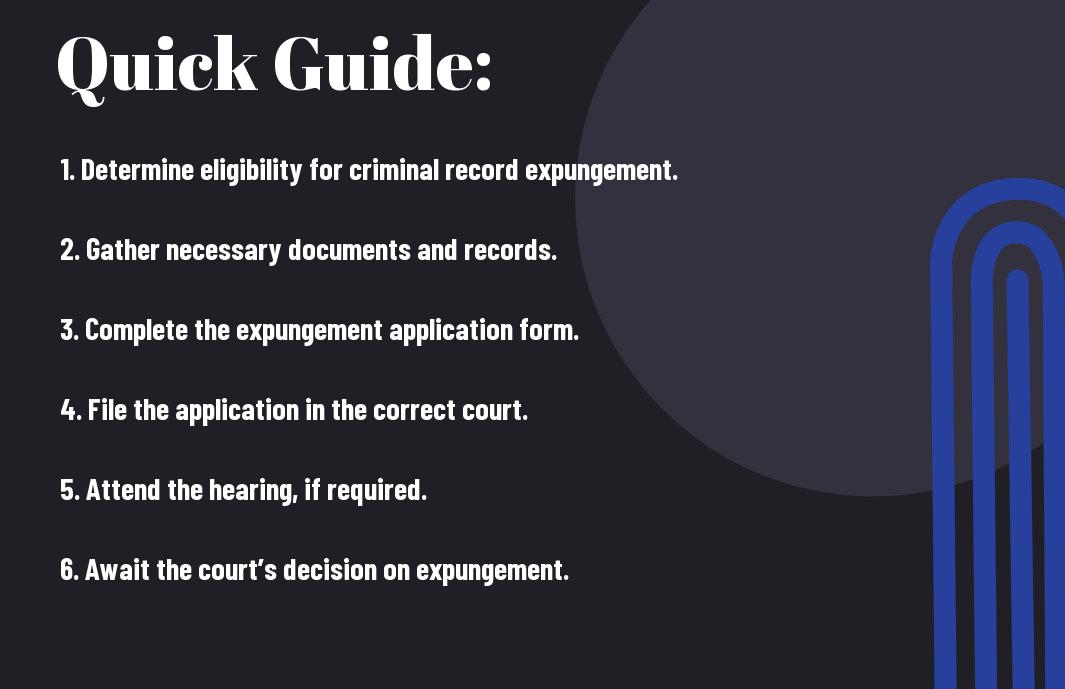
Now that you understand the importance of expungement, it’s time to look into the steps involved in the process. The expungement process typically begins with determining your eligibility, followed by gathering necessary documentation and filing your application. This series of steps may vary depending on local laws, but with careful attention, you can navigate this journey successfully and potentially clear your criminal record.
Pre-Application Assessment
Any expungement process starts with a pre-application assessment, where you evaluate your eligibility for an expungement. This assessment involves reviewing the nature of your offense, the laws in your jurisdiction, and any waiting periods that must be observed. By closely examining these factors, you can ensure you’re on the right track before initiating the official process.
Document Collection and Preparation
Even the most straightforward expungement application can require a range of documents, including court records, disposition statements, and personal identification. Properly collecting and preparing these documents will help streamline your expungement process and bolster your application.
To ensure a successful expungement application, you should gather all relevant documents such as arrest records, court documents, and proof of rehabilitation, if applicable. Make copies of these documents to maintain your records. Additionally, seek any necessary forms specific to your jurisdiction and fill them out accurately. Failing to provide proper documentation or making errors in the forms can lead to delays or rejections. By being thorough and organized, you position yourself favorably for the next stages of the expungement process.
Step-by-Step Application Procedure
Not every case is the same, so it’s necessary to follow a precise procedure for expungement. Below is a simplified breakdown of the application procedure:
| Step | Description |
|---|---|
| 1 | Determine eligibility for expungement. |
| 2 | Gather required documentation and evidence. |
| 3 | Complete the petition form. |
| 4 | File your petition with the court. |
| 5 | Attend the court hearing. |
Filing Your Petition
With the necessary documents ready, you can file your petition with the appropriate court. Ensure you complete the forms accurately, as errors may delay the process. Pay attention to submission deadlines and required fees. Once filed, you’ll receive a court date for your hearing.
Navigating Court Hearings
You may feel anxious about your court hearing, but being prepared can ease your nerves. This is the stage where you will present your case for expungement in front of a judge. It’s important to clearly articulate the reasons for your petition and how expungement would positively impact your life.
For instance, being well-prepared can involve practicing your statement about how you’ve changed since the incident. Consider gathering character references who can speak to your current conduct and stability. This presentation can significantly bolster your case, demonstrating to the judge your commitment to making positive choices moving forward. Additionally, understanding the judge’s perspective allows you to align your arguments with the court’s values.

Tips for a Successful Expungement
Unlike many legal processes, expungement can be straightforward if you follow some important tips. Focus on these key strategies:
- Properly gather all necessary documentation.
- Meet all deadlines for filing your application.
- Be honest in your application about your criminal history.
- Prepare for any required hearings by practicing your statements.
Knowing these tips can significantly increase your chances for a successful outcome.
Working with Legal Professionals
To navigate the expungement process effectively, consider collaborating with legal professionals. Their expertise can help you understand local laws, prepare necessary paperwork, and represent you during hearings if necessary. Having an experienced attorney on your side can simplify complex legal jargon and procedures, ensuring you meet all requirements for a successful expungement.
Common Mistakes to Avoid
Now that you’re ready to start the expungement process, be aware of common mistakes that could hinder your application. You might overlook minor details or misfile documents, which can delay or derail your efforts. Ensure you address each aspect of the application carefully and thoroughly.
Legal issues often arise from small oversights like failing to include all relevant criminal records or not adhering to local laws. It’s important to cross-check every document, follow specific guidelines, and provide complete information. By avoiding these pitfalls, you can streamline the expungement process and improve your chances for success.
Final Words
Taking this into account, understanding the process of expunging your criminal record can empower you to reclaim your future. By following the outlined steps, you can navigate the legal requirements effectively, boost your eligibility for employment and housing, and ultimately take control of your narrative. Stay organized, gather necessary documentation, and consider seeking legal assistance if needed. With determination and the right guidance, you can successfully achieve an expungement and move forward with confidence.