

Most situations involving domestic violence charges can be complex and overwhelming for you. Understanding the available legal defenses and the potential consequences of such charges is necessary to protect your rights and future. This blog post aims to provide you with a clearer understanding of the legal landscape surrounding domestic violence allegations, helping you navigate this challenging experience with more confidence.
Understanding Domestic Violence
Before you explore into the complexities of domestic violence, it’s vital to grasp its definition and forms. Domestic violence encompasses a range of abusive behaviors in intimate relationships, including physical, emotional, and psychological abuse. Recognizing the various manifestations of this issue will enable you to better understand its implications and the legal consequences involved.
Definition and Forms of Domestic Violence
The forms of domestic violence can vary significantly, from physical acts of aggression to non-physical offenses such as coercion, financial abuse, or emotional manipulation. You might encounter scenarios involving threats or isolation, which can also impact your mental well-being and personal freedom.
Legal Framework and Statutes
Before you explore the potential legal implications of domestic violence charges, familiarize yourself with the statutes that govern such actions. Laws surrounding domestic violence can differ by state, often outlining specific protections and penalties for perpetrators and victims alike. Understanding these laws is key to navigating any related legal processes accurately.
Considering your circumstances, it’s important to be aware of the specific statutes under which domestic violence is prosecuted in your jurisdiction. Each state may have unique definitions, legal protections, and penalties tied to domestic violence cases. Familiarizing yourself with local laws is vital for understanding your rights and responsibilities, as well as the potential impacts on your situation.
Common Legal Defenses
Now, when facing domestic violence charges, you may find that certain legal defenses can significantly impact your case. Understanding these defenses can help you navigate the complexities of the legal system. Common arguments used by defendants include self-defense, lack of evidence, and situational factors that may mitigate your culpability. Each defense has its unique requirements, and your attorney can assist in identifying the most appropriate strategy for your situation.
Self-Defense Claims
One common legal defense in domestic violence cases is the claim of self-defense. If you can demonstrate that you acted in response to an immediate threat or harm, this may help establish that your actions were necessary to protect yourself. It is imperative to provide evidence that supports the perception of danger, as courts often assess whether a reasonable person would have felt the same way under the circumstances.
Lack of Evidence
Above all, a lack of evidence can serve as a robust defense against domestic violence charges. If the prosecution cannot present sufficient proof of your alleged actions or intent, the case may be weak or even dismissed. The burden of proof lies with the prosecution, meaning they must establish your guilt beyond a reasonable doubt.
This approach often hinges on questioning the reliability of witness statements, the credibility of the alleged victim, and the thoroughness of the investigation. If you can highlight inconsistencies or gaps in the evidence, your defense gains strength. Engaging a knowledgeable attorney who understands how to challenge the evidence effectively will be beneficial in presenting your case and seeking a favorable outcome.

Consequences of Domestic Violence Charges
All domestic violence charges can lead to significant legal and personal consequences that may affect various aspects of your life. These implications can range from criminal convictions to civil lawsuits, ultimately influencing your future opportunities and relationships. Understanding the potential outcomes is vital as you navigate this challenging situation.
Criminal Penalties
An individual facing domestic violence charges may encounter various criminal penalties, including fines, probation, or incarceration. The severity of the punishment generally correlates with the nature of the offense, prior convictions, and state laws. Such penalties can hinder your ability to secure employment or housing, affecting your long-term wellbeing.
Civil Implications
Among the civil implications, you might deal with restraining orders or custody battles concerning children involved in domestic violence cases. These civil matters can be just as impactful as criminal penalties, leading to restrictions on your daily life and relationships.
Understanding the civil implications of domestic violence charges is important for your overall strategy. You may face challenges such as losing custody of your children, facing visitation restrictions, or being subjected to protective orders that limit your freedom. Additionally, other parties may pursue civil lawsuits against you for damages, adding financial strain to an already difficult situation. Seeking legal counsel is advisable to navigate these complexities effectively.
The Role of Restraining Orders
Despite the serious nature of domestic violence allegations, restraining orders serve as protective measures aimed at safeguarding victims. These orders can prohibit the accused from contacting or approaching the victim, creating a legal boundary to reduce the risk of further harm. Understanding their functioning and implications can be pivotal for both the alleged victim and the accused individual.
Types of Restraining Orders
One effective way to categorize restraining orders is through the following table:
| Type | Description |
| Emergency Restraining Order | Issued quickly for immediate protection. |
| Temporary Restraining Order | Grants protection until a court hearing. |
| Permanent Restraining Order | Issued after a court hearing, lasting longer. |
| No-Contact Order | Prohibits all forms of communication. |
| Stay Away Order | Commands the accused to maintain distance. |
Knowing the types of restraining orders helps you understand the level of protection and restrictions that may be imposed.
Impact on Accused Individuals
By being subjected to a restraining order, you may find your daily life significantly disrupted. These orders can affect your personal freedom and restrict your ability to conduct day-to-day activities without fear of legal repercussions.
A restraining order often leads to emotional distress and a tarnished reputation. It may influence your relationships and employment opportunities, as many employers and individuals may view the order as indicative of violent behavior. Additionally, violations of restraining orders can result in serious legal consequences, including arrest and criminal charges. Therefore, it’s vital to understand the potential ramifications of such orders on your life and to seek legal advice when necessary.
The Importance of Legal Representation
After facing domestic violence charges, securing legal representation is vital for navigating the complexities of the legal system. An attorney who specializes in these cases can help you understand your rights, evaluate the evidence against you, and formulate a strategy tailored to your situation. Without guidance, you risk making decisions that could negatively impact your future and legal standing. Having a skilled defender can be the difference between a favorable outcome and severe consequences.
Choosing the Right Attorney
Against the backdrop of serious allegations, it’s vital to select an attorney with experience in domestic violence cases. Look for someone who understands the nuances of local laws and can provide personalized support. Research their track record, client testimonials, and commitment to defending your rights. A compatible attorney can help alleviate some of your stress during this challenging time.
Strategies for Defense
At every stage of your case, having effective defense strategies is key to presenting your side of the story. This may involve challenging the evidence, questioning the credibility of witnesses, or demonstrating that the incident was mischaracterized. Your attorney’s role is to analyze the specifics of your situation to determine the best course of action and defend you vigorously against the allegations.
Plus, your legal team may explore various defense approaches, such as self-defense claims, false accusations, or evidence of mutual aggression. Each case is unique, and tailoring your defense to the facts is vital. Your attorney will gather necessary documentation, interview witnesses, and construct a compelling argument to counter the prosecution’s narrative. Effective communication with your legal representative will enhance the chances of achieving a positive outcome.
Resources for Victims and Accused
Many individuals facing allegations of domestic violence or those experiencing it can access a range of resources to provide support and legal guidance. These resources help you navigate complex emotional and legal landscapes, ensuring that your rights and well-being are prioritized. Whether you are a victim seeking safety or someone accused seeking defense resources, assistance is available to help you cope with the challenges ahead.
Support Services for Victims
One option for victims of domestic violence is to reach out to local support services, including hotlines and shelters, which offer immediate help and a safe haven. These organizations provide emotional support, counseling, and practical assistance, empowering you to make informed decisions about your future. By connecting with trained professionals, you can regain control and find the strength to move forward.
Legal Aid for the Accused
Legal aid can be an imperative resource for individuals accused of domestic violence, helping you navigate the complexities of the legal system. Finding a lawyer familiar with domestic violence cases can make a significant difference in how your case is handled.
Hence, securing legal aid ensures that you have proper representation to defend your rights and construct an effective legal strategy. Many nonprofits and public defender offices provide legal resources and consultations for those unable to afford private counsel. These organizations can help you understand the charges against you, navigate court proceedings, and explore potential defenses, ensuring your voice is heard during the legal process.
Conclusion
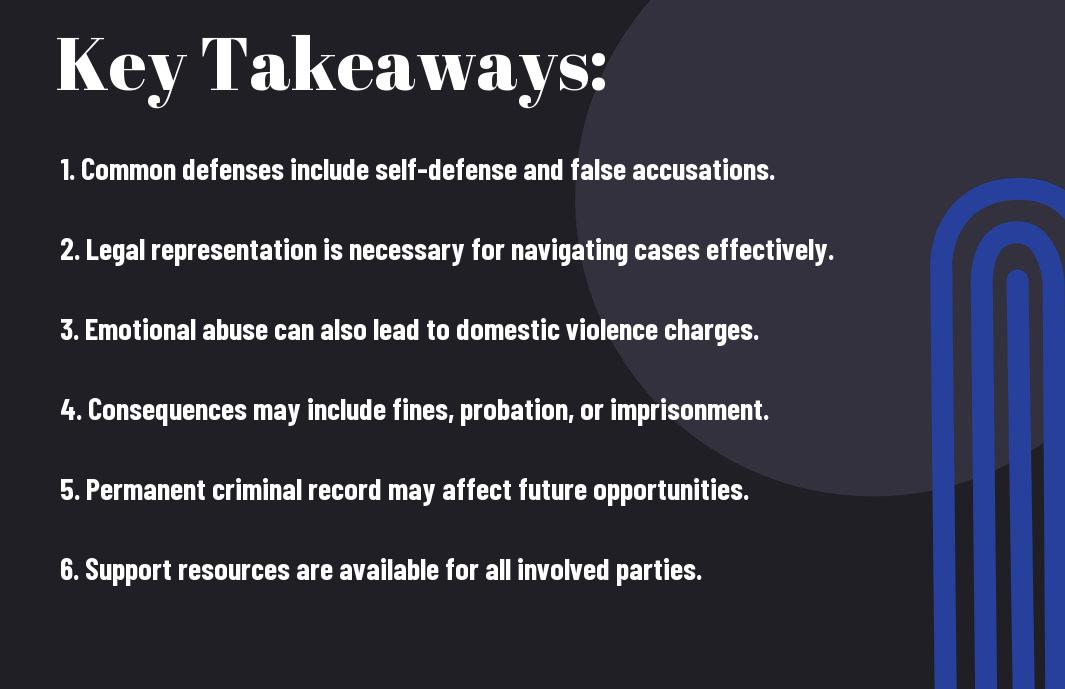
On the whole, understanding domestic violence charges, legal defenses, and their consequences is crucial for navigating these serious situations. If you find yourself facing such charges, it’s important to explore potential defenses and the impacts these allegations may have on your life, including legal repercussions and personal relationships. Engaging a knowledgeable attorney can empower you to protect your rights and achieve the best possible outcome. Being informed can make a significant difference in addressing the complexities of any domestic violence case.