
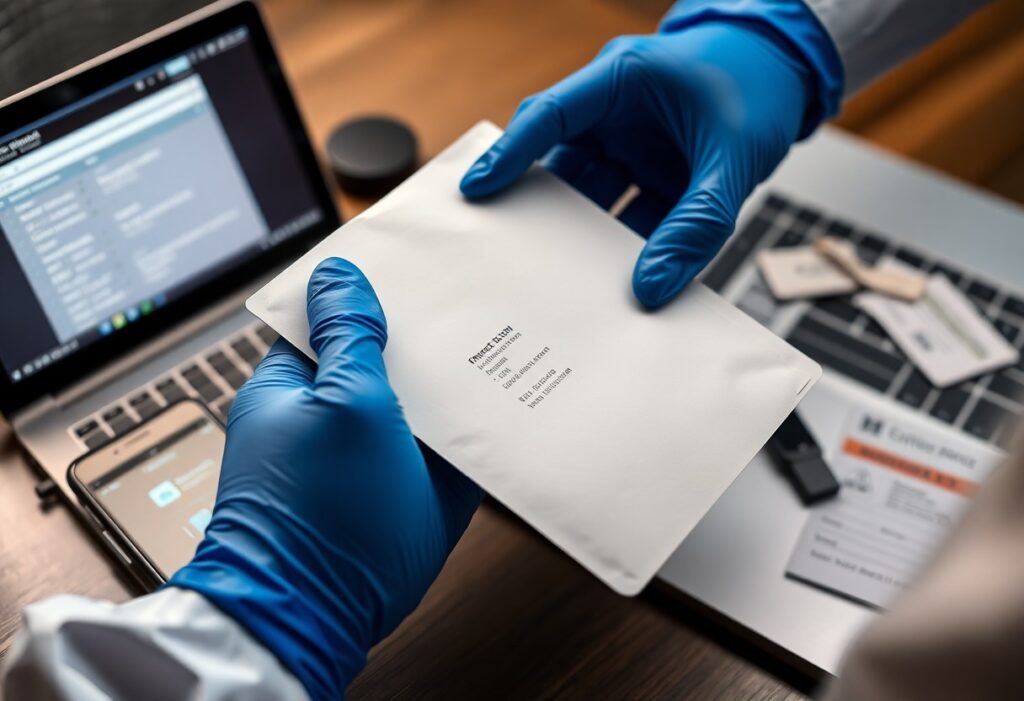
Evidence stored on smartphones, computers, and cloud services plays a central role in today’s criminal cases. You encounter digital traces every day, and law enforcement uses them to reconstruct events, verify alibis, and link suspects to crimes. Investigators follow strict protocols to collect and preserve this data so it holds up in court.
The Cold Geometry of Data
You see patterns where others see chaos-every log entry, timestamp, and metadata fragment forms a precise, unemotional map of digital behavior. This structured silence holds answers, revealing actions long after they occur.
Deciphering the Encrypted Whisper
You face encrypted communications daily, where meaning hides behind mathematical walls. Modern tools and legal authority allow selective access, turning silent code into spoken truth when keys are obtained or vulnerabilities lawfully exploited.
Mapping the Ghostly Path of GPS
You trace movements through invisible breadcrumbs left by smartphones and devices. Each GPS coordinate builds a timeline, placing a person exactly where the data says they were, regardless of their claim.
Location data doesn’t lie. You reconstruct journeys using satellite signals logged by apps, carriers, and operating systems, often confirming alibis or exposing deception. These digital footprints persist across backups and servers, creating a silent, continuous record of presence and motion that withstands scrutiny in court.
Echoes in the Social Sphere
You leave traces every time you post, like, or comment. Social media platforms capture more than content-they record behavior, connections, and timing. These digital footprints often reveal patterns invisible in person, offering investigators a window into relationships, motives, and movements tied to criminal activity.
Intent Hidden in Public Profiles
Your profile may seem harmless, but threats, boasts, or coded language can surface in plain sight. Investigators analyze word choice, imagery, and audience interaction to uncover intent. A single post, taken in context, might expose premeditation or affiliation with illicit acts.
The Unforgiving Clock of Metadata
Every upload, message, or check-in carries invisible timestamps. These metadata points form a precise timeline of your digital life. Even deleted content can leave behind traces that place you at a location or in communication at a critical moment.
Metadata doesn’t rely on your memory-it records facts. When you sent a photo, where your device was, what network you used, and even the software version are all logged. This silent data often contradicts alibis or confirms associations, making it one of the most reliable tools in digital forensics.
Household Spies and Smart Sentinels
Everyday devices now double as silent witnesses in criminal cases. Your smart speaker might recall a heated argument, while security cameras log comings and goings with precision. These tools, designed for convenience, often hold unexpected evidentiary value when law enforcement investigates a crime inside the home.
Domestic Alibis in the Cloud
You might not realize your thermostat can place you at home during a break-in across town. Cloud-stored data from smart appliances, lighting, and door locks creates a timeline of your movements. Prosecutors and defense teams now mine this information to confirm or challenge alibis with digital precision.
Biometric Rhythms of a Crime
Your wearable tracks more than steps-it records stress spikes, sleep disruptions, and sudden movements. When a crime occurs, investigators examine these biometric patterns to verify your account of events. Inconsistent heart rate data during a claimed alibi can raise serious questions.
Law enforcement agencies increasingly request data from fitness trackers and smartwatches during investigations. If you say you were asleep when a disturbance happened, but your device shows elevated heart rate and movement at that exact time, it could undermine your credibility. Courts are beginning to accept this biometric data as legitimate evidence, especially in domestic violence or assault cases where timing and physical state matter. Your body’s digital echo may speak louder than your words.
The Sanctity of the Virtual Ledger
Digital evidence forms an unbroken chain of data that mirrors the integrity of physical proof. You treat every file, log, and timestamp as part of a virtual ledger, where consistency and authenticity are non-negotiable. This ledger, when properly maintained, becomes the foundation of trust in digital investigations.
Preserving the Bitstream Image
You begin by creating a bitstream image, a complete sector-level copy of the original storage medium. This exact replica captures every byte, including deleted files and unallocated space. By working from this image, you ensure the source remains untouched and legally defensible throughout the investigation.
Shielding the Evidence from Alteration
You protect the bitstream image using cryptographic hashing and secure storage protocols. Any change, no matter how small, alters the hash value, immediately signaling tampering. This shield ensures the evidence you present holds up under scrutiny, maintaining its reliability from seizure to courtroom.
Hashing algorithms like SHA-256 generate unique digital fingerprints for your evidence files. You store these hashes alongside the bitstream image in a controlled environment, often with access logs and encryption. When you verify the hash at any point, a match confirms the data’s integrity, proving it hasn’t been modified since acquisition. This process is not optional-it’s your primary defense against claims of contamination or manipulation.
Shadows Across the Dark Network
You operate in a hidden layer of the internet where criminal activity thrives beyond standard surveillance. The dark network enables illicit trade, shielded by encryption and obscured routing. Yet even here, digital footprints persist. Investigators now deploy advanced tools to monitor traffic patterns, infiltrate marketplaces, and trace communications that believe they’re invisible to law enforcement.
Following the Path of Digital Currency
Transactions in cryptocurrency seem anonymous, but each move leaves a permanent record on the blockchain. You transfer funds through wallets and exchanges, unaware that forensic analysts map every hop. Law enforcement follows these trails, linking addresses to real-world identities through exchange logs, timing analysis, and behavioral patterns tied to known criminal behavior.
Stripping the Mask of Anonymity
Tools like Tor and encrypted apps promise secrecy, but human behavior creates leaks. You may mask your IP, but a single misstep-like logging into a personal account-exposes your identity. Investigators correlate timestamps, device fingerprints, and metadata to dismantle the illusion of invisibility, turning operational security gaps into breakthroughs.
Every layer of anonymity relies on perfect execution, and you rarely achieve it. Forensic experts exploit minor inconsistencies: a reused username, a mismatched time zone, or a device that briefly connects without a VPN. These fragments, when combined with data from seized devices or cooperating informants, reconstruct your true identity. The mask slips not because the technology fails, but because behavior betrays it.
The Gavel and the Firewall
Courts now routinely weigh digital privacy against investigative necessity. You face a legal system adapting to rapid technological change, where warrants extend beyond physical spaces into encrypted devices and cloud storage. Judicial decisions shape how evidence is collected, ensuring procedures align with constitutional protections while allowing law enforcement to pursue leads in an increasingly digital world.
Legal Reaches into Private Servers
Law enforcement may access your private servers with a valid warrant, but the process isn’t automatic. Courts examine the scope of the request, ensuring it doesn’t amount to a fishing expedition. You retain Fourth Amendment expectations, even in digital environments, and judges act as gatekeepers to prevent overreach.
Constitutional Limits on Bio-Unlocking
Your body isn’t a key the state can demand at will. Courts have ruled that forcing you to unlock a device using fingerprints or facial recognition may violate the Fifth Amendment’s protection against self-incrimination. The line between physical traits and testimonial evidence remains under legal scrutiny.
Biometric data presents a unique legal challenge because it blurs the line between physical characteristics and compelled testimony. While courts have allowed fingerprint unlocks in some cases, they often distinguish between providing a fingerprint-seen as a physical act-and entering a passcode, which is considered testimonial. You are not required to assist in your own incrimination, and judges are increasingly cautious about allowing law enforcement to exploit biometrics as a backdoor to digital privacy. Precedents continue to evolve as technology outpaces existing legal frameworks.
Final Words
Presently, digital evidence shapes how you understand and resolve criminal cases. Your devices leave traces-messages, locations, timestamps-that investigators analyze to reconstruct events. Courts accept this data when properly collected, making it a standard part of modern prosecution. You rely on its accuracy, and so does the justice system, every time a case turns on what a phone, drive, or server reveals.